Vanity Fair White House Photos: Close-Up Portrait Controversy
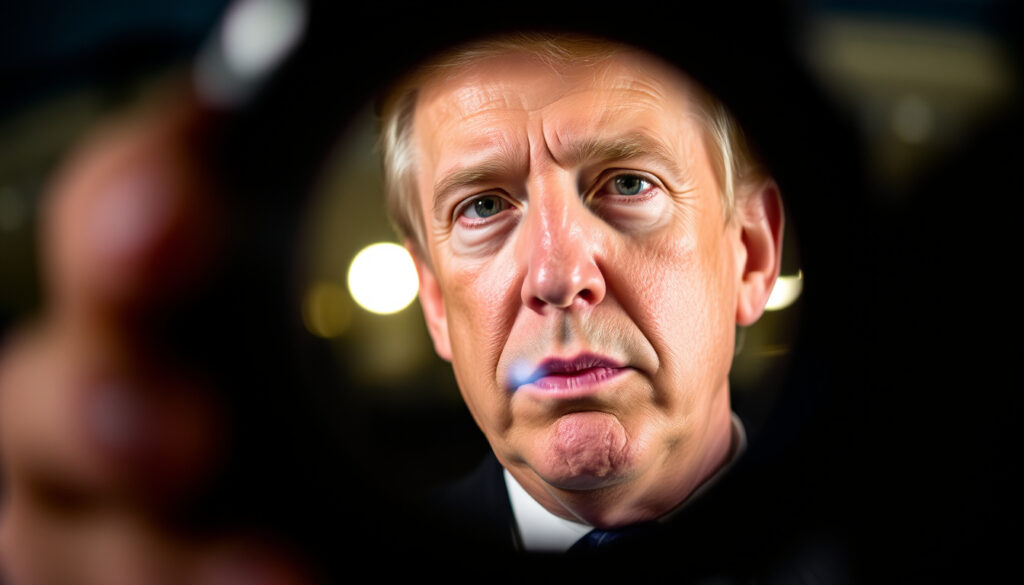
When Vanity Fair published extreme close-up shots of Trump administration officials in December 2025, the reaction was immediate and divided. Photographer Christopher Anderson’s unretouched images of figures like Susie Wiles and JD Vance sparked a debate about journalistic portraiture, political image-making, and the uncomfortable intimacy of getting too close.
Published: December 2025 ·
Photographer: Christopher Anderson ·
Subjects: Susie Wiles, JD Vance, Marco Rubio, Karoline Leavitt, others ·
Discussion Platforms: Reddit, Instagram ·
Controversy: Extreme close-up style
Quick snapshot
- Vanity Fair published the portraits on December 16, 2025 (Vanity Fair, the magazine that commissioned them).
- Subjects include Susie Wiles, JD Vance, Marco Rubio, Karoline Leavitt, Stephen Miller, Dan Scavino, and James Blair (PRINT Magazine, a design publication).
- Photographer Christopher Anderson defended the unretouched approach (The Hill, a political news outlet).
- Exact camera and lens used for the portraits.
- Total number of portraits in the series.
- Whether subjects were aware of the extreme close-up framing before the shoot.
- December 2025: Vanity Fair publishes feature and portraits (Vanity Fair).
- Late December 2025: Anderson gives interview explaining his approach (Newsweek, a weekly news magazine).
- Mid-December 2025: Reddit r/photography thread gains traction (Reddit r/photography community).
- Ongoing discussion on social media and news outlets.
- Possible further response from the White House.
- Potential impact on how future White House media access is handled.
Five key data points capture the essential facts of the controversy.
| Field | Value |
|---|---|
| Publication Date | December 23, 2025 |
| Photographer | Christopher Anderson |
| Subjects | Susie Wiles, JD Vance, Marco Rubio, Karoline Leavitt, and others |
| Camera/Lens | Not publicly confirmed; likely close-up portrait lens |
| Reception | Mixed; praised for artistry, criticized for unflattering portrayal |
Why are the Vanity Fair White House photos so close-up?
The photographer’s stated intention
- Christopher Anderson said he wanted to “penetrate the curated image” and capture the interaction of the moment, as reported by Newsweek (a weekly news magazine).
- He told The Hill (a political news outlet) that he was surprised people expected him to retouch imperfections, stressing that photos of politicians should not be conflated with celebrity portraits.
Camera and lens details
- No official confirmation of the exact equipment. Based on the extreme close-up framing, commentators speculate a macro or telephoto lens was used, but this is not verified.
How the close-up style affects perception
- The unretouched, tight framing highlights skin texture, expression lines, and imperfections, creating a raw, almost confrontational intimacy. Critics argue it makes subjects look unflattering; supporters see it as an honest portrayal.
- USA TODAY (a national newspaper) reported that the images went viral quickly, with viewers focusing on the lack of retouching.
The same close-up style that makes the photos feel authentic also fuels accusations of intentional distortion. For the subjects, the line between transparency and embarrassment is razor-thin.
The implication: Anderson’s approach forces viewers to confront the unvarnished reality of political portraiture, a choice that inherently invites controversy.
Who are the subjects in the Vanity Fair White House photos?
Susie Wiles – White House Chief of Staff
Wiles, the first woman to serve as White House chief of staff, was the main subject of the accompanying article. She called the feature a “disingenuously framed hit piece,” according to The Hill.
JD Vance – Vice President
Vance, the vice president, appeared in one of the most shared portraits. His expression and the tight crop drew commentary on social media.
Marco Rubio – Secretary of State
Rubio publicly accused the photographer of deliberately manipulating the images, as reported by The Hill.
Karoline Leavitt – Press Secretary
Leavitt’s close-up attracted special attention because some viewers believed it showed injection sites. Anderson denied adding anything to the photo, telling The Hill he did not alter the image.
Other administration figures
According to PRINT Magazine, the series also included Stephen Miller, Dan Scavino, and James Blair—senior staffers in the Trump administration.
By featuring a cross-section of the administration, Vanity Fair ensured the story was about the whole team, not just one person. But for each subject, the personal cost of being photographed in this style was different.
The pattern: The administration’s response varied by individual, revealing differing levels of comfort with the unvarnished approach.
What did photographer Christopher Anderson say about the White House photos?
Anderson’s interview with Vanity Fair
In the feature itself, Anderson explained his motivation: he wanted to create photographs that “reflect the interaction at the moment,” as noted by Newsweek.
His defense of the extreme close-up approach
Anderson told The Hill that he was surprised by the expectation that he would retouch the images. “Politicians are not celebrities,” he said, arguing that the two genres of portraiture should not be conflated.
Reaction to public criticism
When accused of making the subjects look sinister, Anderson responded that his job is to capture what is in front of the lens, not to manufacture a flattering narrative. The Washington Post (a major daily newspaper) reported that he denied any intentional manipulation of Leavitt’s image.
How did the public react to the Vanity Fair White House photos?
Reddit community critiques
A thread on Reddit’s r/photography invited expert critique of the shoot. Commenters debated the lighting, composition, and the ethics of publishing unretouched close-ups of political figures.
Instagram and social media buzz
Newsweek reported that Vanity Fair’s Instagram post featuring the portraits drew substantial engagement, with reactions ranging from mockery to praise.
News media analysis
USA TODAY covered the political split: critics called the photos a deliberate hit job, while supporters argued they exposed the administration’s hypocrisy about transparency. Chosun Ilbo English (a Korean news outlet) noted the polarized reaction.
The Reddit thread, with its technical focus, may shape how professional photographers view the shoot—and how future White House press access is negotiated.
The implication: Social media and news coverage have turned the photos into a proxy battle over media trust and political image-making.
Where can you find the Vanity Fair White House photos?
Vanity Fair’s official website and article
The portraits are hosted on Vanity Fair’s website (the magazine that published them) as part of the article “Vanity Fair Goes to the White House: Trump 2.0 Edition.”
Instagram post by Vanity Fair
Vanity Fair posted a selection of the images on their Instagram account in December 2025, as reported by Newsweek.
Reddit discussion threads
The active Reddit r/photography thread contains detailed critique and links to the images.
YouTube analysis videos
A YouTube video titled “He Understood The Assignment” analyzing the photographs was posted in December 2025, according to the timeline.
Timeline
- December 2025: Vanity Fair publishes White House portraits online and in print (Vanity Fair).
- Late December 2025: Christopher Anderson gives an interview explaining his photographic approach (Newsweek).
- Mid-December 2025: Reddit thread in r/photography gains traction with expert critique (Reddit).
What’s confirmed vs. what’s unclear
Confirmed facts
- Photos were published in Vanity Fair in December 2025 (Vanity Fair).
- Subjects include Susie Wiles, JD Vance, Marco Rubio, Karoline Leavitt (PRINT Magazine).
- Christopher Anderson photographed them (Vanity Fair).
- A Reddit discussion exists (Reddit).
- An Instagram post by Vanity Fair features the images (Newsweek).
What’s unclear
- Exact camera and lens used.
- The exact number of portraits in the series.
- Whether subjects knew about the extreme close-up style beforehand.
Quotes from key figures
“I was surprised people expected me to retouch imperfections. Politicians are not celebrities.”
— Christopher Anderson, photographer, as told to The Hill
“The magazine intentionally photographed staff in bizarre ways and deliberately edited the photos to demean and embarrass them.”
— Taylor Rogers, White House spokesperson, as reported by USA TODAY
The Vanity Fair portraits are more than a viral moment—they’re a stress test for the relationship between the White House and the media in a polarized era. For the Trump administration, the lesson is clear: grant access to a magazine known for its editorial independence, and you risk losing control of the frame. The next time a magazine requests a sit-down, the calculation will be different.
thehill.com, youtube.com, reddit.com, vanityfair.com, vanityfair.com, reddit.com, reddit.com
The Vanity Fair portraits have drawn particular attention for their depiction of incoming chief of staff Susie Wiles, whose Susie Wiles biography and role offers further context on her rise to power.
Frequently asked questions
How were the Vanity Fair White House photos lit?
Lighting details are not publicly confirmed, but the images show a strong, direct light source that creates deep shadows—likely a single key light.
What lens did Christopher Anderson use?
The exact lens is not confirmed. Given the extreme close-up framing, it may have been a macro lens or a telephoto with a short minimum focus distance.
Who is Karoline Leavitt?
Karoline Leavitt serves as White House Press Secretary under President Trump. She was previously a campaign spokesperson and appeared in the portraits.
Why did Vanity Fair choose these particular subjects?
Vanity Fair selected senior members of the Trump administration to represent the “Trump 2.0” team, as stated in the article’s title.
Are the photos available in print?
Yes, the feature appeared in the print edition of Vanity Fair in December 2025.
Did any White House officials comment on the photos?
Yes. White House spokesperson Taylor Rogers criticized the photos, and Susie Wiles called the article a “disingenuously framed hit piece.”
What is the name of the article accompanying the photos?
The article is titled “Vanity Fair Goes to the White House: Trump 2.0 Edition.”
More related posts
 How Long Do COVID Symptoms Last? Timeline & Recovery
 Ca t of Red One Film: Full Li t of Actor and Character
 Grocery Stores Open Near Me: Hours, Locator Tips & Timing
 Cast of Happy Gilmore: Original 1996 and 2025 Sequel Cast Guide
 Oregon Ducks Football Schedule 2026-2027
 Giants vs Saints 2025: Final Score & Player Stats
 Best TV Shows Right Now: Top Series to Watch in 2026
 Miss Jessie’s Pillow Soft Curls: Soft Hold Review & Guide