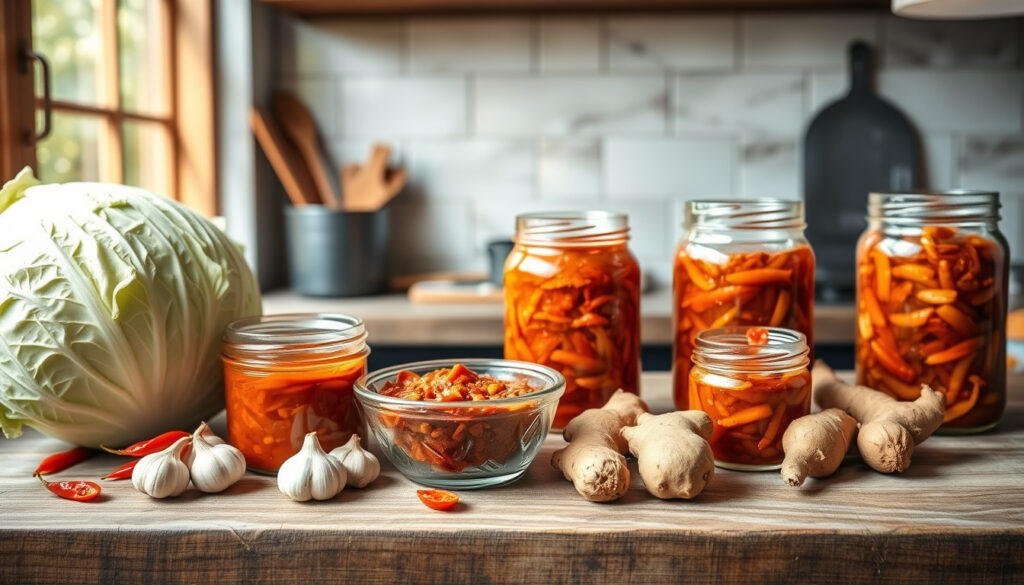
How to Make Kimchi at Home: Easy Step-by-Step Recipe
If you’ve ever cracked open a jar of kimchi and wondered how those crunchy, tangy leaves ended up in your fridge, you’re in the right place. Making kimchi at home sounds intimidating, but the process breaks down into three hands-on stages: salt the cabbage, mix the paste, and pack it tight. Maangchi, the beloved Korean cooking authority, describes lactobacillus bacteria as the real workhorse here—the microorganisms convert sugars into lactic acid, preserving the cabbage and developing that signature sour punch over time.
Primary Ingredient: Napa cabbage · Key Spice: Gochugaru · Other Essentials: Garlic, ginger, fish sauce · Fermentation Base: Salt brine · Common Add-in: Scallions
Quick snapshot
- Napa cabbage is the standard base for traditional kimchi (Country Trading Co.)
- Gochugaru provides the signature red color and heat (Maangchi)
- Exact fermentation days vary by kitchen temperature
- Optimal pH for safe homemade kimchi not standardized
- Active prep: 1 hour (Country Trading Co.)
- Salting stage: 4-10 hours (Country Trading Co.)
- Room temp fermentation: 1-2 days (Korean Bapsang)
- Refrigerate after initial bubbling (Country Trading Co.)
- Optimal flavor develops after 2-3 weeks in fridge (Country Trading Co.)
The following table summarizes the key specifications for a standard batch of traditional baechu kimchi, drawing measurements from established Korean cooking authorities.
| Label | Value |
|---|---|
| Main Vegetable | Napa cabbage |
| Signature Spice | Gochugaru flakes |
| Paste Base | Garlic, ginger, fish sauce |
| Prep Method | Salting and rinsing |
| Garlic Quantity | 24 cloves (1/2 cup minced) |
| Gochugaru Amount | 2 cups |
| Fish Sauce | 1/2 cup |
| Salted Shrimp | 1/4 cup |
How to make kimchi at home?
Prepare the cabbage
Start by selecting a firm, heavy napa cabbage—avoid any with yellowed outer leaves. Cut the cabbage in half lengthwise, then quarters, keeping the leaves attached at the core. Korean Bapsang, a recipe authority with detailed photo guides, recommends this quartering method because it keeps the structure intact while allowing salt to penetrate evenly.
Dissolve 1/2 cup salt in 5 cups water to create your brine. Bathe each cabbage quarter thoroughly in this solution, then sprinkle additional salt on the thick white parts of the leaves. Let everything sit for 4-10 hours, flipping the quarters halfway through, until the cabbage becomes flexible and releases its water. This salting step is non-negotiable—it draws out moisture that would otherwise dilute your paste and protects the leaves’ crunch during fermentation.
When the time is up, rinse the salted cabbage 2-3 times under cold water to remove excess salt, then let it drain thoroughly. According to Maangchi, skipping this rinse leaves kimchi unbearably salty, while over-rinsing strips away the beneficial surface bacteria you need for fermentation.
Make the paste
While your cabbage drains, prepare the rice flour porridge. Cook 2 tablespoons of sweet rice flour in 2 cups of water for 10-20 minutes until it thickens into a glue-like consistency, then let it cool completely. Maangchi uses this porridge as the paste binder—it helps the seasonings cling to leaves and contributes to the fermentation’s body. Some home cooks substitute all-purpose flour, but the texture won’t match the authentic sticky result.
The aromatics come next: mince 24 cloves of garlic, a thumb-sized piece of ginger, and an onion. Korean Bapsang recommends cutting daikon radish and optional Asian pear into thin matchsticks. Combine everything in a large bowl with 2 cups of gochugaru, 1/2 cup of fish sauce, and 1/4 cup of fermented salted shrimp. The paste should taste slightly too salty at this stage—if it doesn’t, add more fish sauce before applying it to the cabbage.
The paste’s saltiness seems counterintuitive, but diluted cabbage leaves absorb flavor proportionally. Under-seasoned paste produces bland kimchi that lacks the sharp, complex punch traditional versions deliver.
Apply and pack
Spread the paste thinly on each cabbage leaf, concentrating on the white parts where absorption is strongest. Work from the outer leaves inward, coating every surface. Simply Korean, a popular video creator, emphasizes that skipping any leaf means missing the heart of the process—each layer matters for even fermentation and flavor distribution.
Pack the seasoned cabbage tightly into a clean glass jar, pressing down to eliminate air pockets. Korean Bapsang recommends adding a splash of the rinse water from your mixing bowl to top off the liquid level. The outer leaves can be folded over the top for later use as wrappers or just packed in for extra crunch.
Seal the jar and leave it at room temperature for 1-2 days until you see bubbles rising through the liquid. Country Trading Co. notes that warmer kitchens ferment faster—you’ll see activity within 24 hours in summer, closer to 48 in cooler conditions. Once bubbling begins, move the jar to the refrigerator.
What are the basic ingredients of kimchi?
Vegetables
Napa cabbage serves as the foundation, but traditional recipes often include daikon radish cut into matchsticks. Country Trading Co. notes that these vegetables provide crunch and vitamins while salt preserves their texture through fermentation. Some modern variations add julienned carrots or scallions for color and additional sweetness.
Seasonings
Gochugaru—Korean red pepper flakes—defines kimchi’s signature color and heat. Maangchi specifies 2 cups for a standard batch, though home cooks can adjust downward for milder results. The pepper flakes differ from standard chili powder in texture and mild sweetness, so substitution compromises authenticity.
Paste components
The paste combines several umami sources: 1/2 cup fish sauce, 1/4 cup salted shrimp, and 24 minced garlic cloves. Beyond Kimchee, a traditional kimchi resource, highlights that these fermented seafood products provide depth impossible to replicate with alternatives. The rice porridge binder (2 tablespoons sweet rice flour in 2 cups water, cooked 10-20 minutes) ensures the paste adheres properly to leaves.
Traditional kimchi relies on fish sauce and salted shrimp for authentic flavor, but vegan versions exist. The trade-off is real: plant-based substitutes like soy sauce or miso produce kimchi that tastes noticeably different to Korean palates familiar with the original.
What are common kimchi mistakes to avoid?
Salting errors
Over-salting ranks as the most common beginner mistake. New makers fear spoilage and double the salt, but Country Trading Co. warns this produces kimchi that’s technically preserved yet inedible from briny intensity. Under-salting creates the opposite problem: mushy cabbage with no crunch and potential off-flavors from unwanted bacteria.
Uneven salt distribution causes inconsistent results within the same batch. Some leaves turn out perfectly tangy while others taste raw or bitter. Always ensure your brine fully submerges the quarters and flip them halfway through the rest period.
Fermentation issues
Fermentation speed depends heavily on room temperature and humidity, yet many recipes present fixed timelines. Maangchi clarifies that warmer conditions accelerate activity—you might see bubbles within 24 hours in summer, but winter kitchens may need 48 hours or more. The solution: watch the jar, not the clock.
Skipping the refrigeration step after initial bubbling causes over-fermentation. Left at room temperature beyond 2-3 days, kimchi turns mushy and excessively sour. The refrigerator doesn’t stop fermentation entirely—it slows the process to a manageable pace.
Paste problems
Insufficient paste application leaves some leaves bare of flavor. Each leaf needs coating, especially the thick white ribs where gochugaru adheres best. Korean Bapsang’s technique involves spreading paste with fingers, working from stem to tip on every surface.
Ahnest Kitchen, a family recipe resource, advises wearing gloves when mixing the paste—gochugaru causes painful skin irritation for anyone sensitive to capsaicin. This warning appears rarely in published recipes but matters for comfortable preparation.
Glass jars with metal lids risk corrosion from salt contact during extended fermentation. Use plastic lids, or place a piece of plastic wrap between the lid and jar rim to prevent metallic taste from leaching into your kimchi.
How to ferment kimchi?
Brining stage
The brining stage sets fermentation’s foundation. Salt draws moisture from cabbage cells, creating the liquid environment where lactobacillus bacteria thrive. Country Trading Co. specifies using Korean coarse sea salt or kosher salt free of iodine and anti-caking agents—additives interfere with bacterial activity and can leave bitter residue.
Duration depends on cabbage size and salt concentration, but the physical test matters more than the clock. Properly salted cabbage feels slippery when lifted, bends without breaking, and releases a steady drip when squeezed. This typically requires 4-10 hours for a standard head of napa cabbage.
Jarring process
Pack seasoned cabbage tightly into jars immediately after coating. Air pockets become breeding grounds for mold and unwanted bacteria. Press down firmly with clean hands or a cabbage tamper, ensuring liquid rises above the cabbage surface. Any exposed leaves discolor and soften during storage.
Beyond Kimchee recommends adding kimchi stock for kimjang-style batches—a simmered mixture of dried pollock, anchovies, kelp, radish, apple, and pear cooked for 30 minutes. This stock adds complexity but isn’t essential for standard home batches.
Monitoring bubbles
Bubbles signal active fermentation as carbon dioxide escapes from bacterial metabolism. Korean Bapsang notes that room temperature fermentation produces visible bubbling within 1-2 days under normal conditions. The absence of bubbles after 3-4 days suggests insufficient bacterial activity—check your salt levels and temperature.
Once bubbling becomes consistent, transfer the jar to refrigeration. The flavor continues developing but at a crawl, allowing you to taste-test weekly. Country Trading Co. advises that optimal flavor emerges around 2-3 weeks of refrigerator aging—the initial tang mellows into something more rounded and complex.
Is kimchi healthy?
Gut health
Kimchi earns its reputation as a probiotic powerhouse from the lactobacillus bacteria active during fermentation. Maangchi explains that these microorganisms convert sugars into lactic acid, which preserves the cabbage and creates the signature sour flavor. Research from Korean institutions suggests regular kimchi consumption supports digestive health, though individual results vary based on gut microbiome composition and kimchi preparation methods.
The fiber content from napa cabbage adds prebiotic benefits—food for the beneficial bacteria already in your gut. Traditional recipes with whole vegetables deliver more fiber than versions that puree everything into paste.
Blood sugar effects
Some studies suggest fermented foods may support blood sugar regulation, but kimchi’s impact varies based on preparation. Traditional recipes include sugar sources like Asian pear or onion, which add carbohydrates. The fermentation process consumes some sugars, but the final product retains enough carbohydrates to affect blood glucose levels.
For those monitoring blood sugar specifically, the fish sauce and salted shrimp contribute sodium rather than carbs. The gochugaru itself contains negligible sugar. Homemade versions allow control over added sweeteners—reducing or omitting the optional pear/apple creates a lower-carb kimchi.
Celiac safety
Traditional kimchi ingredients—napa cabbage, gochugaru, garlic, ginger, fish sauce, and salted shrimp—contain no gluten. For those avoiding wheat, barley, or rye, standard kimchi recipes present no celiac concerns.
The vigilance shifts to store-bought versions. Some commercial kimchi products use soy sauce or other additives that contain wheat-based ingredients. Always check labels if purchasing commercially, and when dining out, confirm that restaurant kimchi hasn’t been prepared with wheat-containing sauces.
Homemade kimchi with traditional ingredients fits cleanly into gluten-free and gut-health-focused diets. The real concern isn’t the recipe itself—it’s commercial products with hidden wheat sources or excessive sodium in heavily processed versions.
Upsides
- Probiotic bacteria support digestive health
- Rich in vitamins A, B, and C from fermented vegetables
- Typically gluten-free with traditional ingredients
- Low in calories, high in fiber when made without excess salt
Downsides
- High sodium content from salt and fish sauce
- Variable sugar content depending on recipe
- May cause bloating initially for those unaccustomed to fermented foods
- Contains fish products, making it unsuitable for vegans
Quotes
Then lactobacillus bacteria can do their work and convert sugar into lactic acid, which preserves the cabbage and changes the flavor over time.
— Maangchi, Korean Cooking Expert (Maangchi)
Kimchi is made from three things—vegetables, salt, and a spicy paste.
— Country Trading Co., Home Cooking Guide (Country Trading Co.)
You still have to do your part and not skip any steps or miss any ingredients. That’s the heart of Kimchi, the love and care.
— Simply Korean, Video Creator (Simply Korean YouTube)
Summary
Making kimchi at home rewards patience more than culinary skill—the process rewards consistent salting, generous paste application, and attentive fermentation monitoring. For home cooks willing to invest the time, the payoff is fresher, more flavorful kimchi than most commercial versions offer. The real win isn’t the tangy crunch sitting in your refrigerator—it’s the understanding that comes from mastering a technique that Korean households have refined over centuries. Once you grasp how the bacteria transform simple vegetables into something complex, every future batch becomes an experiment in flavor development.
Related reading: low calorie diet tips · magnesium benefits
Kimchi’s tangy fermentation pairs naturally with the simple homemade yogurt process, turning basic milk into creamy probiotics through similar culturing techniques.
Frequently asked questions
Where to buy kimchi?
Most grocery stores stock kimchi in the refrigerated section near sauerkraut and other fermented foods. Asian grocery stores typically offer multiple brands and spice levels. For authentic Korean kimchi, look for brands like Mother-in-Law’s, CJ, or Harris Teeter’s store brand. Farmers’ markets increasingly feature local fermentation artisans offering smaller-batch options.
Is kimchi safe for celiac?
Traditional homemade kimchi with napa cabbage, gochugaru, garlic, ginger, fish sauce, and salted shrimp contains no gluten. However, some commercial products use soy sauce or additives containing wheat. Always read ingredient labels carefully if purchasing, and when dining out, verify that restaurant-prepared kimchi hasn’t been made with wheat-based ingredients.
Does kimchi help with blood sugar?
Some research suggests fermented foods may support blood sugar regulation through probiotic effects, but kimchi’s impact varies by recipe. Traditional versions contain carbohydrates from vegetables and optional sweeteners. For blood sugar management, homemade kimchi with reduced or omitted fruit additives offers better control than recipes heavy on Asian pear or onion.
Why does my stomach hurt after eating kimchi?
Initial stomach discomfort when eating kimchi typically stems from two causes: the probiotic load overwhelming an unaccustomed gut, or the high fiber content causing digestive turbulence. Both effects are temporary for most people. Starting with small servings and increasing gradually allows your digestive system to adapt. Persistent discomfort may indicate sensitivity to histamines in fermented foods or an underlying digestive condition.
Who should not eat kimchi?
Individuals with seafood allergies should avoid kimchi made with fish sauce or salted shrimp. Those following strict vegan diets may prefer plant-based versions. People with histamine intolerance may react to the fermentation byproducts. Anyone on sodium-restricted diets should limit portions due to kimchi’s inherently high salt content from brining and fish sauce.
How to know if your kimchi is gluten free?
Homemade kimchi is gluten-free when made with traditional ingredients: napa cabbage, gochugaru, garlic, ginger, fish sauce, and salted shrimp. For store-bought versions, scan ingredient lists for wheat, barley, malt, or soy sauce. Some brands clearly label gluten-free status. When uncertain at restaurants, ask specifically whether wheat-based soy sauce was used in preparation.
How long does homemade kimchi last in the refrigerator?
Properly fermented and refrigerated kimchi maintains quality for several months. The flavor intensifies over time as fermentation continues at a slower rate. Most sources consider 3-4 months the outer limit for optimal taste, though properly stored kimchi remains safe beyond this point if no mold appears and the liquid remains clear.
More related posts
 Highest Yield Savings Account 2025: Ireland vs US
 Oshi no Ko Anime Guide: Plot, Characters & Season Info
 Hilton Friends and Family – Discount Guide 2024
 Timberwolves vs Brooklyn Nets Player Stats & Analysis
 Can Dogs Eat Beans? Safe Types, Risks & Preparation Tips
 Taco Bell Nacho Fries: Price, Ingredients & 2026 Return
 Parts of a Flower – Anatomy, Functions and Identification
 Restaurante Cerca de Mi: San Diego Dining Guide (2024)