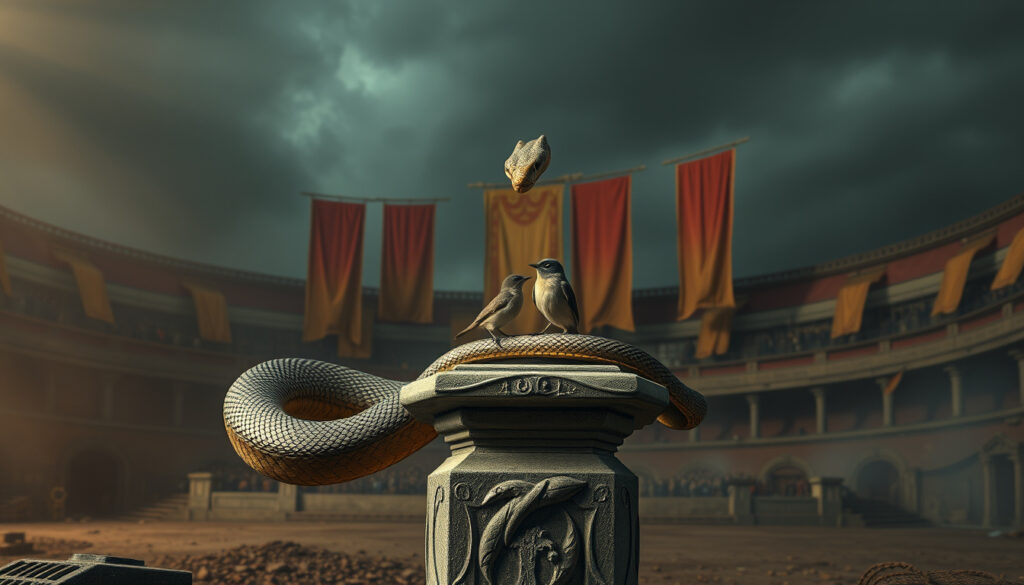
The Hunger Games: The Ballad of Songbirds & Snakes Explained
There’s an uncomfortable thrill in watching a future tyrant charm his way through his teenage years, and that’s the hook of The Hunger Games: The Ballad of Songbirds & Snakes. Set 64 years before Katniss Everdeen ever volunteers as tribute, the film follows 18-year-old Coriolanus Snow as he mentors District 12’s magnetic singer, Lucy Gray Baird, during the 10th Hunger Games (Lionsgate Films UK, official studio release). By the credits, you’ve watched the origin of a villain — and it changes how the original trilogy hits.
Release date: November 17, 2023 (United States) · Director: Francis Lawrence · Runtime: 2h 37m · MPAA rating: PG-13 · Worldwide box office: $337.5 million
Quick snapshot
- The prequel follows an 18-year-old Coriolanus Snow assigned to mentor Lucy Gray Baird, a tribute from District 12, during the 10th Hunger Games (Lionsgate Films UK, studio release notes)
- The film stars Tom Blyth, Rachel Zegler, Peter Dinklage, Hunter Schafer, and Viola Davis (Common Sense Media, book review)
- The story is set in the same world as the original trilogy, but decades earlier (Inverse, director interview)
- Whether Katniss is a descendant of Lucy Gray — no book or film confirms a bloodline (Wikipedia, film article)
- Whether Snow regrets losing Lucy Gray — the novel deliberately leaves his feelings ambiguous (IMDb, film page)
- What actually happens to Lucy Gray after she disappears at the end of the prequel (Rotten Tomatoes, film details)
- Set 64 years before the first Hunger Games film (Common Sense Media, movie review)
- The 10th Games take place before the arena became the polished, televised spectacle of the original trilogy (Francis Lawrence interview, Letterboxd Journal)
- The ending positions Snow at the start of his ruthless rise — not yet the president fans fear (Official movie website)
- No sequel has been announced, but the ending leaves room for more of Snow’s story (Metacritic, film page)
Key facts at a glance
Eight facts, one pattern: the release date, runtime, and PG-13 rating all pitch the prequel to the same teen-plus audience that made the original franchise a hit (Common Sense Media, parent-focused review site).
| Detail | Value |
|---|---|
| Full title | The Hunger Games: The Ballad of Songbirds & Snakes |
| Director | Francis Lawrence |
| Release date | |
| Runtime | 2h 37m (165 minutes) |
| Genre | Science fiction, action, drama |
| Starring | Tom Blyth, Rachel Zegler, Peter Dinklage, Hunter Schafer, Viola Davis |
| MPAA rating | PG-13 |
| Box office | $337.5 million (worldwide) |
What this means: the numbers tell two stories at once. The rating answers the “can my kid watch it?” question before the plot does, and the box office proves the franchise still draws a crowd more than a decade after the first movie.
Is The Ballad of Songbirds and Snakes for kids?
The short answer: it depends on the kid. The film is rated PG-13 for violent content and thematic material — which matters because children fight and kill children in the arena — and Common Sense Media recommends it for viewers around age 14 or older (Common Sense Media, nonprofit media review organization).
- The violence here is more intimate than the set-piece battles of the later films
- Children fight and kill children, and the story treats that with grim seriousness
- There’s no explicit gore, but the emotional weight lands on younger viewers hardest
The original trilogy already pushed PG-13 to its limit, and the prequel sits in the same territory — with one difference. Because the 10th Games are a rougher, less produced affair, the brutality feels closer and less cartoonish than the arena spectacles Katniss faces.
The PG-13 rating doesn’t protect young viewers from the story’s emotional weight. A 12-year-old who handled Catching Fire may still leave the prequel unsettled, because the ending is colder and more cynical than anything in the original trilogy.
For parents, the calculation is straightforward: 13 and up with a conversation afterward is reasonable; under that, wait. The rating is earned, and the discussion it starts is part of the point.
Is The Ballad of Songbirds and Snakes part of The Hunger Games series?
Yes. It’s a prequel set in Panem, the same fictional universe Suzanne Collins created, and it sits squarely inside the franchise’s timeline — 64 years before the first film’s reaping.
- The story centers on the 10th Hunger Games, decades before the televised spectacle of the 74th
- The original trilogy’s events are never referenced directly, but the rules and rituals that define them are still forming
- You don’t need to rewatch the old films first — the prequel stands on its own
What the film does well is show the machinery behind the Games: mentors, gamemakers, and a Capitol still learning how to monetize violence. The 10th Games in this film are a shabby experiment — one the Capitol is still learning to sell.
The prequel isn’t just an origin story for Snow; it’s an origin story for the Hunger Games themselves. Watching the event turn from a grim postwar punishment into mass entertainment explains the world Katniss inherits 64 years later.
The implication: the Games were never naturally a spectacle. They were engineered to become one — and Snow was in the room while it happened.
What is the new Hunger Games movie about The Ballad of Songbirds and Snakes?
The film is the origin story of Coriolanus Snow, told in the years before he becomes the Capitol’s icy dictator. He’s a promising Academy student from a once-powerful family that has fallen on hard times after the war, and he’s assigned to mentor Lucy Gray Baird — a District 12 tribute who upends the reaping by singing.
- Tom Blyth plays the young Snow; Rachel Zegler plays Lucy Gray
- Peter Dinklage plays Dean Casca Highbottom; Viola Davis plays Dr. Volumnia Gaul, the head gamemaker
- Hunter Schafer plays Tigris, Snow’s cousin, in a small but significant role
What makes the film interesting is what it does with the arena. The 10th Games aren’t the polished, televised event of the original series; they’re a shabby, half-funded punishment that the Capitol barely controls. Director Francis Lawrence told Letterboxd Journal that the Games in this film sit at a turning point — before they become the spectacle the original trilogy satirizes (Letterboxd Journal, director interview).
In an interview with Inverse, Lawrence was blunt about the character work: the movie shows Snow as a future villain, not yet the President Snow audiences fear (Inverse, entertainment outlet). The distinction matters, because the prequel never lets you forget what he becomes — it just asks you to watch him get there.
The trade-off is structural: the deeper the film digs into Snow’s psychology, the less time it spends on the Games themselves. Viewers who came for arena action may find the most interesting battles are happening in his head.
That’s what makes the prequel a prequel: you already know the destination, and the film makes the route matter more.
Is Lucy Gray in The Hunger Games trilogy?
No. Lucy Gray Baird is a prequel-only character: she never appears in the original films, and the original books never name her. The confusion comes from the mockingjay thread — the song Katniss knows as “The Hanging Tree” has its roots in Lucy Gray’s story, but that’s an echo, not a family tree.
- Both women are singers from District 12 who defy the Capitol
- Both form complicated relationships with Snow family members
- Neither is treated as a piece in the Capitol’s game — which is exactly why they’re dangerous
Is Katniss the granddaughter of Lucy Gray?
- Short answer: no — nothing in any book or film confirms that connection.
The similarities between Katniss and Lucy Gray are real, and they’re almost certainly deliberate. But the story never establishes a bloodline, and Snow’s obsession with Lucy Gray works better as metaphor than as ancestry.
If Katniss were Lucy Gray’s granddaughter, Snow’s grudge would become petty family business. Without the blood tie, it’s a pattern — the Capitol keeps producing defiant District 12 singers, and Snow keeps trying to silence them.
The pattern, not the pedigree, is the point. Panem repeats itself, and the prequel shows the first verse of a song Katniss will finish decades later.
Does Haymitch find Lucy Gray’s grave?
No. Haymitch never finds Lucy Gray’s grave, because the franchise never establishes that she has one. The prequel leaves her fate deliberately open, and no book or film set later in the timeline mentions her again.
- Haymitch’s own Games happen decades after the 10th, so he has no direct connection to Lucy Gray
- His grief in the original trilogy is about his own lost people, not hers
- Fan theories connecting the two characters remain theories
That hasn’t stopped fans from asking, and the question keeps circling back to the same canon gap: the franchise simply never returns to Lucy Gray’s story.
Does Snow regret killing Lucy Gray?
- Short answer: the book leaves both the killing and the regret ambiguous.
Snow never confirms that Lucy Gray is dead, and he never says he regrets her. What viewers get instead is a man who buries the memory and moves on — which is the closest the prequel comes to an answer.
Who was Haymitch’s true love?
- Short answer: the franchise never names her.
In Catching Fire, Haymitch mentions that the Capitol killed his mother, his younger brother, and “my girl” after his own Games. The girl is never named. Some fans guess it was Maysilee Donner, the other District 12 tribute from Haymitch’s Games, but that’s speculation, not canon.
Did Haymitch know Katniss’ dad?
- Short answer: no — Haymitch never met Katniss’s father, though he knew her mother slightly.
This hasn’t stopped readers from reading hidden family history into Haymitch’s gruff mentorship, but the books draw the relationship more simply: he’s a mentor doing a job, not a long-lost uncle.
Why did Johanna undress in the elevator?
- Short answer: she was hiding a wire and needed the cameras off her.
In Catching Fire, Johanna Mason strips in the elevator to force the Capitol’s cameras to cut away while she pulls a wire hidden on her body. It’s a distraction tactic, and it’s pure Johanna — reckless, effective, and impossible to ignore.
Which tribute died in Peeta’s arms?
- Short answer: Rue — though it’s Katniss who holds her at the end.
Rue dies in Katniss’s arms after the tracker-jacker attack in the first Games. Peeta is part of the alliance and helps carry the grief, but the image that defines the scene is Katniss cradling Rue as she goes.
What did President Snow do to Finnick?
- Short answer: he turned Finnick’s body into currency, then had him tortured.
Snow forced Finnick into relationships with powerful Capitol citizens by threatening Annie, the woman Finnick loved. Later, during the war, Snow had Finnick tortured — one more crime on a list Katniss reads aloud in Mockingjay.
The franchise keeps telling the same story: power destroys the people who love well. Watching Snow learn that rule is the whole point.
Should you watch it? The pros and cons
Upsides
- A genuinely different Hunger Games movie: a character study of the future villain instead of another rebellion
- Tom Blyth and Rachel Zegler carry the film with two very different kinds of magnetism
- The prequel deepens the lore without retconning it — the old films still work on their own
- It works as a standalone introduction for newcomers
Downsides
- At 2h 37m, it’s a long sit with a slower second half
- The arena action is dialed back compared with the original films
- The ending is deliberately cold — don’t expect a feel-good exit
- Some fan-favorite characters get just a few scenes
The trade-off: the prequel swaps spectacle for psychology, and whether that works is a matter of taste. If you’re here for Snow’s transformation, it’s the best possible version of the story; if you’re here for the Games, you’ll leave wanting more.
What’s confirmed and what’s still unclear
Confirmed facts
- The film is a prequel in the same Hunger Games universe, set before the original trilogy (Lionsgate Films UK, studio distributor)
- It depicts Snow as a future villain, before he becomes President Snow (Inverse, director interview)
- It was released on November 17, 2023, with a PG-13 rating
What’s unclear
- Whether Katniss is related to Lucy Gray — no book or film confirms it
- Whether Snow actually killed Lucy Gray — the film leaves it ambiguous
- Whether Snow’s regret is real or just self-preservation
- Whether Lionsgate will continue Snow’s story in a sequel
The balance of evidence: the film’s place in the timeline and Snow’s portrayal are settled questions. What’s unsettled is the human mystery underneath — and that’s exactly where the franchise’s next chapter would live.
What the people behind it say
“The 10th Hunger Games is central to the plot and occurs before the Games become the polished spectacle seen in the original series.”
Francis Lawrence, director, in an interview with Letterboxd Journal, film community journal
The film’s PG-13 rating reflects violent content and disturbing thematic material, which is why Common Sense Media recommends it for viewers around 14 and older.
Common Sense Media, parent-focused film review
Why this matters: Lawrence and the critics are describing the same thing from different angles. The rawness that makes the film uncomfortable is the same quality that makes it worth watching — and worth arguing about afterward.
The takeaway
If the original trilogy asked whether a system built on fear could be broken, the prequel asks what it costs to build one — and watches a smart, charming teenager make every wrong choice. For Lionsgate, the decision is clear: expand the world outward with a new story from a new corner of Panem, or risk another close-up on Snow’s cruelty that slowly turns fascination into fatigue.
commonsensemedia.org, slashfilm.com, dexerto.com, en.wikipedia.org
Frequently asked questions
Is The Ballad of Songbirds and Snakes worth watching?
If you liked the original trilogy’s moral tension more than its action set pieces, yes. It’s a slower, more political Hunger Games film with a deliberately cold ending — and it answers the question the franchise never asked directly: how a decent-seeming kid becomes President Snow.
How long is The Ballad of Songbirds and Snakes?
It runs 2 hours and 37 minutes (165 minutes), which makes it a long sit for younger viewers and a full evening for everyone else.
Who plays Coriolanus Snow in the prequel?
Tom Blyth plays the young Coriolanus Snow, and Rachel Zegler plays Lucy Gray Baird. Peter Dinklage, Viola Davis, and Hunter Schafer round out the main cast.
Does The Ballad of Songbirds and Snakes have post-credits scenes?
No. The story ends in the final scene, so you can leave when the credits start without missing a setup for another film.
Where can I watch The Ballad of Songbirds and Snakes?
Availability changes by region and by streaming deal, so check your local provider. The film had a theatrical release and then moved to digital and streaming platforms.
Is The Ballad of Songbirds and Snakes based on a book?
Yes — it adapts the prequel novel by Suzanne Collins, published after the original trilogy was complete, and it stays close to the book’s major plot points.
What is the age rating for The Ballad of Songbirds and Snakes?
The MPAA rating is PG-13 for violent content and thematic material, and Common Sense Media suggests viewers be around 14 or older.
Will there be a sequel to The Ballad of Songbirds and Snakes?
Lionsgate hasn’t announced one. The film’s $337.5 million worldwide gross makes a follow-up commercially plausible, but nothing has been confirmed.
Between the open ending, the box office, and a cast built for sequels, the only real question left for Lionsgate is which part of Panem the story revisits next.
More related posts
 The Curious Case of Benjamin Button: True Story & Viewing Guide
 Roche ter In titute of Technology v MIT: Which I Better?
 Ehlers-Danlos Syndrome Symptoms: Signs, Diagnosis & More
 What Causes Low Blood Sugar? Causes, Symptoms, and Treatment
 Braelon Allen 40 Time: Projected Speed & Comparisons
 Sinners (2025) Trailer: Plot, Cast and Release Date
 Planet of the Apes 2001: Criticism, Legacy, and Canceled Sequel
 Viva la Vida Lyrics: Meaning, Translation, and Analysis