Viva la Vida Lyrics: Meaning, Translation, and Analysis
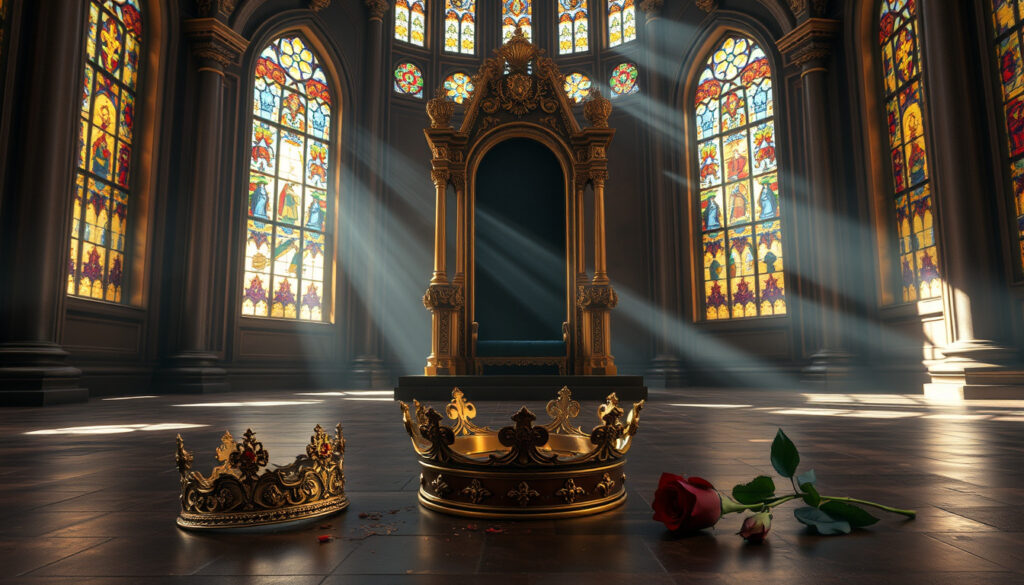
There’s something about a fallen king that makes for unforgettable pop music — Coldplay’s “Viva la Vida” took that image of a ruler stripped of everything and turned it into one of the most analyzed songs of the 2000s. Whether you hear a French monarch’s last confession or a set of biblical riddles, the song keeps pulling people back for another listen.
Release year: 2008 ·
Album: Viva la Vida or Death and All His Friends ·
Grammy Awards won: 2 (Song of the Year, Best Pop Performance) ·
Peak Billboard Hot 100 position: 1 ·
Writers: Guy Berryman, Jonny Buckland, Will Champion, Chris Martin
Quick snapshot
- Whether the song is specifically about Jesus or Christian theology (Wikipedia)
- Which historical figure inspired the lyrics (Louis XVI, Napoleon, or a composite) (Aulart)
- 2008: Released as the second single from “Viva la Vida or Death and All His Friends” (Wikipedia)
- 2009: Won Grammy for Song of the Year (Wikipedia)
- 2008–2009: Topped charts in over 30 countries (Wikipedia)
The production and release details reveal how quickly “Viva la Vida” became a global hit.
| Label | Value |
|---|---|
| Songwriter | Coldplay (all members) (Wikipedia) |
| Producer | Brian Eno, Markus Dravs (Wikipedia) |
| Length | 4:01 (Wikipedia) |
| Label | Parlophone, Capitol (Wikipedia) |
Coldplay built “Viva la Vida” around a paradox: a title that celebrates life while the narrator mourns everything he’s lost. That tension between the Spanish celebration and the English confession is the engine of the song’s enduring mystery.
What do the lyrics of Viva la Vida mean?
The lyrics describe a deposed monarch looking back at the power he once held. The opening line — “I used to rule the world” — sets the frame: a former ruler, now isolated, listing what slipped away. Wikipedia’s analysis notes that the song explores the fleeting nature of power and the regret that follows a fall from grace.
The fallen king narrative
- The narrator says he “used to rule the world” — the song is a story of lost power (Wikipedia article)
- One dominant interpretation frames the song as the French Revolution told from King Louis XVI’s perspective before his execution (Wikipedia article)
- Aulart article summarizes that the song explores power, fame, success, and how quickly they vanish
Key metaphors and symbols
- “Pillars of salt” references Lot’s wife in Genesis — a warning about looking back (Wikipedia article)
- “Pillars of sand” refers to Matthew 7:24-27, the parable of the house built on sand (Wikipedia article)
- “Revolutionaries wait / For my head on a silver plate” echoes the story of John the Baptist’s beheading (Wikipedia article)
- “I know Saint Peter won’t call my name” suggests the narrator’s soul is barred from heaven (Wikipedia article)
The implication: the narrator is a ruler who failed so completely that both history and heaven reject him. The biblical metaphors aren’t decoration — they’re the mechanism of his condemnation.
What does ‘Viva La Vida’ mean in English?
“Viva la Vida” is Spanish for “Long live life.” The title comes from a painting by Frida Kahlo, which Coldplay’s Chris Martin saw and admired. The phrase itself is a celebration — but the song is anything but. That contrast between title and tone is deliberate: the narrator’s life is ending, and the title almost mocks his situation. wikiHow breakdown explains that the title irony deepens the narrative of a ruler who once commanded the world but now commands nothing.
Spanish phrase translation
- “Viva” is the subjunctive form of “vivir” (to live) — it expresses a wish or celebration (Wikipedia article)
- “La Vida” means “life” (Wikipedia article)
- The full phrase is commonly translated as “Long live life” (Wikipedia article)
- The phrase is also used as a toast, similar to “Cheers!” or “To life!” (Wikipedia article)
Context of the title
- Coldplay named the album after the Frida Kahlo painting that bears the same phrase (Wikipedia article)
- The painting depicts a watermelon with the words “Viva la Vida” — a celebration of life despite suffering (Wikipedia article)
- The song uses the same idea: life persists even after a fall from power
If this lyric analysis leads you to explore other works with Spanish themes, you might find our guide to Spanish to English translator tools helpful.
For readers searching for a Spanish-to-English translation, the phrase is simple. But the meaning in context is layered: the title celebrates what the narrator has lost, creating an emotional distance between the words and the speaker.
Is Viva la Vida about Christianity?
No — but the song uses Christian imagery so densely that many listeners hear a religious narrative. Chris Martin has stated that the song is not explicitly Christian; instead, it uses religious metaphors as tools for storytelling. Wikipedia’s entry catalogues the biblical allusions: Saint Peter, Jerusalem bells, pillars of salt, and the “silver plate” reference all appear in the lyrics.
Biblical references in the lyrics
- “Pillars of salt” — Genesis 19:26, Lot’s wife turned into a pillar of salt (Wikipedia article)
- “Pillars of sand” — Matthew 7:24-27, the parable of the foolish builder (Wikipedia article)
- “Saint Peter won’t call my name” — Peter as gatekeeper of heaven (Wikipedia article)
- “Head on a silver plate” — Mark 6:21-28, John the Baptist’s execution (Wikipedia article)
- “Jerusalem bells ringing” — Jerusalem as a city of divine judgment (Brooke McCurdy’s analysis)
- “Roman cavalry choirs are singing” — potentially referencing Roman soldiers at the crucifixion (Brooke McCurdy’s analysis)
The song’s religious ambiguity
- Baptist21 analysis argues the song fits the biblical fall of humanity, especially Adam’s story
- Brooke McCurdy’s analysis (WordPress) treats the entire song as an extensive biblical allusion
- The band has not confirmed any specific Christian interpretation
- The song is more about a secular ruler’s fall than a religious figure’s sacrifice
The catch: the density of religious language makes it easy to read the song as Christian. But the framing — a deposed king, not a messiah — suggests the imagery serves the story of power and loss, not theology.
A song that mentions Saint Peter, Jerusalem, and Roman cavalry choirs — and the band says it’s not Christian. The secular reading actually makes the lyrics sharper: the narrator borrows sacred imagery to express how total his fall really is.
What does Jerusalem bell ringing mean?
“I hear Jerusalem bells a-ringing” is one of the song’s most evocative lines. Brooke McCurdy’s analysis links the line to Jerusalem as a holy city — a place where bells signal judgment, reflection, or divine intervention. In the context of the fallen king, the bells announce that his reign is over and a new order is rising.
Historical context of Jerusalem bells
- Jerusalem has been a symbol of divine presence and judgment in Judeo-Christian tradition for millennia
- Church bells in Jerusalem historically signaled prayer, mourning, or celebration — each context changes the meaning
- The line “bells a-ringing” suggests an event of major significance that the narrator cannot escape
The bells are not just a sound effect; they mark the moment the narrator realizes the world has moved on without him.
Symbolism in the song
- The bells signal the end of the narrator’s rule
- They evoke a world moving on without him, indifferent to his suffering
- Combined with “Roman cavalry choirs are singing,” the line places the narrator at a moment of historical and spiritual transition
- Some listeners hear the fall of Jerusalem in 70 AD — a ruler who tried to hold onto power and lost everything
What this means: the bells aren’t just a pretty image. They mark the psychological moment when the narrator realizes the world no longer belongs to him. The line does heavy lifting — it’s both a sound and a sentence.
Is Coldplay Viva la Vida about Jesus?
This question comes up constantly, and the answer is no — at least not according to the band. Some listeners hear a parallel to the Passion narrative: a figure who was once exalted is now humiliated, betrayed, and executed. But the lyrics describe a ruler who “used to rule the world” and “had it all,” which maps more cleanly onto a monarch like Louis XVI than onto Jesus.
Comparison to the Passion narrative
- Betrayal by those closest to the narrator — echoes Judas but fits any deposed ruler
- Mention of a “head on a silver plate” — directly references John the Baptist, not Jesus
- Saint Peter refusing entry — the narrator is barred from heaven, not resurrected
- The tone is regret and confession, not sacrifice or redemption
Band’s interpretation
- Coldplay has not confirmed any Christian interpretation (Wikipedia article)
- Chris Martin described the song as being about a king who lost his kingdom and reflects on his mistakes (Aulart article)
- Brian Eno, the producer, described the song as having a “sense of grandeur and loss”
- The biblical references function as metaphor, not doctrine
“We were trying to write songs about people in history… a king who has lost his kingdom and thinks about his mistakes.”
— Chris Martin, in interviews about the song’s inspiration (Aulart article)
The pattern: the more closely you read the lyrics as a whole narrative, the weaker the Jesus parallel becomes. The narrator is a ruler reflecting on failure, not a savior dying for others.
“The song has a sense of grandeur and loss — it’s about someone who had everything and lost it, and you can feel that weight in every line.”
— Brian Eno, producer (Aulart article)
The implication for listeners: if you want a Christian song, you’ll find enough references to build a case. But the story underneath is about political power, not spiritual redemption. Coldplay loaded the song with biblical language to give the fallen king’s confession a weight that pure political allegory couldn’t carry.
If the biblical imagery intrigues you, consider our analysis of The Chosen Season 4, a series that explores similar themes of power and sacrifice.
skl123.wordpress.com, reddit.com, reddit.com, youtube.com, coldplaying.com, reddit.com, coldplaying.com
Frequently asked questions
What is the meaning of “I used to rule the world” in Viva la Vida?
The opening line establishes the narrator as a former ruler who has lost all power. It frames the entire song as a confession from someone who once commanded everything and now commands nothing (Wikipedia article).
What does “Roman cavalry choirs are singing” refer to?
The line likely references Roman soldiers present at the crucifixion of Jesus, though some interpretations also connect it to the violent end of historical rulers like King Louis XVI during the French Revolution (Brooke McCurdy’s analysis).
What is the significance of “Saint Peter won’t call my name”?
Saint Peter is traditionally the gatekeeper of heaven in Christian theology. The narrator fears he is barred from entry — a sign that his failures have eternal consequences (Wikipedia article).
What does “pillars of salt” mean in Viva la Vida?
The line references Lot’s wife from Genesis 19:26, who turned into a pillar of salt when she looked back at the destruction of Sodom. It’s a warning about the consequences of looking back at what you’ve lost (Wikipedia article).
What historical figure is referenced in Viva la Vida?
No single figure is confirmed, but the strongest interpretation points to King Louis XVI of France, who was executed during the French Revolution. Napoleon and Jesus have also been suggested, but the song’s frame — a monarch overthrown by revolutionaries — fits Louis XVI most closely (Aulart article).
What is the Spanish translation of Viva la Vida lyrics?
The full Spanish translation of “Viva la Vida” is “Long live life.” Individual lines require context: “I used to rule the world” becomes “Yo solía gobernar el mundo.” The title itself is already Spanish and is used without translation in most language versions of the song.
What are the full lyrics of Viva la Vida?
The full lyrics are available on Coldplay’s official website and licensed lyric platforms such as Genius. The song’s verses follow a structure of four stanzas plus a chorus, with the fallen monarch recounting his rule, his fall, and his isolation.
For readers searching to understand what “Viva la Vida” actually means — whether through its English translation, its biblical references, or its historical allegory — the song rewards attention. It’s not a simple pop hook. It’s a confession, a history lesson, and a paradox wrapped in a string section. For anyone landing on this page because they heard “Jerusalem bells” and wondered, the answer is: the king fell, and the bells are ringing for him.
More related posts
 How Many Planets Are There? Solar System Planet Count Explained
 Megan Thee Stallion Mamushi – Lyrics Meaning Yuki Chiba Feature
 Cynthia Erivo With Hair: The Real Story Behind Her Shave
 Gold Chains for Men: Cost, Karat & Style Guide
 What Is the Moon Phase Tonight? Current Waxing Gibbous
 Who Should I Start? Expert Fantasy Football Start/Sit Advice
 Orange County Clerk of Court – Records, Phone, Locations Guide
 Home Depot Charging Parking Fees? The Hoax Explained