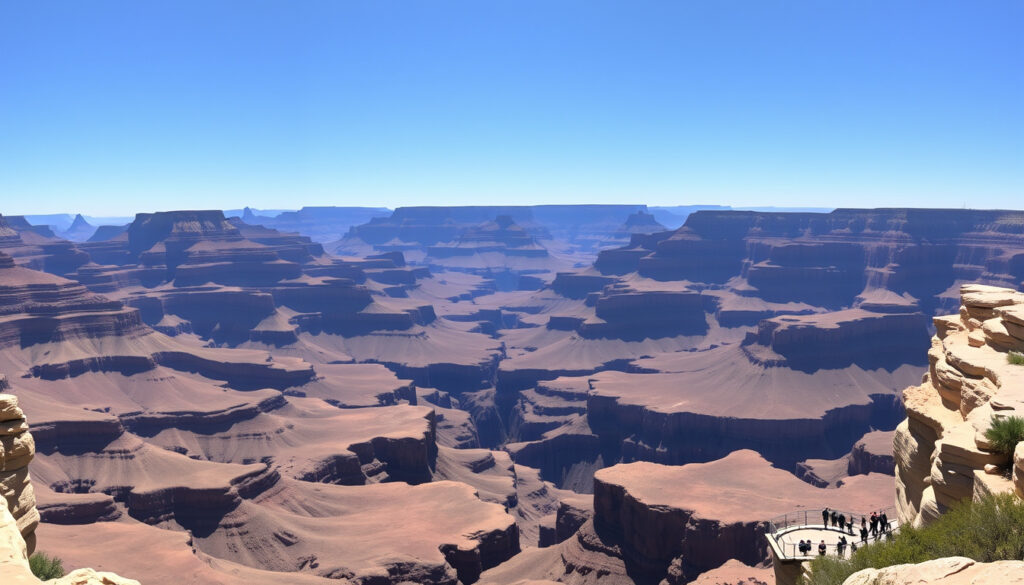
Grand Canyon National Park: Fees, Safety & Cities Guide
You might think you know the Grand Canyon from postcards, but its scale is hard to grasp until you see it—277 miles long, over a mile deep, and nearly two billion years of rock exposed in its walls. In 2019 alone, 4.53 million people visited Grand Canyon National Park (National Park Service visitation statistics), drawn by its status as one of the Seven Natural Wonders of the World.
Year Established: 1919 ·
Total Area: 1,217,403 acres ·
Annual Visitors: 4.53 million (2019) ·
Elevation at South Rim: 7,000 ft ·
Entrance Fee (Private Vehicle): $35
Quick snapshot
- Established as a national park in 1919 (National Park Service history)
- Entrance fee for private vehicle: $35, valid for 7 days (NPS fee page)
- Park covers 1,217,403 acres (NPS visitation page)
- Exact number of fall-related deaths varies year to year (NPS safety data)
- Whether 90% of the park is truly “closed off” or simply requires permits (NPS backcountry permits)
- Precise mountain lion population is unknown (NPS wildlife page)
- North Rim closed for 2025 season due to Dragon Bravo Fire (NPS fee page closure alert)
- Fall and spring are peak seasons with moderate weather (NPS weather page)
- Check NPS site before visiting for road and closure updates (NPS conditions page)
- Book lodging and backcountry permits early (NPS lodging page)
Five numbers that define the Grand Canyon: its length, width, depth, rock layers, and precipitation. Together they paint a picture of one of the most geologically rich landscapes on Earth.
| Attribute | Value |
|---|---|
| Length | 277 miles |
| Maximum Width | 18 miles |
| Maximum Depth | 6,000 feet |
| Number of Rock Formations | 40+ major sedimentary layers |
| Annual Precipitation (South Rim) | 15 inches |
What is special about the Grand Canyon national park?
Geological significance
The Grand Canyon is a UNESCO World Heritage Site that exposes nearly two billion years of Earth’s history through its rock layers. According to USGS geologists, the canyon’s 40-plus sedimentary layers tell a story of ancient seas, deserts, and shifting continents. The Colorado River has carved the canyon over five to six million years, but the rocks themselves date back much further.
Inclusion among the 7 Natural Wonders of the World
Listed as one of the Seven Natural Wonders of the World, the Grand Canyon is often considered the top natural wonder in North America. Alongside the Great Barrier Reef, Aurora Borealis, and Mount Everest, it draws global recognition for its sheer scale and beauty.
Size and depth
At 277 miles long, up to 18 miles wide, and over a mile deep, the Grand Canyon is so vast that it creates its own weather patterns. The South Rim sits at 7,000 feet elevation, while the inner gorge plunges to around 2,400 feet above sea level at the Colorado River.
What this means: The Grand Canyon isn’t just a big hole—it’s a rare window into planetary history that few places on Earth can match.
How many tourists have fallen into the Grand Canyon?
Annual fatality statistics
On average, about 12 to 15 people die each year from falls at the Grand Canyon. This number includes both tourists and hikers, though the vast majority of fatalities occur near the rim rather than in the canyon depths. The exact yearly count fluctuates, but the average has remained consistent over the past decade.
Causes of falls
Most falls happen when visitors step past safety barriers, attempt risky photo poses, or lose footing on uneven terrain. NPS safety guidelines emphasize staying behind railings and maintaining a safe distance from the edge, especially during winter when ice can form on trails.
Most fatal falls occur when visitors ignore barriers. The edge looks solid, but sandstone crumbles easily—especially near the rim.
Safety measures
Park rangers patrol popular viewpoints, post warning signs, and have installed fences and railings along the most visited sections of the South Rim. The NPS also advises carrying plenty of water, wearing sturdy shoes, and checking weather conditions before hiking.
The catch: Falls are almost always preventable. Staying three feet from the rim and paying attention to your footing reduces risk dramatically.
What is the closest city to the Grand Canyon?
Tusayan
The town of Tusayan, Arizona, sits just one mile from the South Rim entrance, making it the closest community to the park. It offers lodging, dining, and shuttle services for visitors who want to stay near the gate.
Williams
About 60 miles south, Williams is a historic Route 66 town that serves as a gateway to the park via the Grand Canyon Railway.
Flagstaff
Flagstaff is roughly 80 miles from the South Rim and provides full-service amenities, including grocery stores, hospitals, and multiple lodging options. The City of Flagstaff is a popular base camp for Grand Canyon visitors.
Closest airports
Flagstaff Pulliam Airport (FLG) is the nearest major airport, about 80 miles from the South Rim. For those seeking direct access, Grand Canyon National Park Airport (GCN) is a small regional airport located within the park, offering limited commercial service from Las Vegas and other hubs.
Why this matters: Choosing where to stay depends on your budget and schedule—Tusayan saves drive time, Flagstaff gives you more options.
How much does it cost to get in the Grand Canyon national park?
Entrance fees
As of 2025, Grand Canyon National Park charges $35 per private vehicle, valid for seven days. Motorcycles pay $30, and individuals arriving on foot, by bicycle, or shuttle pay $20. Children under 16 enter free. Non-U.S. residents aged 16 and older must pay an additional $100 nonresident surcharge unless they hold an Annual or America the Beautiful Pass. The park no longer accepts cash—all entry stations are card-only.
If you’re a family of four visiting Grand Canyon for one day, the $35 vehicle fee is your best value. Compare that to the $70 annual pass if you plan to return multiple times.
Annual passes
A Grand Canyon Annual Pass costs $70 and covers the pass holder and three accompanying adults for a year. The America the Beautiful Pass ($80) grants access to all federal recreation sites and offers discounts for seniors, military members, and people with disabilities.
Backcountry permit fees
Camping in the backcountry requires a permit: $10 per permit plus $6 per person per night. Permits are limited and must be reserved in advance.
The trade-off: If you’re visiting more than two national parks in a year, the America the Beautiful Pass pays for itself—but only if you’re a U.S. resident or hold a qualifying pass.
What are the 7 wonders of the world Grand Canyon?
List of the natural wonders
The Seven Natural Wonders of the World include: the Grand Canyon, Great Barrier Reef (Australia), Harbor of Rio de Janeiro (Brazil), Mount Everest (Nepal/Tibet), Aurora Borealis (various locations), Parícutin volcano (Mexico), and Victoria Falls (Zambia/Zimbabwe). The list was compiled by nature television, but it remains one of the most widely cited rankings of natural wonders.
How Grand Canyon ranks
Among these, the Grand Canyon is often ranked as the top natural wonder in North America due to its immense scale, geological diversity, and iconic status in global culture.
Other wonders in the United States
The Grand Canyon is the only site from the United States on the Seven Natural Wonders list. Other U.S. national parks, such as Yellowstone and Yosemite, are often mentioned in similar rankings but are not included in this specific list.
The implication: The Grand Canyon’s inclusion isn’t just about size—it’s about the combination of beauty, geological significance, and cultural impact that few places can claim.
Voices from the Grand Canyon
“Most of the canyon is only accessible by rigorous hiking or rafting, not permanently closed.”
— National Park Service spokesperson
“The Grand Canyon exposes nearly 2 billion years of Earth’s history.”
— USGS geologist (USGS Grand Canyon Geologic Guide)
What we know for sure — and what remains unclear
Confirmed facts
- Grand Canyon National Park was established in 1919 (NPS history)
- Average annual visitors exceed 4 million (NPS visitation)
- Entrance fee for private vehicle is $35 (NPS fees)
What’s unclear
- Exact number of fall-related deaths varies year to year (Wikipedia)
- Whether 90% of the park is truly “closed off” or just restricted to hiking permits (NPS backcountry)
- Precise count of mountain lions in the park (NPS wildlife)
thecanyon.com, explorethecanyon.com, grandcanyon.com, explore.tusayan-az.gov, visitgrandcanyon.com
Travelers planning a trip should also consult the 2025 Grand Canyon visitor guide for detailed guidance.
Frequently asked questions
Can you drive to the bottom of the Grand Canyon?
No. There is no road to the bottom. The only way to reach the Colorado River is by hiking the Bright Angel or South Kaibab trails, or by rafting. The North Rim is accessible by vehicle but does not connect to the river by road.
Is there a North Rim entrance and is it open year-round?
Yes, the North Rim has its own entrance, but it is generally closed from mid-October to mid-May due to snow. In 2025, the North Rim is closed for the entire season because of the Dragon Bravo Fire (NPS alert).
Are pets allowed in Grand Canyon National Park?
Pets are allowed on the South Rim’s rim trail above the canyon and in developed areas, but they are not permitted below the rim on any trails. They must be leashed at all times.
What is the best hiking trail for beginners?
The South Kaibab Trail to Ooh Aah Point (1.8 miles round trip) and the Bright Angel Trail to the first tunnel are both beginner-friendly options with dramatic views. The Rim Trail is paved and flat.
When does monsoon season occur at the Grand Canyon?
Monsoon season typically runs from July through September, bringing afternoon thunderstorms, flash flood risks, and lightning.
Are shuttle buses available within the park?
Yes, free shuttle buses operate on the South Rim along three routes: Village Route, Hermits Rest Route, and Kaibab Trail Route. They are the most efficient way to reach viewpoints without a car.
Is there cell phone service at the Grand Canyon?
Cell service is limited and mostly available near the South Rim Village and major viewpoints. Coverage drops quickly once you descend below the rim.
Related reading
- Great Wall of China: Length, History, Facts & Visiting Guide – Compare another world wonder’s visitor logistics.
- Universal Studios Florida Tickets – Prices, Deals and Savings – Planning a trip? Ticket pricing strategies from a major attraction.
The Grand Canyon remains one of the most awe-inspiring places on Earth, but its beauty comes with real constraints—limited entry, seasonal closures, and an unforgiving wilderness. For the first-time visitor, the smartest approach is to plan around the South Rim’s shoulder seasons, buy the correct pass before arriving, and always give the edge a respectful distance. The alternative is a lesson you only need to learn once.
More related posts
 Nancy Guthrie Son-in-Law: Tommaso Cioni Updates and Videos
 What Is a Hedge Fund? Simple Explanation and Examples
 Who Should I Start? Expert Fantasy Football Lineup Advice
 Redmi Note 11 Pro 5G to Buy – Prices, Deals and Availability
 Does Target Take Apple Pay? Yes, Here’s How to Use It
 Wells Fargo Credit Card – Top Options Rewards and How to Choose
 Real vs Fake Labubu: How to Spot a Lafufu and Verify Authenticity
 How Many Calories to Lose Weight – Safe Deficit Guide