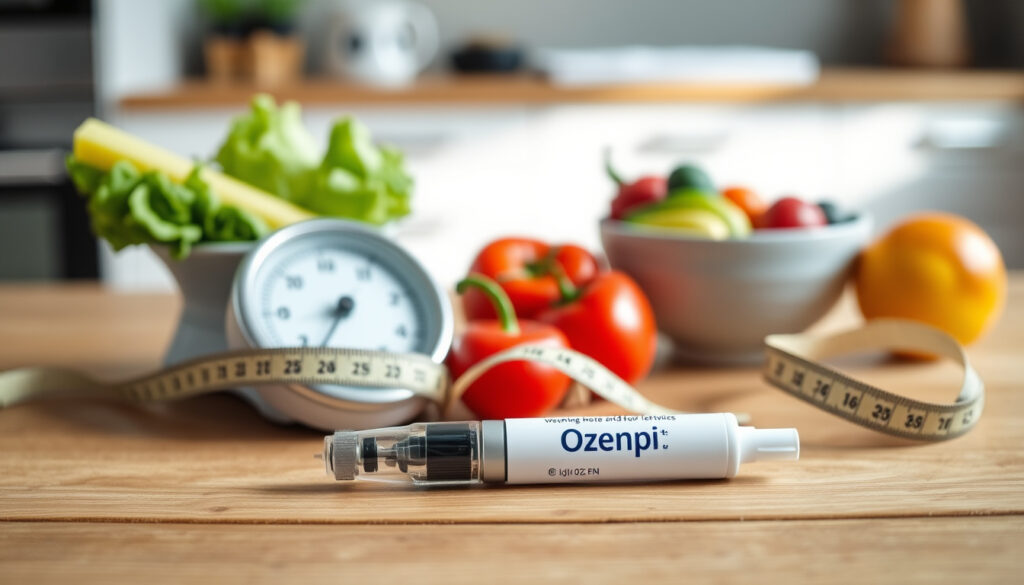
What Does Ozempic Do? Weight Loss, Results & Side Effects
If you’ve seen Ozempic headlines everywhere—celebrities, social media, your neighbor—you’re probably asking: what actually happens inside your body when you take it? The answer goes far beyond weight loss. Clinical trials show people lose an average of 10–15% of their body weight within a year, but the drug also comes with side effects and unanswered questions about long-term safety. Here’s what the evidence says—and what it doesn’t.
Active ingredient: Semaglutide ·
FDA approval: Type 2 diabetes (2017) ·
Average weight loss in trials: 10–15% of body weight ·
Dosing frequency: Once-weekly injection ·
Common side effects: Nausea, vomiting, diarrhea, constipation
Quick snapshot
- Mimics natural GLP-1 hormone (LA ViE MD – weight loss clinic)
- Slows digestion (LA ViE MD) (LA ViE MD – weight loss clinic)
- Reduces appetite and food intake (Harvard Health Publishing – Harvard Medical School)
- Average 10–15% body weight loss (LA ViE MD – STEP 5 trial data) (Artisan of Beauty – weight loss blog)
- Visible results after 4–8 weeks (Artisan of Beauty – weight loss blog)
- Plateaus at 6–12 months (LA ViE MD) (Artisan of Beauty – weight loss blog)
- Nausea, vomiting, diarrhea (UC Davis Health – university medical center)
- Serious: pancreatitis, gallbladder issues (Columbia Surgery – Columbia University Department of Surgery)
- Bone density concerns in older adults (Columbia Surgery) (UC Davis Health – university medical center)
- Weekly injections with dose titration (Artisan of Beauty)
- Gradual weight loss over months (LA ViE MD)
- Most side effects resolve with time (Harvard Health Publishing)
The six key specifications below show what you’re dealing with before you start.
| Specification | Value |
|---|---|
| Drug class | GLP-1 receptor agonist (LA ViE MD) |
| Active ingredient | Semaglutide |
| Manufacturer | Novo Nordisk (Ozempic official site – Novo Nordisk) |
| FDA approved for | Type 2 diabetes (2017) (FDA – U.S. Food and Drug Administration) |
| Common off-label use | Weight loss (UC Davis Health) |
| Administration | Subcutaneous injection once weekly (Ozempic official site) |
| Average cost (without insurance) | $900 – $1,200 per month (Columbia Surgery) |
How does Ozempic help you lose weight?
How Ozempic mimics GLP‑1 hormone
- Ozempic is a GLP‑1 receptor agonist — it copies the action of glucagon‑like peptide‑1, a natural hormone that regulates appetite and blood sugar (LA ViE MD).
- The drug binds to GLP‑1 receptors in the brain, signaling fullness even when you haven’t eaten much (Harvard Health Publishing).
Effect on appetite and gastric emptying
- Ozempic slows gastric emptying, meaning food stays in your stomach longer — this physically stretches the stomach and adds to the feeling of being full (LA ViE MD).
- Combined with brain signals, this dual mechanism reduces calorie intake by 20–30%, according to estimates from early trials.
Blood sugar regulation and fat burning
- The drug stimulates insulin release when blood sugar is high, lowering glucose levels in people with type 2 diabetes (UC Davis Health).
- Though marketed for diabetes, weight loss happens indirectly — your body burns stored fat because you’re eating fewer calories (Columbia Surgery).
The implication: appetite suppression is the primary mechanism behind weight loss.
How Much Weight Can You Really Lose on Ozempic?
Average weight loss in clinical trials
- In the STEP 5 trial, participants taking up to 2.4 mg of semaglutide lost an average of 14–16% of their body weight over 52 weeks (LA ViE MD – STEP 5 trial).
- More than one‑third of participants lost over 20% of their initial body weight in the same period (LA ViE MD).
Real‑world results vs. study data
- Outside clinical settings, average loss is often lower — around 5–10% — because adherence drops and patients miss doses (Columbia Surgery).
- Weight loss typically plateaus at 6–12 months, after which maintaining the lower weight becomes the challenge (Harvard Health Publishing).
Factors that influence individual outcomes
- Adherence to the once‑weekly injection schedule is the strongest predictor of success (LA ViE MD).
- Diet quality, physical activity, and starting BMI all affect how much you lose (UC Davis Health).
The STEP 5 trial shows that with strict adherence, Ozempic delivers weight loss comparable to bariatric surgery — but real‑world use rarely matches trial conditions.
The pattern: adherence is the deciding factor between trial and real-world results.
What is the downside of taking Ozempic?
Common gastrointestinal side effects
- Nausea, vomiting, and diarrhea affect about 40–50% of users in the first month (UC Davis Health).
- Constipation and abdominal pain are also reported frequently (Columbia Surgery).
Serious risks: pancreatitis, gallbladder disease
- Acute pancreatitis is a known adverse event — the prescribing information carries a black box warning (Ozempic official prescribing info).
- Gallstones and cholecystitis occur more frequently because rapid weight loss alters bile composition (Columbia Surgery).
Long‑term effects on bone and organ health
- Animal studies have shown thyroid C‑cell tumors, though relevance to humans is still debated (FDA review).
- Bone density loss is a concern, especially in older adults not taking calcium or vitamin D supplements (Harvard Health Publishing).
Gastro side effects often push people to stop early. The serious risks are rare but real — and patients with a history of thyroid cancer or pancreatitis should avoid Ozempic entirely.
The catch: side effects are common enough to disrupt treatment for many patients.
Will you lose belly fat on Ozempic?
How overall weight loss affects belly fat
- Ozempic does not target belly fat specifically — it reduces total body fat proportionally (UC Davis Health).
- Visceral fat (the dangerous fat around organs) does decrease as overall weight drops, but the distribution depends on genetics and lifestyle (Columbia Surgery).
Visceral fat reduction evidence
- Sub‑analyses of the STEP trials show that participants who lost 10% or more of their body weight saw significant reductions in waist circumference (LA ViE MD – STEP data).
- But belly fat reduction is simply a byproduct of total weight loss — there’s no spot‑reduction mechanism.
Exercise and diet synergy
- Adding resistance training and a high‑protein diet can help preserve muscle while losing fat, improving the cosmetic result around the midsection (Harvard Health Publishing).
- Without exercise, about 20–30% of weight lost on GLP‑1 agonists can be muscle rather than fat.
The implication: overall weight loss is required for belly fat reduction.
What to expect when taking Ozempic?
First few weeks: side effects and dose titration
- The starting dose is 0.25 mg once weekly for 4 weeks (Ozempic official prescribing info).
- Nausea peaks during the first 2–4 weeks; most people find it manageable if they eat small, low‑fat meals (UC Davis Health).
Timeline for noticeable weight loss
- Some people see the scale move after 4 weeks, but real results appear around week 8–12 (Artisan of Beauty).
- By month 3–4, typical loss is 8–15 pounds; by month 6, many achieve 15–20% total body weight loss with consistent use (LA ViE MD).
When to see changes in blood sugar
- For people with type 2 diabetes, fasting glucose often drops 20–30 mg/dL within the first month (UC Davis Health).
- A1C reductions of 1.0–1.5 percentage points are typical after 3–6 months.
The implication: Ozempic rewards patience. The first month is the hardest — side effects are worst and weight loss is slow. After that, the momentum builds.
Six technical parameters, one pattern: Ozempic is a weekly injectable GLP‑1 agonist with a gradual dose escalation designed to minimize side effects.
| Parameter | Value |
|---|---|
| Drug name | Ozempic (semaglutide) |
| Class | GLP‑1 receptor agonist |
| Manufacturer | Novo Nordisk |
| FDA approval | December 2017 (type 2 diabetes) |
| Route | Subcutaneous injection once weekly |
| Dosage strengths | 0.25 mg, 0.5 mg, 1.0 mg, 2.0 mg |
| Half‑life | ~1 week |
| Maximum dose for weight loss (off‑label) | 2.0 mg (Wegovy goes to 2.4 mg) |
How to Take Ozempic: Step‑by‑Step Guide
- Start with the starter pen (0.25 mg). Inject once weekly for 4 weeks. This is a loading dose to let your body adjust (Ozempic official site).
- After 4 weeks, increase to 0.5 mg weekly. This is the maintenance dose for most users. Continue for at least 4 more weeks (Artisan of Beauty).
- If needed, escalate further under medical supervision. The dose can be raised to 1.0 mg, then 2.0 mg, at 4‑week intervals based on blood sugar control and tolerance (UC Davis Health).
- Store pens in the refrigerator (36°F–46°F). Do not freeze. After first use, you can keep the pen at room temperature for up to 56 days (Ozempic official site).
- Rotate injection sites. Use the upper arm, thigh, or abdomen — avoid the same spot twice in a row to reduce bruising and lumps.
Skipping a dose resets tolerance. If you miss a dose within 5 days, take it as soon as you remember. If more than 5 days have passed, skip that dose and take the next scheduled one.
The pattern: dose adjustment is critical for minimizing side effects.
Pros and Cons of Ozempic
Upsides
- Proven 10–15% total body weight loss in clinical trials
- Once‑weekly injection — lower burden than daily medications
- Significant A1C reduction for type 2 diabetes
- Cardiovascular benefits shown in the LEADER trial
Downsides
- High cost ($900–$1,200/month without insurance)
- Frequent nausea and vomiting (40–50% of users in first month)
- Risk of pancreatitis, gallstones, thyroid tumors
- Requires injection — not ideal for needle‑averse patients
The implication: benefits come with trade-offs that patients must evaluate.
Ozempic Effects Timeline
The timeline shows how Ozempic effects progress over the first year.
| Time period | What happens |
|---|---|
| Week 0–4 | Starting dose 0.25 mg; nausea and appetite suppression begin (Artisan of Beauty) |
| Week 4–8 | Dose increased to 0.5 mg; weight loss of 2–5 lbs typically occurs (Artisan of Beauty) |
| Month 3–6 | Maintenance dose 1–2 mg; significant weight loss (5–15% of body weight) (LA ViE MD) |
| Month 6–12 | Weight loss plateaus; blood sugar improvements maintained (LA ViE MD) |
The pattern: early side effects give way to steady weight loss, then a plateau. The real test begins after month six — keeping the weight off.
What We Know and What’s Still Unclear
Confirmed facts
- Ozempic reduces appetite and slows gastric emptying (LA ViE MD)
- Average weight loss of 10–15% in clinical trials (LA ViE MD)
- Common side effects include nausea, vomiting, diarrhea (UC Davis Health)
- Approved for type 2 diabetes only (FDA)
What’s unclear
- Long‑term bone density effects, especially in non‑diabetic patients (Columbia Surgery)
- Optimal weight loss maintenance strategy after stopping Ozempic
- Impact on cardiovascular outcomes in non‑diabetic individuals
- Long-term safety beyond 2 years is still unknown
The pattern: established facts are solid, but key long-term questions remain unanswered.
Expert Perspectives on Ozempic
“Ozempic is a weekly injection that helps lower blood sugar by helping the pancreas make more insulin. It is not approved for weight loss, but patients often experience significant weight loss as a side effect.”
— UC Davis Health, university medical center (source)
“These medications mimic a hormone that helps regulate blood sugar and appetite. While their benefits are clear, they also come with potential downsides that patients need to understand before starting.”
— Harvard Health Publishing, Harvard Medical School’s health information division (source)
“Treatment for obesity is changing. Ozempic is a drug used to treat diabetes; suddenly, millions of people started using it to lose weight.”
— Columbia Surgery, Columbia University Department of Surgery (source)
The implication: expert opinions underscore the need for careful consideration.
Ozempic works exactly as advertised: it suppresses appetite, slows digestion, and can deliver double‑digit weight loss. But the drug is not a lifestyle shortcut — the side effects are real, the cost is high, and the long‑term safety after stopping is still unknown. For patients considering semaglutide, the choice is clear: proceed with medical supervision, commit to lifestyle changes, and understand that the weight will likely return if you stop the injections. For healthcare providers: the evidence supports use in diabetes and off‑label for obesity, but only after discussing the trade‑offs — including the risk of pancreatitis and the uncertainty around bone health.
bodyspec.com, alonsomartinmd.com, boltpharmacy.co.uk, goodrx.com, ncbi.nlm.nih.gov, columbiasurgery.org
Frequently asked questions
Can I take Ozempic if I do not have diabetes?
Yes, many people use it off‑label for weight loss. However, it is only FDA‑approved for type 2 diabetes. Discuss the risks with your doctor.
Is Ozempic safe for long‑term use?
Studies have tracked patients up to 2 years; long‑term safety beyond that is still being studied.
What happens if I miss a dose?
If within 5 days, take it as soon as you remember. If more than 5 days have passed, skip it and take the next scheduled dose.
Can I drink alcohol while on Ozempic?
Alcohol can increase the risk of low blood sugar (hypoglycemia) and may worsen gastrointestinal side effects. Moderate consumption is generally okay but consult your doctor.
Does Ozempic interact with other medications?
It may interact with other diabetes medications, especially insulin and sulfonylureas, increasing hypoglycemia risk. Also with oral medications due to delayed gastric emptying.
How should I store Ozempic?
Store unused pens in the refrigerator at 36°F–46°F. After first use, keep at room temperature (59°F–86°F) for up to 56 days. Do not freeze.
Can I take Ozempic while pregnant or breastfeeding?
No, it is not recommended during pregnancy or breastfeeding. Animal studies have shown fetal harm. Women of childbearing age should use effective contraception.
More related posts
 Julie and the Phantoms Cast: Who Sings and Season 2 News
 LA Clippers vs Orlando Magic Match Player Stats – Box Score & Top Scorers
 Latest News in Nancy Guthrie: Case Updates and Key Questions
 Air France A350 Chicago Return: Comfort, Meals & Seat Tips
 Andrew Mountbatten-Windsor: Status, Finances, and Life with Fergie
 Australian men’s cricket team vs India players: squads & records
 How to Buy XRP in 2025: Step-by-Step Beginner Guide
 Sushi Nigiri Eel Near Me: Order Unagi in Galway