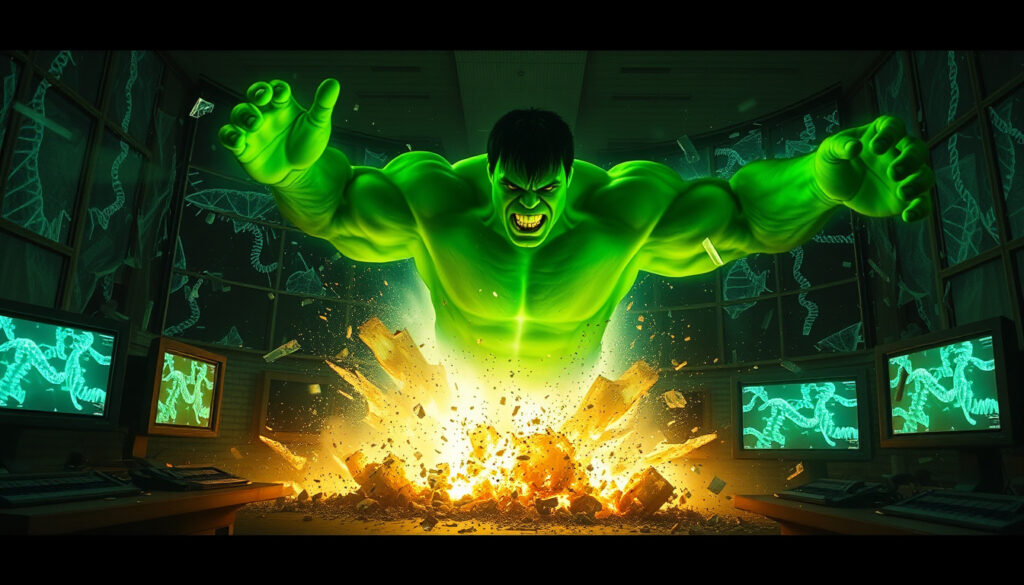
The Incredible Hulk Cast: Norton, Tyler, Roth & More (2008)
If you’ve ever wondered why the green giant on screen kept changing faces over the years, you’re not alone. The Bruce Banner recasting drama ranks among the MCU’s most talked-about casting pivots, and the 2008 film sits right at the center of it all.
Bruce Banner / Hulk: Edward Norton · Betty Ross: Liv Tyler · Emil Blonsky / Abomination: Tim Roth · General Thaddeus Ross: William Hurt · Samuel Sterns: Tim Blake Nelson
Quick snapshot
- Edward Norton played Bruce Banner in 2008 (ScreenRant)
- The Incredible Hulk was the MCU’s second film (Wikipedia)
- Exact number of actors who played Hulk across all media
- Specific contractual terms behind the casting decision
- Mark Ruffalo announced at San Diego Comic Con 2010 (ScreenRant)
- Ruffalo first appeared in The Avengers (2012) (Wikipedia)
- Hulk distribution rights remain with Universal Pictures
- No solo MCU Hulk film announced while rights issue persists
| Label | Value |
|---|---|
| Release Year | 2008 |
| Director | Louis Leterrier |
| Runtime | 114 minutes |
| Key Antagonist | Abomination (Tim Roth) |
Why was Edward Norton replaced by Mark Ruffalo?
The most common explanation for Edward Norton being recast centers on behind-the-scenes conflicts. Norton wanted more control over production, including rewriting parts of the script (ScreenRant). His editing choices reportedly caused production problems during filming.
Marvel wanted a shorter, more action-oriented film following the underperformance of Ang Lee’s Hulk in 2003 (ScreenRant). Norton, reportedly drawn to the Greek myth of Prometheus for the character, envisioned a deeper character study. These creative differences proved irreconcilable.
Creative differences
Kevin Feige ultimately chose not to bring back Edward Norton for future MCU films (Wikipedia). Interestingly, director Louis Leterrier’s original choice for Bruce Banner was Mark Ruffalo, not Norton—the role went to Norton after Ruffalo declined the initial offer.
Marvel’s decision post-Incredible Hulk
During San Diego Comic Con 2010, Marvel announced that Mark Ruffalo would step into the role, confirming the MCU would move forward without Norton (ScreenRant). Ruffalo’s first appearance as the character came in The Avengers (2012), marking a significant pivot in the franchise’s approach to the Hulk.
How many actors played The Incredible Hulk?
The Hulk persona has been portrayed by multiple actors across television and film adaptations spanning decades. From Bill Bixby’s TV portrayal in the late 1970s to Lou Ferrigno’s physical performance, the role has continuously evolved.
TV series era
The original 1977-1982 CBS series starred Bill Bixby as David Banner, with Lou Ferrigno bulked up as the Hulk through prosthetics and makeup. Ferrigno returned for 1988’s The Incredible Hulk Returns TV movie, which introduced the character’s first meeting with Thor (YouTube).
Film adaptations
Eric Bana took on the role for Ang Lee’s experimental 2003 film, which used split-screen techniques and explored the character’s psychology. Edward Norton then starred in 2008’s The Incredible Hulk, which marked the MCU’s second film and positioned the character differently within a shared universe.
MCU portrayals
Mark Ruffalo replaced Norton beginning in The Avengers (2012) and has maintained the role for over a decade, appearing in Avengers: Age of Ultron (2015), Thor: Ragnarok (2017), Avengers: Infinity War (2018), and Avengers: Endgame (2019) (Wikipedia). Lou Ferrigno also voiced the Hulk in the 2008 film, creating a direct connection between the TV and film eras.
Is The Incredible Hulk a sequel to Hulk 2003?
Despite sharing thematic DNA, The Incredible Hulk (2008) is not a direct sequel to Ang Lee’s Hulk (2003). The films exist in separate continuities, with different actors taking on the lead role.
Plot connections
While both films explore Bruce Banner’s origin and his transformation into the Hulk, the narrative approaches differ significantly. Ang Lee’s take was psychologically driven and visually experimental, while the 2008 version pursued a more straightforward action trajectory.
Cast differences
Eric Bana starred in the 2003 film as Bruce Banner, while Edward Norton took the role in 2008. This recasting signaled Marvel’s intent to recalibrate the character for the emerging MCU. William Hurt appeared as General Ross in 2008, providing continuity in the supporting cast.
Canon status
Marvel treats the 2003 Ang Lee film as existing outside the MCU’s main continuity. The Incredible Hulk (2008) became the canonical MCU version, though the character was recast before the next major appearance.
Who turned down the role of Hulk?
Multiple actors were considered for the Bruce Banner role over the years, with some passing on the part before it landed with the eventual casting choices that audiences saw on screen.
Pre-2003 considerations
During the original 2003 film’s development, various actors were rumored for the part. David Duchovny was reportedly a front-runner before the role went to Eric Bana (Wikipedia). The casting process for that film took considerable time as filmmakers searched for the right fit.
2008 casting process
For The Incredible Hulk (2008), Louis Leterrier’s original choice was Mark Ruffalo, who initially declined before Edward Norton accepted. This reversal proved significant: Ruffalo eventually took on the role permanently, and his tenure now spans over a decade of MCU appearances.
Did Bill Bixby and Lou Ferrigno get along?
The collaboration between Bill Bixby and Lou Ferrigno on the 1977-1982 television series worked because both performers prioritized the show’s success over individual recognition.
1977 TV series dynamics
Bixby played David Banner, the alter ego struggling with his transformation, while Ferrigno bulked up to become the green-skinned Hulk. The series ran for five seasons, making it one of the longest-running Hulk adaptations and establishing the character archetype that many audiences still recognize today.
Behind-the-scenes relationship
Ferrigno has spoken positively about working with Bixby in interviews, describing the experience as professionally rewarding. Their partnership demonstrated how actors and physical performers could coexist successfully when both committed to the production’s vision. Their collaboration sustained a five-season run that defined the character for a generation.
This table shows how each adaptation reflected its era’s filmmaking philosophy, from dramatic character study to blockbuster franchise fixture.
| Adaptation | Year | Actor | Approach |
|---|---|---|---|
| The Incredible Hulk (TV Series) | 1977-1982 | Bill Bixby / Lou Ferrigno | Drama with monster-of-the-week format |
| Hulk | 2003 | Eric Bana | Psychological, split-screen experimentation |
| The Incredible Hulk | 2008 | Edward Norton | Action-oriented MCU entry |
| The Avengers onwards | 2012-present | Mark Ruffalo | Ensemble comedy-drama tone |
Confirmed facts
- Edward Norton as Bruce Banner in 2008
- Liv Tyler as Betty Ross in 2008
- William Hurt as General Ross (2003 and 2008)
- Mark Ruffalo recast announced at San Diego Comic Con 2010
- Lou Ferrigno voiced Hulk in 2008 film
- The Incredible Hulk was MCU’s second film
What’s unclear
- Exact contractual terms of the Norton recast
- Whether other actors were formally considered before Ruffalo
- Specific details of Norton’s proposed script rewrites
The MCU gained a more collaborative actor in Ruffalo but lost the chance to develop a single coherent Banner arc across multiple films. For viewers, the recasting created a discontinuity that no amount of post-credit scenes could fully smooth over.
During San Diego Comic Con 2010, it was announced that Mark Ruffalo would be stepping into the role, confirming that Norton would not return and the MCU would be moving forward.
— ScreenRant (entertainment publication covering franchise developments)
The most common explanation for Edward Norton being recast as the Hulk is conflicts that were happening behind the scenes.
— ScreenRant (analysis of MCU casting decisions)
Related reading: Cast of the Black Phone 2 · Cast of After Everything
The ensemble led by Edward Norton and Liv Tyler receives a detailed Norwegian cast breakdown that echoes the film’s MCU significance and casting choices.
Frequently asked questions
Why did they change Bruce Banner to David?
The 2008 film restored the “Bruce Banner” name rather than “David Banner” (Ang Lee’s choice). This aligned the character more closely with comic book origins and the original TV series naming convention.
Why does the Hulk refer to David Bruce Banner as ‘Bob’?
In Thor: Ragnarok, Banner uses “Bob” as a mundane alias. This running gag acknowledges how the character often needs to disguise his identity when not in Hulk form.
What tragedy happened to Mark Ruffalo?
Ruffalo has not experienced a specific “tragedy” related to his casting. The question likely refers to the frustration many fans feel that his Hulk has never received a proper solo MCU film due to Universal’s distribution rights over the character.
Why did Marvel fire Edward Norton after The Incredible Hulk?
Marvel did not publicly announce a termination—instead, they simply did not offer Norton a contract for future films. Creative differences and collaboration issues with the studio drove the decision, reportedly related to Norton’s desire for script control.
Why did Mark Ruffalo never get his own Hulk movie?
Universal Pictures holds the distribution rights to the Hulk character. Even though Marvel Studios owns the character creatively, a solo MCU Hulk film would require Universal’s involvement—or a rights deal that the studios have not yet reached.
Will the Hulk get his own Marvel Studios movie?
As of now, no solo MCU Hulk film has been announced. The distribution rights issue with Universal Pictures remains unresolved, leaving audiences to enjoy the character in ensemble crossovers rather than standalone adventures.
Edward Norton’s departure left a gap that Ruffalo filled with a tenure now approaching fifteen years. The trade-off has been clear: a more consistent presence on screen, offset by the knowledge that a fully developed Banner arc might have looked very different.
More related posts
 Miami-Dade Property Search: Official Records & Tax Guide
 Friday the 13th 1980 Cast: Killer, Victims & Kevin Bacon
 Redmi Note 11 Pro 5G to Buy – Prices, Deals and Availability
 How to Roast Asparagus in the Oven: A Complete Guide
 Dan Da Dan Season 2: Release Date, Episodes & News
 Where to Watch Warriors vs Rockets on TV & Streaming
 Freida McFadden Books in Order: Complete Reading Guide
 National Ice Cream Day 2026: Date, Deals & Facts