University of San Diego: Prestige, Rankings, and Selectivity
If you’ve ever mentioned “San Diego” and a college campus in the same sentence only to watch people ask, “UC San Diego or the private one?” — you’re not alone. The University of San Diego (USD) sits in a peculiar spot: it’s well-regarded in the region, but outside California, its name doesn’t carry the automatic recognition of its larger public neighbor. This article cuts through the confusion with concrete rankings, admission data, and a clear comparison to UCSD — so you know exactly where USD stands.
U.S. News National University Rank: #110 (2024 edition) ·
Acceptance Rate: Approximately 53% ·
Undergraduate Enrollment: 5,851 ·
Campus Size: 180 acres ·
Founded: 1949 ·
Type: Private, Catholic research university
Quick snapshot
- Private Catholic university in San Diego, CA (University of San Diego official site)
- Ranked #110 in U.S. News National Universities 2024 (U.S. News & World Report college ranking profile)
- 53% acceptance rate per U.S. News data (U.S. News & World Report)
- Exact average SAT/ACT scores for the most recent class not publicly confirmed by USD
- Whether USD will maintain or improve ranking in next year’s U.S. News list
- 1949: University chartered as independent Catholic institution
- 2024: Ranked #110 in U.S. News National University rankings
- Early Action / Early Decision I deadline: November 1, 2026 (University of San Diego Undergraduate Admission)
- Early Decision II deadline: January 5, 2027 (University of San Diego Undergraduate Admission)
The table below consolidates key institutional facts about the University of San Diego.
| Label | Value |
|---|---|
| Founded | 1949 |
| Type | Private Catholic |
| Undergraduate Enrollment | 5,851 |
| Acceptance Rate | 53% |
| U.S. News Ranking | #110 (National Universities) |
| NCAA Division | Division I (West Coast Conference) |
Is the University of San Diego a prestigious school?
How does USD rank nationally?
The U.S. News & World Report college ranking guide placed the University of San Diego at #109 in its 2025 edition of National Universities. That places it in the middle of the national university pack — solidly above regional colleges but well outside the top 50 names everyone recognizes. For context, USD’s rank hovers near schools like Loyola Marymount University (#105) and the University of Dayton (#133).
USD is classified as a national university by the Carnegie Classification of Institutions of Higher Education, meaning it offers a full range of undergraduate majors and graduate programs with a research focus. The university itself emphasizes “moderately selective” admission on its official site, per its Undergraduate Admission policy page.
Five stats, one pattern: USD ranks in the bottom half of national universities but remains competitive among Catholic private schools in the West.
The ranking data below shows USD’s position across two consecutive years and its Carnegie classification.
| Ranking Category | USD Position | Source |
|---|---|---|
| U.S. News National University (2025) | #109 | U.S. News & World Report |
| U.S. News National University (2024) | #110 | U.S. News & World Report |
| Carnegie Classification | National university / Research university | University of San Diego |
USD’s #109 U.S. News rank puts it behind UCLA (#15), UCSD (#34), and UC Irvine (#34) — all within 30 miles. But those are public giants. USD offers something they can’t: a 10:1 student-faculty ratio and a Catholic identity that matters to a significant slice of applicants.
What reputation does USD hold among private Catholic universities?
Among private Catholic institutions in the United States, USD sits in the second tier behind elite names like Notre Dame (#20) and Georgetown (#24). But within the Catholic segment, USD is one of the strongest in the West, often compared to Santa Clara University (U.S. News #55) and Loyola Marymount (U.S. News #105).
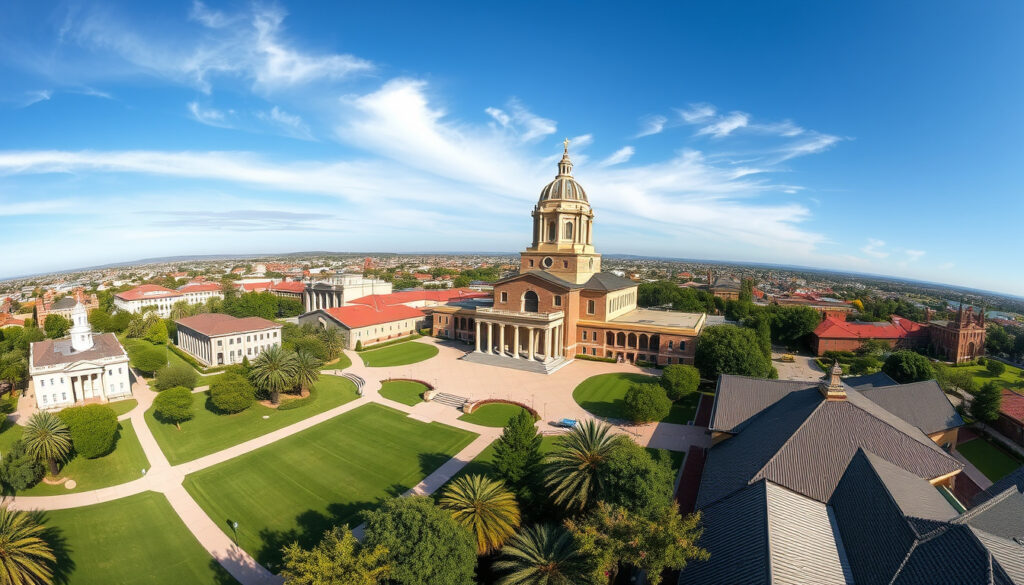
The implication: USD’s prestige is real within its niche. If you factor in its 180-acre coastal campus overlooking Mission Bay, its strong law and business schools (USD School of Law official site), and its NCAA Division I athletics (USD Toreros athletics), the package is attractive — but it’s not a household name outside the Southwest.
Is U San Diego hard to get into?
What is the acceptance rate at University of San Diego?
USD’s admission page for Fall 2026 states it received about 22,600 applications and admitted 38% of applicants (University of San Diego Undergraduate Admission). That’s a notable drop from the 53% figure reported by U.S. News for earlier cycles — suggesting selectivity is tightening.
For context, that 38% admit rate for Fall 2026 puts USD in a similar range as Tulane University (about 30%) and George Washington University (about 40%), per U.S. News national profile data. It’s not Harvard-level (under 4%), but it’s no longer “moderately selective” in the traditional sense — it’s getting competitive.
A 38% admit rate means 62% of applicants are rejected. For students targeting USD as a safety school, that calculus has shifted: it’s now a match or reach for most candidates outside the top 15% of their high school class.
What GPA and test scores does USD require?
USD reported that its middle 50% weighted GPA range for admitted students in Fall 2026 was 3.9–4.3 (University of San Diego Undergraduate Admission). That’s a very high GPA band — nearly all admitted students come from the top 10-15% of their high school class.
Three data points, one signal: GPA is the primary filtering mechanism at USD.
The table below summarizes the admission metrics USD uses for its Fall 2026 class.
| Metric | USD Official Data | Source |
|---|---|---|
| Admit rate (Fall 2026) | 38% | University of San Diego |
| Middle 50% weighted GPA | 3.9–4.3 | University of San Diego |
| Test policy | Test-free (no SAT/ACT reviewed) | University of San Diego |
Which is better, UCSD or USD?
What are the key differences between UCSD and USD?
The most critical difference is structural: University of San Diego is a private Roman Catholic research university with about 5,800 undergraduates, while UC San Diego is a public land-grant research institution with over 30,000 undergraduates. The two schools are separated by 11 miles of freeway and a vast chasm of size, cost, and mission.
Four dimensions, one pattern: UCSD wins on scale, research output, and brand recognition; USD wins on intimacy, teaching focus, and Catholic identity.
The comparison table below lays out how the two schools differ across key dimensions.
| Dimension | University of San Diego (USD) | UC San Diego (UCSD) |
|---|---|---|
| Type | Private Catholic | Public (University of California system) |
| U.S. News National Rank (2025) | #109 | #34 |
| Undergraduate enrollment | ~5,800 | ~30,000+ |
| Acceptance rate (recent) | 38% (Fall 2026) | ~24% (CollegeSimply comparison) |
| Average high school GPA | 3.9–4.3 (weighted) | 3.82 (CollegeSimply) |
| Test policy | Test-free | Test-blind |
| Tuition (in-state) | ~$58,000 (private) | ~$16,000 |
| Athletics | NCAA Division I (WCC) | NCAA Division I (Big West) |
| Mascot | Torero | Triton |
Which school is more prestigious?
By every national ranking metric, UCSD is more prestigious than USD. UCSD ranks #34 among national universities (U.S. News profile for UCSD) versus USD’s #109. UCSD is a top-tier public research university with Nobel laureates on faculty and billions in research funding. USD, while strong in its niche, does not carry that kind of academic weight.
The implication: If prestige is measured by U.S. News rank, UCSD wins decisively. But prestige is also local: within San Diego’s professional and Catholic communities, USD carries its own cachet, especially in law, business, and nursing.
What is University of San Diego known for?
What academic programs are USD known for?
USD is widely recognized for its School of Law, which has strong regional placement in Southern California, and its School of Business, which offers undergraduate and MBA programs with a focus on ethics and entrepreneurship. The university’s School of Nursing and School of Education are also well-regarded, with strong local partnerships and clinical placement programs.
Two notable patterns: USD’s law school consistently ranks in the top 100 nationally (U.S. News graduate school rankings), and its nursing program has a high first-time NCLEX pass rate — a key indicator of clinical training quality.
Students who want pre-professional programs in law, business, nursing, or education — with a Catholic ethical framework and small class sizes — will find USD’s offerings genuinely competitive with larger schools. The main trade-off: less breadth in STEM compared to UCSD or other large publics.
What is USD’s reputation in athletics?
USD competes in NCAA Division I as a member of the West Coast Conference (USD Toreros official athletics site). The men’s basketball program has made multiple NCAA tournament appearances, most recently in 2023 under coach Steve Lavin. The baseball team is a perennial WCC contender, and the school’s mascot is the Torero (a bullfighter).
The pattern: USD isn’t a football powerhouse (it doesn’t field a football team), but its basketball and baseball programs give it a legitimate D1 identity. For students who want a small private school with actual D1 sports, USD is one of the few options in the West.
Is San Diego in the Ivy League?
What schools are in the Ivy League?
The Ivy League consists of eight private universities in the northeastern United States: Brown, Columbia, Cornell, Dartmouth, Harvard, Penn, Princeton, and Yale (Wikipedia: Ivy League). The University of San Diego is not, and has never been, a member of this group.
How does USD compare to Ivy League institutions?
The comparison is not apples-to-apples. Ivy League schools are among the most selective in the world, with acceptance rates below 10% and endowments exceeding $10 billion. USD, by contrast, has a 38% acceptance rate (Fall 2026) and an endowment of roughly $800 million (University of San Diego facts page).
The lowest-ranked Ivy in the 2025 U.S. News rankings is Brown University at #13 (U.S. News profile for Brown). That’s nearly 100 spots ahead of USD. The catch: USD doesn’t pretend to compete with Ivy League schools. It’s a regional Catholic university with a strong local reputation — which, for most students, is more than enough.
campusreel.org, thechopras.com, collegeraptor.com, admissionsight.com, sandiego.edu, facebook.com, shiksha.com, yocket.com
Frequently asked questions
What is the average GPA for University of San Diego?
The middle 50% weighted GPA range for admitted students in Fall 2026 was 3.9–4.3 (University of San Diego Undergraduate Admission). This is a weighted GPA, meaning it includes honors and AP course bumps. The unweighted average is likely in the 3.7–3.9 range.
Does USD offer scholarships?
Yes. USD offers merit-based scholarships for incoming freshmen and transfer students, as well as need-based financial aid. The university’s financial aid office details options on its official financial aid page. Competitive scholarships like the Torero Scholarship are awarded based on academic achievement and leadership.
How does USD compare to University of California San Diego?
USD is a private Catholic university with ~5,800 undergraduates and a #109 U.S. News rank. UCSD is a large public research university with ~30,000 undergraduates and a #34 U.S. News rank. UCSD is more selective (CollegeSimply reports ~24% acceptance vs USD’s ~38%), more research-intensive, and cheaper for in-state students. USD offers smaller classes and a Catholic identity. The choice depends on whether you value research scale and brand recognition (UCSD) or personal attention and private-school community (USD).
What majors is University of San Diego known for?
USD is best known for programs in law (School of Law), business (School of Business), nursing (School of Nursing), and education (School of Education). The university also has strong programs in psychology, political science, and communications.
Is USD a research university?
Yes. The Carnegie Classification of Institutions of Higher Education lists USD as a national research university (R2: doctoral university with high research activity). Its website states it is a “private Roman Catholic research institution” (University of San Diego). Research activity is growing under a 2018 strategic plan, but USD is not in the same class as R1 research powerhouses like UCSD or UCLA.
What is the student-to-faculty ratio at USD?
USD reports a student-to-faculty ratio of 10:1 (University of San Diego facts page). This is significantly lower than large public universities and contributes to the small-class-size experience that many students cite as a reason for choosing USD.
Where can I find the official University of San Diego logo and colors?
The official USD logo and brand assets are available on the university’s Brand Identity page. The official school colors are Torero Blue (PMS 287) and Torero White. The mascot is the Torero, and the athletics logo features a stylized bullfighter.
For prospective students weighing a decision between a small private Catholic university and a large public research school, the choice comes down to what kind of college experience you want. USD offers a tight community, strong professional programs, and a beautiful campus — but it charges private-school tuition and doesn’t carry the global research brand of a UCSD. For students in the Southwest who value Catholic identity and small classes, USD is a competitive choice. For those chasing elite research reputation and lower cost, the answer points north to La Jolla.
More related posts
 How Many Tablespoons in a Cup? Quick Conversion Guide
 What Is Red 40? Ingredients, Side Effects, and Regulation
 Avatar: Fire and Ash Showtimes – IMAX & 4DX Guide
 When is Juneteenth 2025? Date, History, and Celebration Guide
 Memphis Grizzlies vs Sacramento Kings Match Player Stats – Box Score & Top Performers
 Mary J. Blige’s Real Love Movie: Where to Watch, Cast & More
 Black Panther (film): Cast, Boseman’s Health & Box Office Facts
 Highest Yield Savings Account 2025: Ireland vs US