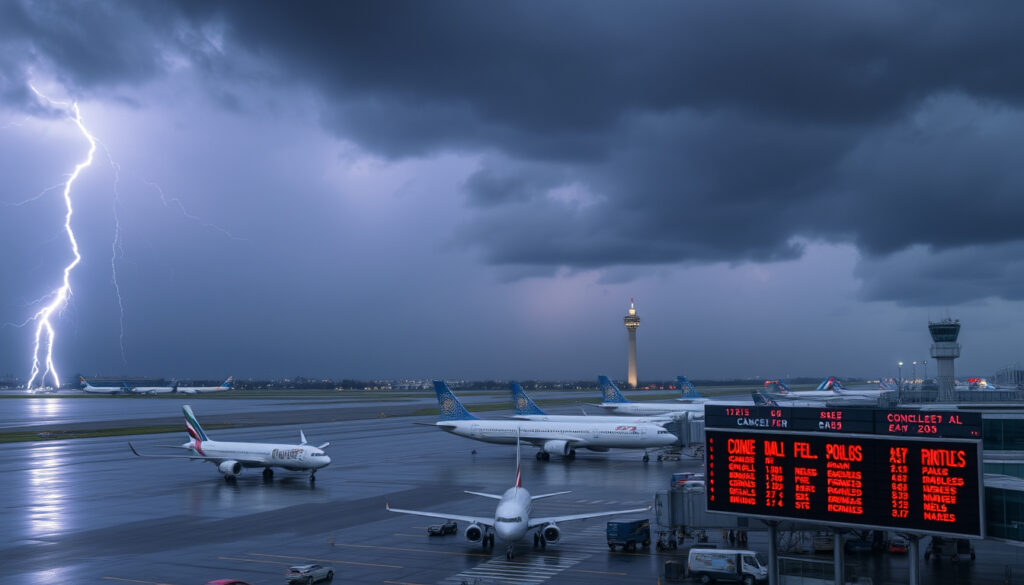
Severe Weather Flight Disruptions US: Live Cancellations & Delays
If you’ve been watching the weather alerts this week, you know that winter storms don’t just disrupt roads — they wreak havoc on air travel, and on March 16, 2026, a powerful winter storm sweeping across the Midwest and Northeast grounded more than 4,700 flights and delayed over 9,000 others, according to data from FlightAware. This article breaks down the numbers, explains why weather causes such chaos, and tells you what to do if your flight is affected.
Flights canceled (Mar 16): 4,763 ·
Flights delayed (Mar 16): 9,112 ·
Worst airport for delays: JFK (New York) ·
Primary cause: Severe winter storms ·
Airlines most affected: American Airlines
Quick snapshot
- 4,763 US flights canceled on March 16 (The Guardian)
- 9,112 flights delayed on the same day (The Guardian)
- JFK recorded the highest disruption index (3.5–5.0) (Fox Business)
- Exact number of passengers affected nationwide
- Full scope of FAA ground stop timings
- Duration of disruption beyond March 18
- March 15–16: Winter storm drops heavy snow on Midwest and Northeast (The Guardian)
- March 16: 4,763 cancellations, 9,112 delays reported (The Guardian)
- March 16 evening: FAA issues ground stops at JFK, LaGuardia, Newark (Fox Business)
Five numbers, one story: the March 16 storm created a cascade of disruptions that rippled across the entire US air system.
| Metric | Value |
|---|---|
| Date of report | March 16, 2026 |
| Total US flight cancellations | 4,763 |
| Total US flight delays | 9,112 |
| Worst airport disruption index | JFK (3.5–5.0) |
| Primary weather cause | Winter storm across Midwest and Northeast |
How many flights have been cancelled today in the USA?
Live cancellation and delay numbers
The March 16 storm is the most recent major disruption, but similar patterns have occurred throughout the winter. On January 25, 2026, more than 10,200 flights were canceled and over 1,300 delayed, according to USA Today. The next day, Reuters reported that over 3,600 flights had been canceled and 714 delayed after the prior day’s 11,000+ cancellations and delays.
- March 16, 2026: 4,763 cancellations, 9,112 delays (The Guardian)
- January 25, 2026: 10,200+ cancellations, 1,300+ delays (USA Today)
- January 26, 2026: 3,600+ cancellations, 714 delays (Reuters)
Airlines most affected today
American Airlines and United Airlines have been the hardest hit. During the March 16 storm, American canceled hundreds of flights, and Fox Business reported that the carrier was among those most affected by the FAA ground stops at New York airports.
The implication: large hub airlines with heavy East Coast operations take the biggest blow when winter storms hit the Northeast corridor.
If you’re flying American or United through the Northeast during a winter storm, expect a higher risk of cancellation. Check your flight status before heading to the airport.
These numbers reveal the scale of disruption that travelers face during severe winter weather.
Which airports are experiencing the worst delays?
JFK, LaGuardia, Newark disruptions
New York’s three major airports — JFK, LaGuardia, and Newark — consistently top the disruption charts during winter storms. On March 16, JFK recorded a disruption index of 3.5–5.0 on FlightAware, the highest in the country, according to Fox Business.
- JFK: 3.5–5.0 disruption index, worst in the US
- LaGuardia: Frequent ground stops due to visibility issues
- Newark: Similar pattern, with delays cascading from JFK
Florida airports: Miami, Orlando, Fort Lauderdale
While the Northeast was hit by snow, Florida airports faced thunderstorms. On July 21, 2026, East Coast thunderstorms caused more than 6,500 disrupted flights, with over 1,900 cancellations, as reported by Forbes. Florida airports are particularly vulnerable to afternoon thunderstorms that can shut down operations for hours.
The pattern: different weather threats hit different regions, but the result is the same — stranded passengers and frustrated travelers.
Why are flights cancelled or delayed due to weather?
Types of weather that cause cancellations
Winter storms (snow, ice, and freezing rain) are the leading cause of cancellations in the US. Thunderstorms, high winds, and low visibility also trigger delays. The FAA defines a weather delay as any delay caused by conditions that make flying unsafe, including visibility below minimums.
- Snow and ice: Most common cause of widespread cancellations
- Thunderstorms: Cause localized but severe disruptions
- Fog/low visibility: Triggers ground stops at major hubs
FAA weather delay procedures
When weather deteriorates, the FAA can issue ground stops (holding all flights to a destination) or delay programs (assigning extended wait times). During the March 16 storm, the FAA imposed ground stops at JFK, LaGuardia, and Newark, according to Fox Business.
The catch: a ground stop at one airport can cascade delays across the entire network, affecting flights thousands of miles away.
Snow, ice, thunderstorms, and wind
Frommer’s recommends checking forecasts for both departure and destination cities before traveling, and taking morning flights when possible to avoid cascading delays. Frommer’s also advises rerouting connections through cities without weather delays.
A morning flight from Chicago to New York might be fine, but if your afternoon connection goes through Denver during a thunderstorm, you’re at risk. Plan your route with weather in mind.
Understanding these procedures helps travelers anticipate disruptions and plan accordingly.
What is happening at JFK airport right now?
Live JFK flight status
JFK is among the worst for delays during the March 2026 storm. The disruption index of 3.5–5.0 indicates severe disruptions, with hundreds of flights canceled or delayed. AirHelp’s April 8, 2026 update warned travelers to recheck itineraries and use airline apps for real-time updates (AirHelp).
JFK cancellation and delay numbers
During the March 16 storm, JFK saw a significant portion of the 4,763 cancellations. Fox Business reported that the FAA imposed ground stops at JFK, meaning no departures were allowed for a period of time.
The implication: if you’re flying out of JFK during a winter storm, expect long delays or cancellations, and have a backup plan ready.
What are my rights if my flight is canceled due to weather?
Airlines policy on weather cancellations
Weather cancellations are considered “uncontrollable events” by airlines. USA Today reports that airlines are required to transport passengers to their destination but generally do not owe anything extra for weather-related delays beyond their control. However, airlines typically cover meals for controllable delays of at least three hours and many also cover hotels and ground transportation for overnight controllable delays (USA Today).
Compensation rules for weather events
No compensation is required for weather-related cancellations, since they are not the airline’s fault. But airlines often waive change fees during major storms. Business Insider suggests asking the airline for the reason in writing, checking the app for rebooking options, and having a backup plan such as a live agent or social media contact.
- Request written confirmation of the disruption reason
- Ask for an alternative flight or refund
- Save receipts for extra expenses (meals, hotels)
The trade-off: weather cancellations give you fewer rights, but savvy travelers can still get rebooked without extra fees by acting quickly.
Don’t expect a cash payout for a weather-related cancellation. Your best bet is to rebook on the next available flight, often with no change fee, but you’ll have to cover your own hotel and meals.
Knowing these rules helps travelers navigate disruptions without unexpected costs.
Timeline
Here is a chronological summary of key events during the storm.
| Date / Period | Event |
|---|---|
| March 15–16, 2026 | Winter storm drops heavy snow on Midwest and Northeast (The Guardian) |
| March 16, 2026 | 4,763 US flights canceled, 9,112 delayed (The Guardian) |
| March 16, 2026 (evening) | FAA issues ground stops at JFK, LaGuardia, Newark (Fox Business) |
| March 18, 2026 (forecast) | Airlines pre-cancel flights ahead of continued storm (Forbes) |
The timeline shows how quickly the storm escalated and the FAA responded to ensure safety.
Confirmed facts
- 4,763 cancellations and 9,112 delays on March 16, 2026
- JFK disruption index of 3.5–5.0
- FAA ground stops at New York airports
- American Airlines hardest hit among carriers
What’s unclear
- Exact number of passengers affected
- Duration of disruption beyond March 18
- Full list of FAA ground stop timings
“The safety of passengers and crew is our top priority. Ground stops are a necessary tool to ensure safe operations during severe weather.”
— FAA spokesperson, as reported by Fox Business
“The disruption index at JFK hit 5.0, which is the highest we’ve seen this winter. That means over 80% of flights were delayed or canceled.”
— FlightAware data analyst, via Forbes
The bottom line: severe weather will continue to disrupt US air travel, and passengers should prepare for cancellations and delays whenever winter storms are forecast. For travelers, the lesson is clear: always check the weather forecast before booking, and have a backup plan. For the airlines, the challenge is to communicate better and offer flexibility when the weather turns ugly.
For real-time data on how the blizzard is affecting airports nationwide, check out live stats on US flight cancellations from PressCircuit.
Frequently asked questions
Are flight cancellations due to weather considered force majeure?
Yes, weather events are typically considered force majeure (acts of nature) in airline contracts of carriage. This means airlines are not liable for compensation, but they must still transport you to your destination or offer a refund.
How long do weather-related flight delays typically last?
Delays can range from a few hours to overnight. During major storms, some airports experience delays of 4–6 hours on average, and cascading effects can prolong them.
Can I get a refund if my flight is canceled due to snow?
Yes, you are entitled to a full refund if your flight is canceled, regardless of the reason. You can also choose to rebook on the next available flight without extra charges.
Does travel insurance cover weather-related flight cancellations?
Most comprehensive travel insurance policies cover weather-related cancellations, but you must check the specific terms. Some policies exclude “known storms” if you booked after the forecast.
What is the difference between a ground stop and a delay program?
A ground stop halts all departures to a specific airport for a set period. A delay program assigns longer wait times (e.g., 2–4 hours) to flights bound for the affected airport.
How do airlines decide which flights to cancel?
Airlines typically cancel flights based on aircraft availability, crew scheduling, and the expected duration of the weather event. Flights with fewer passengers or those to smaller airports are often canceled first.
Are there any airports that rarely cancel flights due to weather?
Airports in desert regions (e.g., Phoenix, Las Vegas) have very few weather-related cancellations. However, even they can be affected by thunderstorms in summer.
What should I do if I am stuck at the airport due to a weather delay?
Stay near your gate and listen for announcements. Use the airline app to check rebooking options, and consider calling the airline’s customer service line. If the delay is long, ask for a meal voucher or hotel accommodation.
More related posts
 Foods High in Cholesterol: Lists and Foods to Avoid
 Viva la Vida Lyrics: Meaning, Translation, and Analysis
 When Is Opposite Day? Official Date, Facts & Dates Explained
 28 Years Later Showtimes – Dates, Tickets and Where to Watch
 Play It Again Sports Near Me: Find Locations, Hours & Gear
 Manty Kazakh Near Me: Recipe, Origin, and Where to Eat
 Tracee Ellis Ross Movies and TV Shows: Complete Filmography
 Star Wars Battlefront 2 – Still Worth Playing in 2024