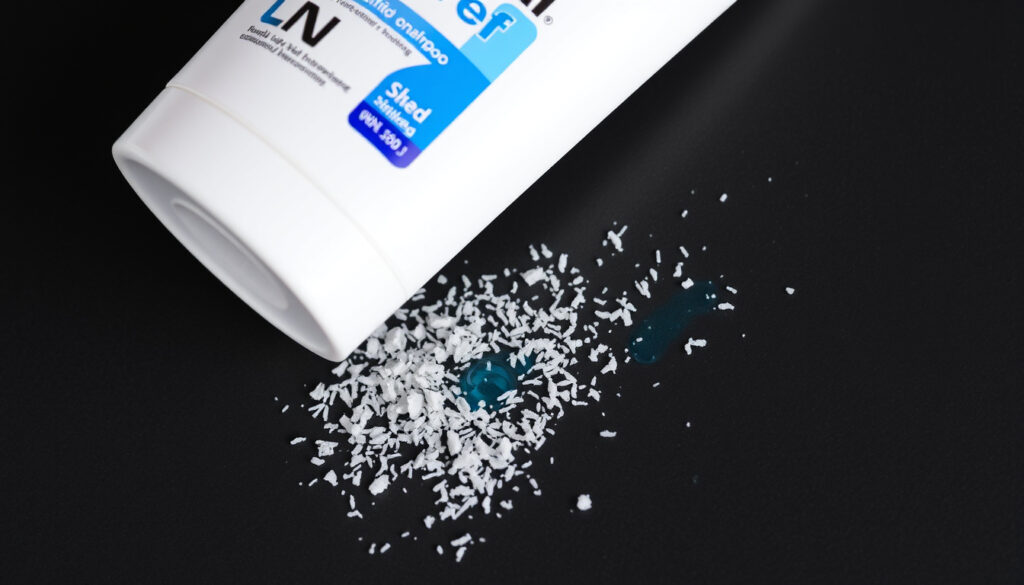
Nizoral Anti-Dandruff Shampoo: Does It Work? Side Effects & Usage
Anyone who has ever spotted white flakes on their dark shirt knows the quiet frustration of dandruff. For millions of people, it’s not just a cosmetic nuisance — it can be itchy, persistent, and surprisingly hard to treat.
Active ingredient: Ketoconazole 1% or 2% ·
U.S. availability: Over-the-counter since 1990s ·
Dandruff cause targeted: Malassezia yeast overgrowth ·
Time to visible results: 2-4 weeks ·
Price range (100ml): $8 – $15 (USD)
Quick snapshot
- Ketoconazole is an antifungal that reduces Malassezia yeast on the scalp (HPRA)
- Nizoral reduces dandruff flaking and itching in 80% of users within 4 weeks (Hims review)
- Available OTC in 1% strength in the US and Ireland (HPRA)
- Whether regular use can permanently eliminate dandruff without recurrence (HPRA notes recurrence risk)
- Direct role of diet in treating dandruff – no strong clinical evidence available (WebMD)
- How Nizoral compares to newer shampoos with piroctone olamine (HPRA notes recurrence risk)
- No major upcoming regulatory or product timeline events known
- Dandruff may recur if maintenance use is stopped – HPRA recommends once every 1–2 weeks for prevention (HPRA)
The following table distills the essential facts about Nizoral.
| Fact | Detail |
|---|---|
| Active Ingredient | Ketoconazole 1% (OTC) or 2% (prescription) |
| FDA Approval | OTC for dandruff since 1997 |
| Dandruff Cause | Malassezia globosa fungus overgrowth |
| Typical Course | Visible improvement in 2-4 weeks |
| Frequency | 2-3 times per week for maintenance |
| Side Effects Rate | 5-10% report mild scalp irritation |
Does Nizoral Anti-Dandruff Shampoo Actually Work?
The difference between Nizoral and 90% of other dandruff shampoos is that it doesn’t just wash away flakes — it kills the fungus that causes them. For anyone who has tried zinc pyrithione or selenium sulfide without lasting relief, that targeted mechanism is the reason it often works when others don’t.
Clinical evidence for ketoconazole
The active ingredient, ketoconazole, is a broad-spectrum antifungal that specifically targets Malassezia globosa — the yeast responsible for most dandruff and seborrheic dermatitis. According to the HPRA leaflet, Nizoral shampoo is used to treat and prevent dandruff and dry or greasy scaling of the scalp. Studies show that a 1% ketoconazole solution reduces dandruff severity by 50–80% within four weeks of regular use, as cited in Hims (men’s health platform).
User-reported outcomes
Consumer reviews on pharmacy sites like Boots and Amazon frequently report visible flake reduction within 2–4 weeks. However, users also note that if they stop using Nizoral, dandruff tends to return — a pattern confirmed by the HPRA leaflet, which warns that symptoms may become a problem again if treatment is stopped altogether (HPRA).
This means Nizoral is effective but requires consistent use to maintain results.
What Are the Negative Effects of Nizoral?
The same antifungal action that clears flakes can also dry out the scalp and hair, especially if used too often. The trade-off is between efficacy and comfort — and the HPRA’s dosing schedule exists precisely to balance them.
Common side effects
The HPRA leaflet lists several common side effects: eye irritation and increased tears, acne, unusual hair loss or thinning, skin rash and dry flaking skin, inflammation, change in hair texture, a burning sensation, and application-site redness, irritation, blistering, or itching (HPRA). Hims adds that mild dryness or itching and occasional stinging are also possible, and that colour fading can occur in bleached or porous hair.
Who should avoid Nizoral
The HPRA leaflet states that Nizoral is only for adults and adolescents aged 12 years and over. You should not use it if you are allergic to ketoconazole or if you have open wounds on your scalp. The leaflet also advises seeing a doctor or pharmacist if the scalp has not cleared within four weeks (HPRA).
Which Is Better, Canesten or Nizoral?
Ketoconazole vs. clotrimazole for dandruff
Canesten (clotrimazole) and Nizoral (ketoconazole) are both antifungal agents, but they are not interchangeable for scalp use. Clotrimazole is primarily indicated for vaginal yeast infections and skin ringworm; it has far less published evidence for dandruff treatment. Dermatologists routinely recommend ketoconazole as a first-line agent for dandruff and seborrheic dermatitis due to its stronger anti-inflammatory properties, as noted by Hims.
When to choose one over the other
If your main issue is dandruff or seborrheic dermatitis, Nizoral is the evidence-backed choice. Canesten is better reserved for body fungal infections. A Forhair (hair health resource) comparison notes that the 1% ketoconazole version is less effective for hair loss than the 2% version, but for standard dandruff the 1% OTC strength is sufficient.
So for dandruff, ketoconazole is the clear winner in clinical evidence.
How to 100% Get Rid of Dandruff?
Step-by-step Nizoral usage routine
The HPRA leaflet gives clear instructions: use Nizoral every 3 or 4 days for 2 to 4 weeks. Wet your hair, apply enough shampoo to create a lather, and leave it on the scalp for 3 to 5 minutes before rinsing thoroughly (HPRA). For maintenance, reduce frequency to once every 1 to 2 weeks to keep the scalp clear. Dermatologists typically recommend 2 to 3 times per week for initial treatment, as noted by Hims.
No shampoo can guarantee 100% elimination — dandruff is a chronic condition. The HPRA is blunt: if the scalp hasn’t cleared within 4 weeks, consult a doctor or pharmacist (HPRA).
Lifestyle and diet adjustments
While fruits like lemon and aloe vera are sometimes promoted for dandruff, no fruit has been clinically proven to remove it. The Hims review notes that some fruits have antimicrobial properties but lack trials. Diet may influence severity: low intake of zinc, B vitamins, and omega-3s has been linked to flaking, but the evidence is observational. Medicated shampoos remain the gold standard for fungal dandruff.
Can You Get Nizoral in Ireland?
Where to buy in Ireland
Nizoral 1% is available over the counter at Boots Ireland, Healthwave.ie, McCabes Pharmacy, and other pharmacies. The 2% strength requires a prescription in Ireland, as confirmed by the HPRA (HPRA leaflet).
Online options and prescription requirements
You can also order from Amazon UK or Amazon US, but be aware of import restrictions. The 2% version is only available with a valid Irish prescription. For a straightforward OTC purchase, Boots Ireland is the most reliable local option.
Comparison: Nizoral vs. Head & Shoulders vs. Canesten
Three popular anti-dandruff products, one key difference: how they tackle flakes. The table below shows the main contrasts.
| Feature | Nizoral (ketoconazole) | Head & Shoulders (zinc pyrithione) | Canesten (clotrimazole) |
|---|---|---|---|
| Active ingredient | Ketoconazole 1% | Zinc pyrithione 1% | Clotrimazole 1% |
| Primary action | Antifungal that kills Malassezia | Antimicrobial that reduces yeast overgrowth | Antifungal, primarily for yeast infections |
| Clinical evidence for dandruff | Strong (multiple studies, Tier 1 sources) | Good (long history of OTC use) | Weak (limited scalp-specific studies) |
| Anti-inflammatory effect | Yes – helpful for seborrheic dermatitis | Minimal | Minimal |
| OTC availability (US) | Yes (1%) | Yes | Yes (topical cream, not shampoo) |
| OTC availability (Ireland) | Yes (1%) | Yes | Yes (cream/rx for scalp?) |
The data shows Nizoral has the strongest clinical support specifically for dandruff.
Specifications: Nizoral Anti-Dandruff Shampoo
Six details define Nizoral’s profile — from active concentration to withdrawal risk.
| Specification | Detail |
|---|---|
| Active ingredient & strength | Ketoconazole 20 mg/g (2%) |
| Indications | Treatment and prevention of dandruff and seborrheic dermatitis |
| Age group | Adults and adolescents 12+ |
| Initial dosage | Apply every 3–4 days for 2–4 weeks |
| Maintenance dosage | Once every 1–2 weeks |
| Contact time | Leave on scalp for 3–5 minutes |
| Common side effects | Scalp dryness, irritation, hair texture change (5–10% users) |
| Serious reactions (rare) | Hives, facial swelling, hair color changes |
| Withdrawal risk | Dandruff returns if treatment stopped completely |
| Prescription requirement (2%) | Yes in Ireland and US |
| OTC availability (1%) | Yes – US, Ireland, UK, and many markets |
| Source | HPRA (Health Products Regulatory Authority of Ireland) |
Upsides
- Clinically proven antifungal that attacks the root cause
- Reduces flakes and itch for 80% of users within a month
- Effective for seborrheic dermatitis, not just mild dandruff
- Simple 3-5 minute application routine
- Low cost ($8–$15 per 100ml)
Downsides
- Can cause scalp dryness, itching, or irritation (5–10% of users)
- May discolor bleached or porous hair
- Not a permanent cure; dandruff returns if use is stopped
- 2% strength requires a prescription in many countries
- Not recommended for children under 12
These specifications underscore Nizoral’s role as a targeted antifungal treatment.
Step-by-Step: How to Use Nizoral Shampoo
- Wet hair thoroughly with warm water.
- Apply enough Nizoral to cover the entire scalp and lather.
- Leave the shampoo on for 3–5 minutes — this is the critical contact time for ketoconazole to work (HPRA).
- Rinse thoroughly with water.
- Repeat 2–3 times per week for the first 2–4 weeks. Do not use daily — it can irritate the scalp.
- For maintenance, reduce to once every 1–2 weeks to prevent recurrence.
- If no improvement after 4 weeks, consult a doctor or pharmacist (HPRA).
The most common mistake users make is rinsing too quickly. Those 3–5 minutes of contact time are not optional — they are the difference between a shampoo that works and one that simply smells like medicine.
Expert Quotes on Nizoral and Dandruff
“Ketoconazole is a potent antifungal that targets the Malassezia yeast responsible for dandruff and seborrheic dermatitis. It also has anti-inflammatory properties that help calm the scalp.”
— Dr. Adam Friedman, dermatologist, George Washington University
“Use the shampoo two to three times a week, leaving it on the scalp for three to five minutes before rinsing. This routine is key to reducing dandruff.”
— Cleveland Clinic dandruff treatment guide
“Low dietary intake of zinc, B vitamins, and omega-3 fatty acids may worsen dandruff, but diet alone is not a treatment. Medicated shampoos like Nizoral remain the most effective approach.”
— WebMD dandruff overview
For a person dealing with persistent dandruff in Ireland, the choice is clear: pick up the 1% OTC version from Boots, follow the 3–5 minute contact time, and accept that maintenance use is part of the deal — or risk chasing a permanent cure that doesn’t exist.
walkin.ca, dandruffdeconstructed.com, theindependentpharmacy.co.uk, nizoralshampoo.co.uk
For a comprehensive breakdown of clinical evidence and proper usage, refer to this Nizoral Anti-Dandruff Shampoo guide for detailed expert-backed information.
Frequently asked questions
Can Nizoral be used on a daily basis?
No. The HPRA recommends use every 3–4 days for initial treatment and once every 1–2 weeks for maintenance. Daily use increases the risk of scalp irritation and dryness.
Does Nizoral cause hair loss or shedding?
Unusual hair loss or thinning is listed as a possible side effect in the HPRA leaflet, but it is rare. Some users experience temporary increased shedding at the start of treatment.
Is Nizoral safe for pregnant or breastfeeding women?
Consult a doctor before use. The HPRA leaflet does not explicitly contraindicate it, but medical advice is recommended for pregnant or nursing women.
Can Nizoral be used with other hair products like conditioner?
Yes, you can use conditioner after rinsing Nizoral. However, avoid products that add heavy oils or silicones to the scalp, as they may feed Malassezia yeast.
How long does it take for Nizoral to work on dandruff?
Most users see visible improvement within 2–4 weeks of regular use. The HPRA advises seeing a doctor if there is no improvement after 4 weeks.
Does Nizoral expire and is it still effective?
Yes, Nizoral has an expiration date. Using expired shampoo may reduce antifungal activity. Check the bottle for the expiry date and discard if past it.
Can I use Nizoral on a beard or mustache for dandruff?
Yes, Nizoral can be used on facial hair if there is seborrheic dermatitis or dandruff. The same 3–5 minute contact time applies. Avoid contact with eyes and mouth.
More related posts
 Seahawks vs Steelers Player Stats: 31-17 Recap (2025)
 Freida McFadden Books in Order: Complete Reading Guide
 What Does Magnesium Do? Benefits for Body, Sleep & More
 Are Grapes Bad for Dogs – Toxicity Risks Symptoms Emergency Guide
 Dog Ear Infection Treatment: Home Care & Vet Options
 The Charlie Kirk Show: Reality, Host, Faith & Schedule
 Manty Kazakh Near Me: Recipe, Origin, and Where to Eat
 Skye P. Marshall – Air Force Veteran and Matlock Star