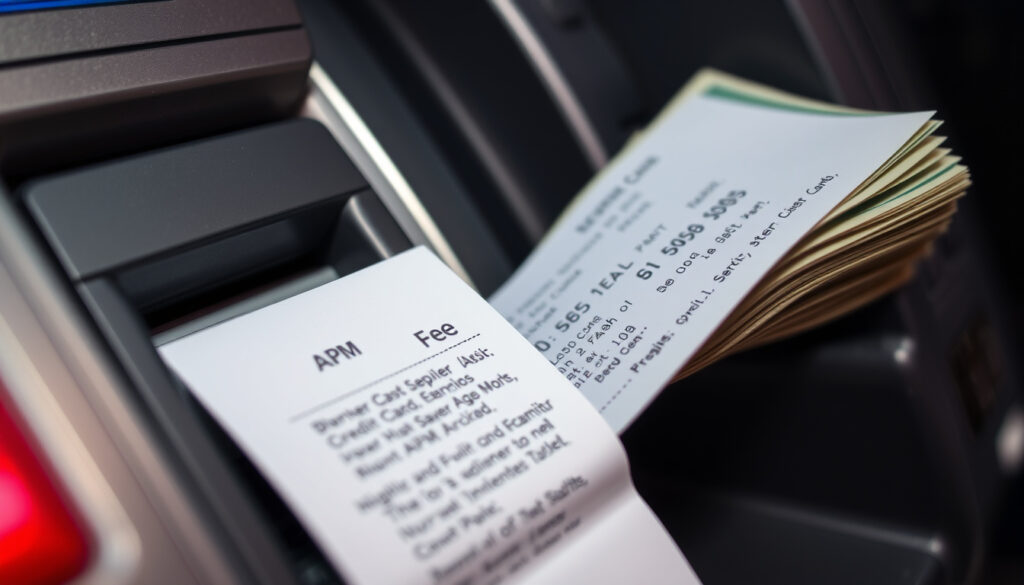
What Is a Cash Advance? Fees, APR & Credit Impact
Picture this: you’re short on cash, the ATM is right there, and your credit card is in your wallet. That “quick fix” — a cash advance — can come with costs that catch many people off guard. This guide breaks down exactly how cash advances work, what they really cost, and why they can set off a debt cycle that’s hard to escape. By the end, you’ll know the fees, the credit impact, and safer alternatives to consider.
Typical cash advance fee: 3% to 5% of amount withdrawn ·
Typical APR for cash advances: 25% to 30% ·
No grace period: Interest starts immediately ·
Cash advance limit: Usually 20% to 50% of total credit limit
Quick snapshot
- Withdrawal against credit line
- Fee: 3–5% of amount
- APR: often 25%–30%
- No grace period
- Withdrawal from checking/savings
- May have bank ATM fee
- No interest (if sufficient funds)
- Not a loan
- Salary advance from employer
- No interest typically
- Repaid via payroll deduction
- Often limited amount
- Short-term loan via app
- May have subscription fee
- Repaid next payday
- Max $100–$500
Five key numbers paint the picture of what a cash advance really costs, based on issuer data and consumer finance research.
| Metric | Value |
|---|---|
| Average cash advance APR | 27.9% (CreditCards.com industry survey) |
| Typical fee percentage | 3–5% of withdrawal |
| Minimum fee | $5 or $10 common |
| No interest grace period | None — interest starts day of withdrawal |
| Cash advance limit vs credit limit | Usually 20–50% |
How does a cash advance work?
What is a cash advance credit card?
- A credit card cash advance is a withdrawal against your card’s credit line, treated differently from purchases (Chase, major U.S. bank).
- You can get it at an ATM, bank teller, or via convenience checks sent by the issuer.
- Your card has a separate cash advance limit — typically 20% to 50% of the total credit limit.
A cash advance feels like free money, but it’s a separate loan with its own terms. The moment you withdraw, the clock starts ticking at a higher APR than your purchase rate.
What is a cash advance on a debit card?
- A debit card cash advance simply withdraws money from your checking or savings account — it’s not a loan.
- The bank may charge an ATM fee, but no interest applies if you have sufficient funds.
- If you overdraw, you may face overdraft fees instead of cash advance charges.
The implication: debit cash advances are much cheaper than credit card advances, but they don’t provide extra borrowing power.
Do cash advances hurt your credit?
What is the biggest killer of credit scores?
- A cash advance does not directly lower your credit score by itself, but the added balance raises credit utilization and can hurt your score indirectly (Bankrate, consumer finance publisher).
- If the higher balance pushes a card closer to its limit, utilization rises — a key factor in scoring models.
- Late payments on the cash advance account will damage your payment history.
What are the risks of taking out a cash advance?
- Separate repayment terms can lead to missed payments if you forget to track them.
- Debt-to-income ratio may increase, potentially affecting mortgage or loan applications.
- Some cash advance apps may report late payments to credit bureaus, though policy varies (Firstcard, fintech platform).
Even a single cash advance that pushes utilization above 30% can knock 10–20 points off your credit score for months, according to credit scoring simulations.
The trade-off: quick cash today can mean a lower credit score tomorrow, especially if you already carry a balance.
Is a cash advance a good idea?
Why are cash advances a bad idea?
- High fees and immediate interest make them one of the most expensive ways to borrow.
- Cash advances typically have a separate APR that is higher than the card’s purchase APR (CNBC Select, personal finance outlet).
- No grace period — interest starts accruing immediately, unlike purchases that often have 21–25 days of interest-free time (Chase).
What are safer alternatives?
- Personal loan — lower interest rates and fixed repayment terms.
- Employer cash advance — often interest-free, repaid via payroll deduction (MoneyLion, financial services app).
- Credit union small-dollar loan — regulated payday alternative loans with capped rates.
- 0% balance transfer card — if you need to move debt, avoid cash advances.
Cash advances are marketed as emergency tools, but the cost structure makes them a poor choice even in emergencies. A credit union loan or a small personal loan almost always costs less.
Why this matters: the convenience of a cash advance can mask a cost that is 5–10 times higher than other short-term options.
Do cash advances have to be paid back?
Do you pay back a cash advance?
- Yes — cash advances are loans, legally required to be repaid.
- Credit card cash advances appear on your monthly statement and must be paid by the due date.
- Cash advance apps typically deduct repayment from your next paycheck automatically (MoneyLion).
What is a cash advance loan?
- Short-term loan often offered by payday lenders, not credit cards.
- May have triple-digit APRs and are heavily regulated in some states.
- Employer cash advances may be structured as salary deductions — check with HR.
The pattern: regardless of type, every cash advance is a debt that must be repaid, and defaulting can lead to collections and legal action.
If you can’t repay a credit card cash advance by the next statement, the high APR will compound quickly — turning a $200 advance into $260 or more within a few months.
What are the fees and charges for a cash advance?
What is a cash advance charge?
- Cash advance fee: commonly 3% to 5% of the amount withdrawn, often with a minimum dollar fee (myFICO, credit scoring resource).
- Some card agreements specify the fee as the greater of a percentage or a flat fee, such as 5% or $10 (CFPB sample card agreement).
- ATM operator surcharge may apply on top — the total cost can exceed the issuer’s fee alone (Experian, credit bureau).
What is a cash advance fee on a credit card?
- Interest rate (APR) is typically 25%–30% or higher — a recent survey put the average at 24.80% (CreditCards.com).
- No grace period — interest begins the day you withdraw.
- Some recent consumer-finance coverage places cash advance APRs in the 24.99% to 29.99% range (CNET, consumer tech and finance publisher).
What this means: a $400 cash advance with a 5% fee and 27% APR costs $20 upfront plus around $9 in interest in 30 days — that’s a 7.25% effective monthly charge, or 87% APR equivalent if rolled over.
The same $400 borrowed on a credit card as a purchase with a 21-day grace period could cost zero interest if paid in full. Cash advances remove that grace, turning a free short-term loan into an expensive one.
Pros and cons of cash advances
Upsides
- Fast access to cash — available at any ATM or bank teller
- No additional credit check required (already on your card)
- Can be used for any purpose, including emergencies
- Employer advances may be interest-free
Downsides
- High fee (3–5%) with a minimum charge
- Higher APR than purchases (typically 25–30%)
- No grace period — interest from day one
- Increases credit utilization, hurting credit score
- Can set off a debt cycle if not repaid quickly
What we know and what’s still unclear
Here’s where the evidence stands on cash advances, based on issuer disclosures, consumer finance data, and regulatory records.
Confirmed facts
- Cash advances carry higher APRs than purchases.
- Interest begins immediately on cash advances.
- Cash advance fees are typically 3–5%.
- Cash advances can increase credit utilization.
- Employer advances are not reported to credit bureaus.
What’s unclear
- Exact impact on credit score varies by individual credit profile.
- Some apps may report late payments to credit bureaus; policy varies.
- States may cap cash advance rates; enforcement varies.
- The average cash advance APR reported in surveys (24.80% from CreditCards.com) may not reflect every cardholder’s rate.
- Whether earned wage access apps are treated as loans under state law differs by jurisdiction.
“A cash advance does not directly lower your credit score by itself, but the added balance can raise utilization and hurt your score indirectly.”
“Cash advances typically have a separate APR that is higher than the card’s purchase APR, and interest begins accruing immediately.”
“Customers may take a cash advance for emergency expenses, but the costs can be significant if not repaid quickly.”
Cash advances are not just expensive — they are engineered to bypass the safeguards that protect cardholders on regular purchases. The lack of a grace period, the separate high APR, and the immediate interest start create a debt cascade that can snowball quickly. For anyone facing a short-term cash gap, the choice is clear: avoid the credit card advance and look first at employer advances, credit union loans, or even a small personal loan. The financial hit is smaller, and your credit score stays intact.
Frequently asked questions
Can you get a cash advance without a credit check?
Some cash advance apps underwrite using bank account activity instead of FICO scores (Firstcard). However, credit card cash advances require an existing card — which itself involved a credit check.
How long does it take to pay back a cash advance?
Credit card cash advances are due on your next statement date, typically 21–25 days after the transaction. App-based advances are usually repaid on your next payday.
Does a cash advance affect your ability to get a mortgage?
Yes — a high cash advance balance raises your debt-to-income ratio and can lower your credit score, both of which mortgage lenders evaluate.
What happens if you don’t repay a cash advance?
Unpaid cash advances can result in late fees, increased interest, a damaged credit score, and eventually collections or legal action.
Are cash advance apps safer than credit card advances?
App advances typically have lower fees and no interest, but they can still trigger overdrafts or subscription costs. Credit card advances have higher upfront fees and immediate interest.
Can you use a cash advance for a down payment on a house?
Technically yes, but it’s strongly discouraged. The high cost and credit impact make it a poor choice for a large purchase like a down payment.
How do cash advances affect your credit utilization ratio?
The advance amount is added to your balance, increasing utilization. If your limit is $1,000 and you take a $200 advance, utilization jumps from 0% to 20% — enough to lower your score.
More related posts
 The Chosen Season 4: Free Streaming, Cast Changes, Season 5
 New Samsung Phone 2025: Galaxy S25 Ultra vs S26 Ultra Rumors
 Dallas Museum of Art: Visitor Guide & Highlights
 Royal Caribbean Ships by Size 2026: Full Fleet Ranked
 Morning Glory San Diego: Michelin-Recognized Brunch Tips
 Frontier Airlines Customer Service: Phone, Hours, Real Person
 Tom Glynn-Carney Biography: Height, Age, and House of the Dragon
 3/8 Inch to mm – Exact 9.525 mm Value, Formula & Chart