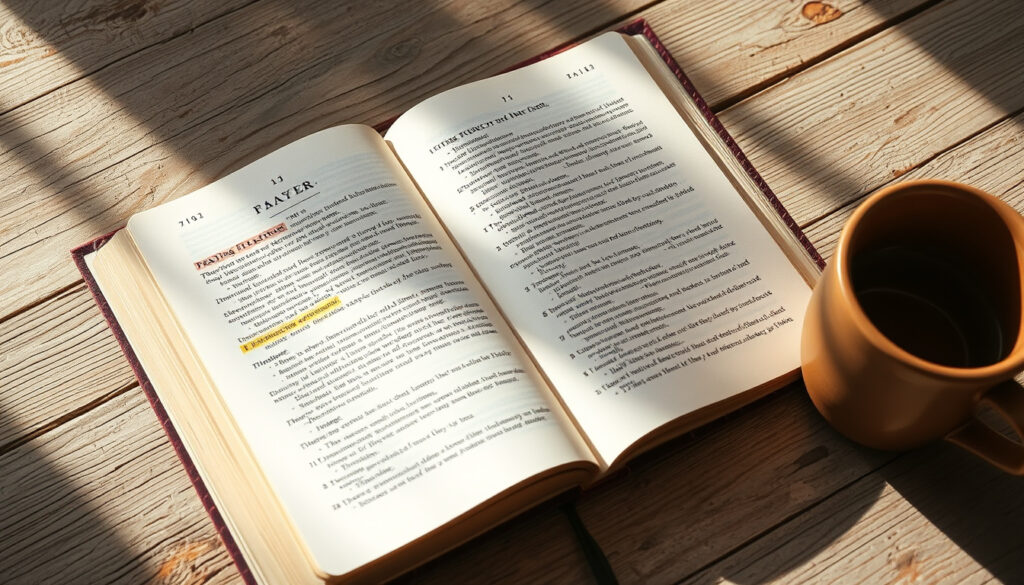
Matthew 17:21 Meaning, Why It’s Missing, and Fasting Rules
It starts with a small jolt: you’re reading the end of Matthew 17, where the disciples cannot force out a demon, and your Bible either adds a sharp line about prayer and fasting—or slides it away into a footnote — that disputed line is Matthew 17:21. According to BibleRef’s textual note, many modern versions either include the text as a footnote or leave it out entirely.
KJV: prints the verse · Earliest uncials: omit it · Later Greek majority: includes it · Modern critical editions: footnote or omit it.
Confirmed facts
Manuscript status
- The earliest uncials and several early versions omit the verse. The Text of the Gospels (a textual-criticism blog)
Bibles with the verse
- The KJV and NKJV print it, and the Luther and Elberfelder pages still show it in the German streams. StudyLight’s KJV text, BibleStudyTools NKJV, Luther text, Elberfelder text
Verse context
- All manuscripts tell the story of the healed boy. The debate is only about the line after it: does Jesus add “and fasting” to the need for prayer?
Parallel verse
- Mark 9:29 is the closest parallel and uses the same “this kind” and prayer language. BibliaPlus’s Matthew 17:21 notes
Why do many Bibles leave Matthew 17:21 out?
The simplest answer is that modern Bible translations are not all following the same Greek text. The KJV and NKJV follow the Textus Receptus, which includes the verse. Many modern critical editions follow earlier Greek manuscripts, where the verse is absent.
This is why you can open two good English Bibles and find the same story with different endings. One prints the line; the other gives it a small footnote. Both sides are trying to answer the same question: what did the original text most likely say?
The implication: readers should see the footnote as a window into textual history, not a flaw in their Bible.
What does Matthew 17:21 mean?
What is the context of Matthew 17:21?
The verse sits immediately after the disciples fail to heal a boy with seizures. Jesus responds by first rebuking their lack of faith (Matthew 17:20) and then, in the longer text, adds that this kind of spirit requires prayer and fasting. The context ties the verse directly to the disciples’ impotence against a particularly stubborn spiritual force.
Why did Jesus connect this kind of demon with prayer and fasting?
In the traditional reading, Jesus is teaching that some spiritual opposition demands extraordinary dependence on God. Prayer and fasting intensify that dependence. This interpretation is supported by the parallel in Mark 9:29, where the same saying appears with less textual dispute.
This distinction shapes how readers approach spiritual warfare in their own lives.
What the manuscripts actually show
The clearest picture comes from the manuscript evidence itself. Here is the pattern in plain language:
| Factor | What the evidence shows |
|---|---|
| Manuscript status | Omitted in a range of early witnesses, including the earliest uncials and several early versions. The Text of the Gospels |
| Later Greek evidence | A majority of later Greek manuscripts support the verse, which creates the classic internal-versus-external evidence split. The Text of the Gospels (same source) notes the split. |
| Traditional English wording | “Howbeit this kind goeth not out but by prayer and fasting.” StudyLight’s KJV text |
| NKJV wording | “However, this kind does not go out except by prayer and fasting.” BibleStudyTools NKJV |
| Modern translation status | Many modern versions either include the text as a footnote or leave it out. BibleRef |
The pattern underscores that no translation is without a manuscript tradition bias.
Timeline of key events in the textual history
- 4th century: Codex Sinaiticus and Codex Vaticanus, two early Greek manuscripts, do not include Matthew 17:21. The Text of the Gospels
- 1611: The King James Version prints the verse, following the Textus Receptus. StudyLight KJV
- 1881: Westcott and Hort’s critical Greek New Testament prioritizes earlier Alexandrian witnesses and omits the verse. UASV Bible
- 20th–21st century: Modern translations such as the NIV and ESV omit the verse from the main text or place it in a footnote. BibleRef
Traditional and modern translations are working from two manuscript maps
Once you know which manuscripts sit behind a translation, the decision almost makes itself. Here is the comparison in one view:
| Translation stream | What readers see | Why it happens |
|---|---|---|
| King James tradition | Prints the verse in the main text. | The line is present in the Textus Receptus. |
| Modern critical editions | Usually omit it or footnote it. | The earliest uncials and early versions do not have it. |
| Traditional-language Protestant Bibles | The Luther and Elberfelder pages still show it. | They follow the received text rather than the earliest critical text. |
This choice affects how readers encounter the fasting line.
Does “this kind” refer to every demonic spirit?
No. The commentary tradition has usually read “this kind” as particularly stubborn opposition, not as a full taxonomy of every demon or disease.
When the longer line is present, prayer and fasting are understood as intensified dependence on God in unusually difficult cases. That reading is visible in the NKJV wording: “However, this kind does not go out except by prayer and fasting.” BibleStudyTools NKJV text
Readers should avoid turning the verse into a diagnostic checklist for demons.
Do Christians have to fast before every deliverance?
Not on this verse. If you follow the earliest manuscript evidence, the fasting line is probably not original to Matthew. If you follow the longer reading, the line still describes one strategy for a particular kind of battle, not a universal ritual.
The more helpful question is not “How often must I fast?” but “What makes the difference when the disciples’ own efforts fail?” The longer text points toward prayer and fasting as intensified dependence. That fits Jesus’ own teaching elsewhere: some situations reveal human weakness more than others.
This reframes fasting from obligation to opportunity.
What should you not do while fasting?
Can I eat eggs while fasting?
Scripture does not give a universal food code for every fast. A food fast means abstaining from foods such as eggs. The biblical model is total abstinence from food for the duration, though some choose partial fasts.
Can we touch private parts during fasting?
Matthew 17:21 does not address sexual touch. Christian teaching on holiness and self-control applies, but the verse itself gives no specific prohibition. The broader Bible principle is to set aside distractions for focused prayer.
Can you sleep with your wife during fasting in Christianity?
The Bible does not forbid marital relations during a fast. Paul’s broader teaching allows agreed temporary abstinence for prayer (1 Corinthians 7:5), but it is not a rule derived from this verse.
Jesus does not forbid fasting. He assumes people will fast. What he forbids is theatrical fasting. In Matthew 6:16–18, the warning is simple: don’t fast to be seen by other people.
That is why the old ethical instinct is still right: the fast is not a public performance. It is a hidden discipline between the believer and God.
The emphasis remains on motive, not method.
What are some important things for Christians to do while fasting?
How does prayer relate to fasting in Matthew 17:21?
The phrase “prayer and fasting” links the two practices as a single discipline. Fasting without prayer risks being merely a diet. Prayer anchors the fast in dependence on God.
What attitudes does the Bible warn against during fasting?
The Bible emphasizes fasting directed toward God rather than public recognition. Jesus warns against disfiguring the face to appear fasting (Matthew 6:16). The inner posture matters more than outward observance.
Practical steps for a meaningful fast:
- Decide the type and length of the fast (e.g., complete food fast, partial, or from specific items).
- Prepare spiritually through prayer, setting an intention for seeking God.
- Begin with a clear commitment, avoiding half‑heartedness.
- Maintain normal daily activities but increase time in prayer and Scripture reading.
- Break the fast gently, with gratitude, and reflect on what God taught.
This discipline, when practiced with a right heart, aligns with Jesus’ own example.
How to sleep at night when fasting?
Is it okay to sleep while fasting in Christianity?
The Bible does not say that sleeping breaks a fast. Sleep is a normal part of life and can be part of a fast. Some believers choose to stay awake for prayer, but it is not required.
What makes sleep harder when fasting?
Hunger pangs, changes in meal timing, and reduced caffeine intake can disrupt sleep patterns. The body adjusts over the first 24–48 hours.
What evening routines help during fasting?
Maintain a consistent bedtime. Avoid caffeine after noon. Drink water if your fast allows it. Engage in light reading or prayer before bed rather than screens. A warm bath can signal the body to rest.
Listen to your body and adjust accordingly.
What is actually confirmed by the evidence?
Let’s separate what is solid from what is only rumored. These points are confirmed by the manuscript and translation record:
- The earliest uncials and several early versions omit the verse. The Text of the Gospels.
- A later Greek majority supports the verse. The Text of the Gospels.
- The KJV and NKJV include it; many modern critical editions do not. StudyLight, BibleRef
What is overstated is the idea that “someone removed the verse from the Bible.” That assumes first that the KJV being set beside newer Bibles is the only true text, which is exactly the point under debate.
The evidence forces humility on all sides.
What remains unclear
- Whether Matthew originally wrote the verse is debated; some scholars see a scribal addition from Mark 9:29.
- What exactly qualifies as “this kind” of demon is not defined by the text.
- Biblical fasting rules do not specify every food, drink, or sexual behavior question.
Quotes that frame the debate
“A range of early witnesses, including the earliest uncials and several early versions.”
— The Text of the Gospels
“However, this kind does not go out except by prayer and fasting.”
— BibleStudyTools NKJV text
This framing helps readers evaluate competing claims.
What this means for your Bible reading
When you see Matthew 17:21 in a footnote, you are seeing the textual conclusion made by a translation team. When you see it in the main text, you are seeing the decision of another translation team. Both are trying to give you the best picture of the evidence.
This approach turns the textual question into a spiritual opportunity.
For more on interpreting spiritual messages in daily life, see Dream Teeth Falling Out? Spiritual Meaning Explained. For understanding how definitions shape discussions, see Fascist Definition: Simple Meaning, Examples & Differences.
biblehub.com, bibelgriechisch.online, biblehub.com, biblehub.com, biblerepository.com
Frequently asked questions
Why is Matthew 17:21 not in the Bible?
It is in the KJV and NKJV, but it is absent from many modern editions because the earliest Greek witnesses omit it. BibleRef
Does “this kind” mean every demonic spirit?
No. The longer text points to unusually oppositional circumstances. The commentary tradition reads prayer and fasting as intensified dependence, not as a permanent spiritual law. BibleStudyTools NKJV
Do Christians have to fast before every deliverance?
No. The verse is textually disputed, and even where it appears, it describes a response to a particular kind of difficulty, not a compulsory pre-ritual.
What should you not do while fasting?
Jesus warns against fasting for public applause in Matthew 6:16–18. The fast is hidden, not theatrical.
Is Matthew 17:21 in the original manuscripts?
Most modern textual critics treat it as a later addition because the earliest recoverable witnesses omit it. The Text of the Gospels
Why did early scribes add it?
The most likely reason is influence from the parallel passage in Mark 9:29 and the early Christian instinct to link prayer and fasting. BibliaPlus
This perspective transforms how readers engage with their Bibles.
More related posts
 John Turturro Movies and TV Shows: Full Filmography
 LG Stand By Me – 2025 Prices Specs and Buying Guide
 What Is a Leap Year? Complete Definition, Rules, and Key Facts
 Uber Eats Customer Service: Live Agent, Refunds & Disputes
 How to Copy and Paste on Any Device: Step-by-Step Guide (2025)
 European Train Pass Info: Coverage, Cost & Best Options
 What Is a Black Hole? Simple Explanation, Formation & Dangers
 Sweet Treats Near Me: Best Local Desserts & Delivery in Ireland