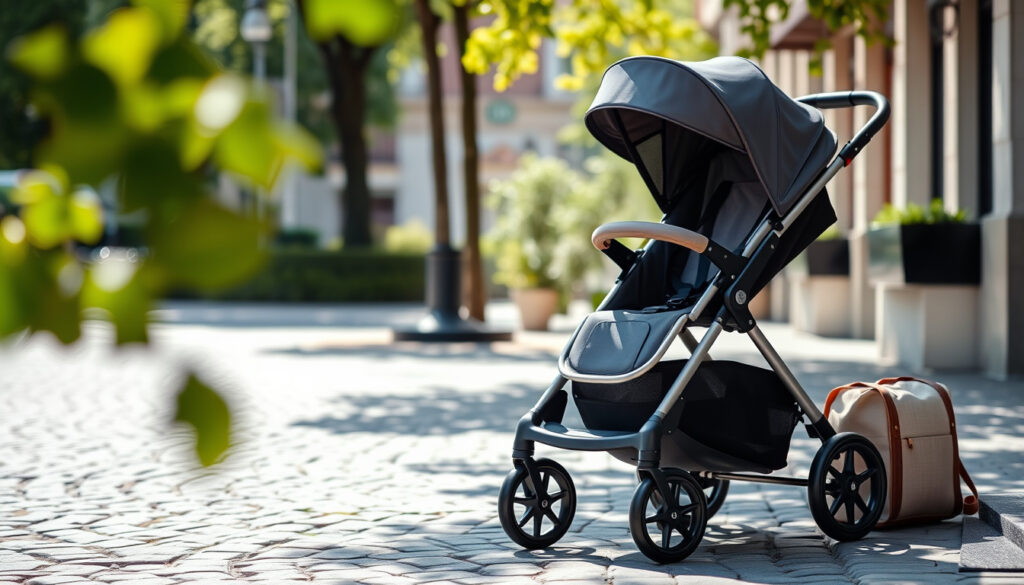
How to Choose a Baby Stroller: 2026 Buying Guide
Few things feel as overwhelming as standing in a baby gear aisle, staring at a row of strollers that all promise to make life easier. The truth is, the best stroller for you depends less on the brand name and more on your daily routine.
Average infant stroller weight: 15-25 lbs ·
Age stroller use starts (newborn recline): birth ·
Top rated stroller brands (Consumer Reports): UPPAbaby, Baby Jogger, Chicco ·
Stroller types available: full-size, lightweight, jogging, travel, double ·
Price range for premium strollers: $800-$1,500+
Quick snapshot
- Newborns require full recline or a car seat/bassinet (Consumer Reports buying guide)
- Weight and fold size are top decision factors for car users (Mamazing blog)
- Which brand is exactly #1 depends on individual criteria and year of testing (Consumer Reports)
- Crossover usage of jogging strollers before 6 months is not recommended by the American Academy of Pediatrics
- Match the stroller type to your daily routine first (AMMA Family)
- Test the folded size against your car trunk before buying (Momcozy)
Here are the key facts at a glance.
| Label | Value |
|---|---|
| Minimum safe age for regular stroller use | Birth (with full recline or bassinet) |
| Average stroller lifespan | 3-5 years (depends on wear and number of children) |
| Price range for a quality travel system | $300 – $1,200+ |
| Most tested stroller brand in 2026 labs | UPPAbaby |
| Newborn recline requirement | Near-flat position or car seat/bassinet (Nemours KidsHealth) |
| Safest harness type | 5-point harness (Nemours KidsHealth) |
| Brake requirement | Easy to engage, locks back wheels securely (Nemours KidsHealth) |
| Stroller stability check | Press handles; should resist tipping (Nemours KidsHealth) |
| Wheel base recommendation | Wide base, low seat for stability (Nemours KidsHealth) |
| Double stroller steering | Tandem easier to steer than side-by-side (Nemours KidsHealth) |
How do I decide what stroller to get?
Match stroller type to your lifestyle
Start with your daily routine. A parent who walks city sidewalks every day needs a different stroller than one who drives to a park on weekends. The stroller types — full-size, lightweight, jogging, travel, double — each suit a different environment. Consumer Reports notes that weight and fold size are the top two factors for parents who use a car regularly.
- City commuters: lightweight, compact fold, easy one-hand steering
- Suburban car users: moderate weight, travel system compatibility, one-hand fold
- Runners/joggers: jogging stroller with fixed front wheel (not for newborns)
- Frequent flyers: ultra-lightweight, small fold, carry-on compatible
- Two kids: tandem or side-by-side double (Nemours KidsHealth recommends tandem for easier steering)
A full-size stroller offers more storage and a smoother ride, but it takes up twice the trunk space. A lightweight stroller folds small but may lack suspension for rough sidewalks.
Consider storage space and car trunk fit
One commonly skipped check is whether the folded stroller fits in your car boot. Mamazing advises parents to measure the trunk opening and depth before buying. Many strollers fold to 30×20×15 inches, but some compact models go as small as 20×12×10 inches.
Evaluate how often you will use it
If you push the stroller only on weekends, a budget-friendly model like Graco or Joie may suffice. For daily use, invest in durability, better suspension, and washable fabrics. Baby Kiki suggests that frequent users should prioritize puncture-proof wheels and a brake that is easy to engage.
The implication: your lifestyle dictates the stroller type, not the brand name. A parent who walks 3 miles daily in a city should choose a lightweight stroller with good suspension, even if it costs more upfront.
At what age do you put a baby in a regular stroller?
What is a ‘regular’ stroller?
A “regular” stroller means a full-size or umbrella stroller that does not include a bassinet or car seat adapter. These strollers typically have a seat that reclines to a certain angle, but not all recline flat.
Newborn recline requirements (flat or near-flat)
Newborns cannot hold up their heads, so they need to lie almost flat. Nemours KidsHealth states that a stroller for newborn use should recline to a near-flat position or accept an infant car seat or separate bassinet attachment. Consumer Reports confirms that newborns need a stroller that reclines fully or has a compatible bassinet/car seat.
Car seat compatibility for infants
Many parents use a car seat snapped onto the stroller frame for the first few months. This is safe as long as the car seat is designed for newborns and the stroller has a compatible adapter. AMMA Family notes that buying a stroller with a detachable car seat can be useful for frequent travel.
A newborn should never be placed in a regular upright stroller seat. The baby’s airway can be compromised. Always check the recline angle before purchase.
The pattern: from birth, a baby can use a stroller only if the seat reclines flat or a car seat/bassinet is attached. After about 6 months, when the baby can sit up unsupported, a regular upright stroller is safe.
What to consider before buying a stroller?
Wheel type and suspension
Wheels affect how the stroller handles different surfaces. AMMA Family recommends pneumatic wheels in the 12-16 inch range for rough terrain, dirt roads, or park trails. For city sidewalks, smaller foam or rubber wheels are lighter and easier to maneuver. Suspension is important for a smooth ride, especially for newborns.
Fold mechanism and weight
Look for a stroller that folds with one hand if you often carry a baby. The folded size matters for storage. Mamazing warns that many parents skip checking the folded size against their car boot, leading to frustration.
Car seat compatibility
If you plan to use a car seat with the stroller, ensure the stroller accepts adapters for your car seat brand. Most travel systems come with a compatible car seat, but standalone strollers may require separate adapters.
Safety features (five-point harness, brake)
Nemours KidsHealth emphasizes that the safest restraint design is a 5-point harness. The brake should be easy to use and lock the back wheels securely. The stroller should be free from pinch points and choking hazards. Check stability by pressing lightly on the handles to see if it resists tipping backward.
The catch: a stroller with all the safety features can still tip if you hang heavy bags on the handles. Always follow the manufacturer’s weight limits.
How to choose a stroller for a newborn?
Full recline feature
A newborn needs a stroller that reclines fully or near-flat. Momcozy states that a stroller marketed for newborns must offer full recline or accept infant car seat adapters. Mamazing adds that under six months, a stroller should be flat rather than upright.
Newborn insert or bassinet option
Some strollers come with a newborn insert that provides a more supportive lying surface. Others offer a separate bassinet that attaches to the frame. A bassinet is generally safer because it keeps the baby flat and firm.
Car seat compatibility
For parents who drive, a travel system (stroller + car seat) is convenient. The car seat clicks into the stroller, so you don’t have to wake the sleeping baby. AMMA Family recommends this for frequent travel.
Safe harness system
A 5-point harness is the gold standard for newborns. It secures the baby at the shoulders, hips, and between the legs. Nemours KidsHealth advises checking that the harness is adjustable and snug.
For a newborn, the stroller must either recline flat or have a bassinet/car seat. A regular upright stroller is unsafe. The safest choice is a stroller with a 5-point harness, a wide base, and a reliable brake.
The implication: when shopping for a newborn stroller, prioritize recline and safety features over weight or fold size. You can always add a lightweight stroller later when the baby is older.
What are the top 5 baby strollers?
Five models consistently appear in buying guides, each with a different strength. The table below compares them across key categories.
| Model | Type | Newborn ready | Weight | Fold size | Price range |
|---|---|---|---|---|---|
| UPPAbaby Vista V2 | Full-size / travel system | Yes (bassinet or car seat) | 27 lbs | Large | $900-$1,000 |
| Baby Jogger City Select | Full-size / double capable | Yes (car seat adapter) | 28 lbs | Medium | $650-$750 |
| Chicco Bravo Trio | Travel system | Yes (car seat included) | 23 lbs | Medium | $350-$450 |
| Thule Urban Glide 2 | Jogging stroller | Yes (car seat adapter, but not for jogging under 6 months) | 25 lbs | Medium | $600-$700 |
| Nuna Mixx Next | Full-size / luxury | Yes (bassinet or car seat) | 28 lbs | Large | $900-$1,100 |
These five models cover the spectrum from budget to premium. The UPPAbaby and Nuna are luxury options, while the Chicco offers the best value for a travel system. The Baby Jogger excels as a double stroller later. The Thule is ideal for active parents but note the 6-month jogging restriction.
The trade-off: premium strollers have better materials and resale value, but you can get a perfectly safe and functional stroller for $300-$400 from Graco or Joie.
Pros and cons of full-size vs lightweight strollers
Upsides
- Full-size: more storage, smoother ride, better for newborns, often compatible with car seats
- Lightweight: easy to carry, small fold, great for travel and public transit
Downsides
- Full-size: heavy, takes up trunk space, can be hard to maneuver in tight shops
- Lightweight: less suspension, smaller canopy, may not recline fully for newborns
Which type you choose depends on how you balance these trade-offs against your daily routine.
Steps to choose the right stroller
- Assess your daily routine: Write down the surfaces you’ll push on, how often you use a car, and whether you take public transit.
- Set a budget: Decide a range. A quality travel system costs $300-$1,200. Expect to spend more for durability.
- Measure your car trunk: Note the width, depth, and height of the opening.
- Check newborn readiness: Ensure the stroller reclines flat or accepts a bassinet/car seat.
- Test the fold: Go to a store and try folding the stroller one-handed if possible.
- Compare safety features: Verify 5-point harness, brake lock, and stability.
- Read reviews from trusted sources: Use Consumer Reports and Nemours KidsHealth for unbiased evaluations.
Follow these steps to narrow your options and make a confident purchase.
What the experts say
“Jogging with an infant under 6 months is not recommended because the baby’s neck and spine are not strong enough to handle the jostling. A stroller that reclines flat is the only safe option for newborns.”
— American Academy of Pediatrics (AAP) guideline
“Look for puncture-proof wheels, washable fabrics, and a brake that is easy to engage. These features make a stroller last longer and stay cleaner.”
— Bugaboo buying guide
Both sources emphasize that safety and practical features matter more than brand prestige.
babylist.com, thebump.com, momcozy.com, babies-in-bloom.com, momcozy.com, strollercompass.com, parentingpod.com
For parents who value convenience, exploring the best stroller travel systems can simplify the decision by combining a car seat and stroller in one seamless system.
Frequently asked questions
Can a car seat replace a bassinet in a stroller for a newborn?
Yes, many parents use a car seat snapped onto the stroller frame for the first months. However, the AAP recommends that babies spend no more than 2 hours at a time in a car seat when not traveling, because of positional asphyxiation risk. A bassinet or flat recline is safer for longer walks.
Is it safe to use a used stroller?
It can be, but check for recalls, missing parts, frayed harness straps, and brake function. The Australian Competition and Consumer Commission (ACCC) advises verifying that the stroller complies with current safety standards.
How do I clean a baby stroller?
Most stroller fabrics can be spot-cleaned with mild soap and water. Remove the seat pad if it is machine-washable (check the manual). Avoid harsh chemicals that could damage the fabric or harness.
What is the difference between a stroller and a pram?
A pram (short for perambulator) traditionally has a flat bassinet for newborns. A stroller has a seat that reclines. Modern strollers often include a pram-like mode via a bassinet attachment. The terms are sometimes used interchangeably.
Are all stroller car seat adapters universal?
No, adapters are brand-specific. Even within the same brand, different car seat models may require different adapters. Always check compatibility before buying.
How long do baby strollers typically last?
3-5 years on average, depending on frequency of use, terrain, and number of children. Premium strollers with replaceable parts can last longer.
Is a jogging stroller worth it for casual walking?
Jogging strollers have larger wheels and better suspension, making them comfortable on uneven terrain. However, they are heavier and bulkier than standard strollers. For mostly paved sidewalks, a regular stroller with good suspension is lighter and easier to maneuver.
These answers cover the most common questions parents have when choosing a stroller.
More related posts
 Pdf Editor Online Free – Best No Watermark Tools 2025
 Timberwolves vs Brooklyn Nets Player Stats & Analysis
 Grand Canyon National Park: Fees, Safety & Cities Guide
 Inter Miami vs LAFC 2026: Result, How to Watch, Stats & Analysis
 Sterling K. Brown Movies and TV Shows: Complete Guide
 Anyone But You Cast: Full List of Actors and Characters
 Hayden Christensen Movies and TV Shows: Complete Filmography
 Best Defense for Fantasy Football 2025: Rankings & Strategy