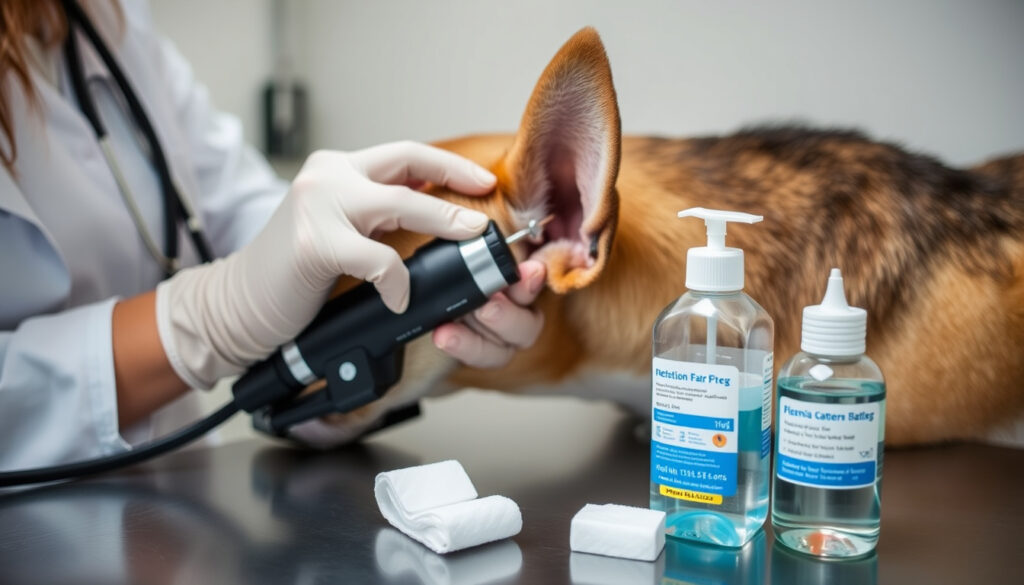
Dog Ear Infection Treatment: Home Care & Vet Options
Few things are as worrying as seeing your dog shake its head or scratch its ear — over 20% of dogs seen by vets have ear infections. This guide covers safe home care, affordable alternatives, and the warning signs that demand immediate professional help.
Dogs affected by ear infections annually: Over 20% of dogs seen by vets · Common causes: Bacteria, yeast, allergies, ear mites · Typical treatment cost: $50–$150 per visit · Self-resolution rate without treatment: Very low; may become chronic
Quick snapshot
- Untreated ear infections can become chronic (Kinship (pet health resource))
- Topical antibiotics are standard treatment (Sirius Vets (veterinary practice))
- Apple cider vinegar should only be used if eardrum is intact (Dogs Naturally Magazine (natural pet care resource))
- Exact efficacy of home remedies vs. vet treatment in all cases (Kinship (pet health resource))
- Long-term outcomes of untreated mild infections (GoodRx (pharmacy and pet health))
- Effectiveness of the sock trick as a treatment (anecdotal only) (Dogs Naturally Magazine)
- Typical treatment duration: 7–14 days (Sirius Vets (veterinary practice))
- Prevent recurrence by addressing allergies and keeping ears dry (Pooler Vet (veterinary clinic))
From cost to recovery time, here’s what the numbers say about dog ear infections.
| Factor | Details | Source |
|---|---|---|
| Common causes | Bacteria, yeast, ear mites, allergies, moisture | Kinship |
| Typical treatment duration | 7–14 days | Sirius Vets |
| Recurrence rate | Up to 50% if underlying cause not addressed | Pooler Vet |
| Estimated cost range | $100–$500 | Jeffers Pet |
| Home remedy risk | Can irritate if eardrum is ruptured | (Kinship) |
| OTC ear cleaners | Can be used temporarily as a stopgap | (GoodRx) |
| Apple cider vinegar | Use diluted 1:1 with water; avoid if eardrum damaged | (Dogs Naturally Magazine) |
| Green tea rinse | Steeped and cooled, can be used as a mild cleaner | (Dogs Naturally Magazine) |
| Olive oil | Small amounts with massage may help loosen debris | Wag (pet care platform) |
| Elizabethan collar | Prevents scratching during healing | (Pooler Vet) |
How can I treat a dog’s ear infection at home?
Safe home cleaning methods
- Use a veterinarian-recommended ear cleaning solution and a cotton ball. Gently massage the ear base before wiping away debris (Sirius Vets).
- Diluted apple cider vinegar (1:1 with water) can be used as a rinse for mild cases, but only if the eardrum is intact (Dogs Naturally Magazine).
- Green tea, steeped and cooled, can be used as a gentle ear cleaner (Dogs Naturally Magazine).
- Olive oil applied in small amounts with gentle massage may help loosen debris (Wag).
When to avoid home treatment
- If the ear canal is swollen shut, bleeding, or producing pus, seek veterinary care immediately (Kinship).
- Never use hydrogen peroxide, rubbing alcohol, or essential oils inside the ear canal; they can worsen the problem (GoodRx).
- Do not use Q-tips or insert objects into the ear canal — stick to cotton balls or gauze for visible areas only (Kinship).
The pattern: home remedies can provide comfort, but they are no substitute for a proper diagnosis. Without knowing whether the eardrum is intact, you risk causing more harm than good.
What to do if my dog has an ear infection but I can’t afford a vet?
Free and low-cost veterinary clinics
- Local animal shelters or humane societies may offer low-cost or sliding-scale veterinary options (Kinship).
- Ask your vet about payment plans or financing options — some clinics work with third-party lenders (Kinship).
Preventive care to avoid recurrence
- Keep ears dry after swimming or bathing to reduce infection risk (Sirius Vets).
- Regular cleaning with a vet-approved solution can prevent buildup (Pooler Vet).
What this means: even without a vet visit, you can reduce risk through simple hygiene. But if symptoms persist, a professional exam is the only way to rule out a ruptured eardrum or deep infection.
Will a dog’s ear infection heal itself?
Risk of chronic infection
- Most infections require treatment; self-healing is rare (Sirius Vets).
- Untreated infections can lead to chronic issues or hearing loss (Kinship).
- Yeast infections may persist without antifungal medication (Dogs Naturally Magazine).
Signs of worsening
- Increased redness, swelling, discharge, or odor indicate the infection is not resolving (GoodRx).
- If the dog stops eating or becomes lethargic, seek help immediately (GoodRx).
The trade-off: waiting it out might save a vet bill in the short term, but it can cost far more in prolonged treatment and suffering down the road.
What is the sock trick for ear infection?
Purpose of the sock trick
- Many pet owners share a method of filling a clean sock with warm rice or salt and holding it against the dog’s ear as a warm compress.
- This can soothe pain and make the dog more comfortable, but it does not treat the underlying infection.
Step-by-step instructions
- Fill a clean sock with uncooked rice or table salt. Tie the end.
- Microwave for 20–30 seconds — test the temperature on your wrist; it should be warm, not hot.
- Hold the sock against the outside of the affected ear for 5–10 minutes, up to twice a day.
- Always check temperature to avoid burns.
The catch: the sock trick is a comfort measure only. If infection signs persist, a vet visit is still necessary.
What are the types of dog ear infections and their treatments?
Otitis externa
- Infection of the outer ear canal — most common and treatable with topical ear drops (Sirius Vets).
- Medicated drops contain antibiotics, antifungals, and anti-inflammatories (PDSA (UK veterinary charity)).
Otitis media
- Middle ear infection — requires systemic antibiotics and often a vet-performed ear flush.
- Can develop from untreated otitis externa.
Otitis interna
- Inner ear infection — aggressive treatment needed; may include oral steroids or surgery (Kinship).
- Bacterial and yeast infections require different medications — culture may be needed (Dogs Naturally Magazine).
Why this matters: knowing the type helps you understand why some treatments work and others don’t. A topical drop for outer ear won’t help a middle ear infection.
How much does dog ear infection treatment cost?
Vet visit fees
- Initial exam: $50–$100 (Jeffers Pet).
- Total treatment cost can range from $100 to $500 depending on severity (Jeffers Pet).
Medication costs
- Ear drops: $20–$60 per bottle.
- Oral antibiotics or antifungals may add $30–$80.
Long-term management expenses
- Recurrence costs can accumulate — up to 50% of dogs relapse if the underlying cause (e.g., allergies) isn’t managed (Pooler Vet).
- Surgery for deep infections can exceed $1,000.
The implication: a single episode is manageable, but without addressing root causes, the financial (and physical) toll can multiply.
Can a dog ear infection spread to the brain?
Neurological symptoms
- Rare but possible if infection reaches the inner ear. According to the PDSA, untreated infections can spread deeper.
- Signs include head tilt, circling, loss of balance, and unusual eye movements.
Emergency warning signs
- If your dog suddenly cannot stand, has a stiff neck, or seems disoriented, get to an emergency vet immediately (Kinship).
- Prompt treatment is critical — brain involvement can be life-threatening.
Why this matters: while rare, the risk is real. The window for effective treatment narrows once neurological symptoms appear.
Upsides
- Home care can reduce discomfort and prevent mild cases from worsening (Pooler Vet)
- OTC ear cleaners provide a temporary bridge when a vet isn’t immediately available (GoodRx)
- Preventive practices (drying ears, regular cleaning) lower recurrence (Sirius Vets)
Downsides
- Home remedies can cause pain or damage if the eardrum is ruptured (Kinship)
- Delaying vet care allows infection to spread, leading to chronic issues (Kinship)
- Without a culture, using the wrong medication (antibiotic vs. antifungal) can worsen a yeast infection (Dogs Naturally Magazine)
Home care can help, but it’s a stopgap, not a cure. The longer an infection goes untreated with proper medication, the higher the chance of permanent damage — and the higher the eventual bill.
A vet visit now costs $50–$150. A surgery for a deep-seated infection can cost over $1,000. Investing in early professional care nearly always saves money and suffering.
Step-by-Step Home Treatment Guide
- Assess the severity. If you see swelling, bleeding, pus, or if the dog is in obvious pain, stop — go to a vet. (Kinship)
- Clean the outer ear. Use a cotton ball and a vet-approved cleaner. Wipe only the visible part — never insert anything. (Sirius Vets)
- Apply a warm compress (optional). Sock trick or a warm damp cloth can soothe for 5–10 minutes.
- Use an OTC ear cleaner as a temporary measure if a vet appointment is days away. (GoodRx)
- Prevent scratching. Use an Elizabethan collar if the dog paws at the ear. (Pooler Vet)
- Monitor for 48 hours. If symptoms don’t improve, a vet visit is non-negotiable.
The takeaway: following these steps can help, but professional care is essential if symptoms don’t improve.
What’s clear and what’s still uncertain
- Confirmed: Untreated infections can become chronic (Kinship)
- Confirmed: Topical antibiotics are standard (Sirius Vets)
- Confirmed: Apple cider vinegar can help only if eardrum is intact (Dogs Naturally Magazine)
- Unclear: Exact efficacy of home remedies vs. vet treatment in all cases (Kinship)
- Unclear: Long-term outcomes of untreated mild infections (GoodRx)
- Unclear: Effectiveness of the sock trick as a treatment (anecdotal only) (Dogs Naturally Magazine)
“Treatment requires finding and correcting underlying causes and relieving pain.”— MSD Veterinary Manual (veterinary reference)
“Medicated eardrops containing antibiotics, antifungals and anti-inflammatories help to clear swelling and pain.”— PDSA (UK veterinary charity)
For dog owners facing a suspected ear infection, the choice is clear: use safe home care as a short-term bridge, but never skip a veterinary exam if symptoms persist. The risk of chronic pain, hearing loss, and a much larger vet bill far outweighs the cost of initial treatment.
While treating a dog ear infection, it’s important to also consider common causes like ear mites in dogs, which can lead to similar symptoms.
Frequently asked questions
Can I use hydrogen peroxide to clean my dog’s ear?
How often should I clean my dog’s ears?
What are the signs of a yeast infection in a dog’s ear?
Is it safe to use cotton swabs in a dog’s ear?
Can diet affect my dog’s ear infections?
Are certain dog breeds more prone to ear infections?
How long does it take for a dog ear infection to clear up with antibiotics?
Related reading
- How to treat dog ear infection
- Dog ear infection when you can’t afford a vet
More related posts
 Avatar: Fire and Ash Showtimes – IMAX & 4DX Guide
 George Foreman Net Worth 2025: How He Built $300 Million
 Severe Weather Flight Disruptions US: Live Cancellations & Delays
 How to Roast Asparagus in the Oven: A Complete Guide
 GTA 6 Release Date: When Will GTA 6 Come Out
 1 USD to CAD – Current Rate, History and Conversion Guide
 Taco Bell Nacho Fries: Price, Ingredients & 2026 Return
 Cast of After Everything – Actors, Roles and Bios