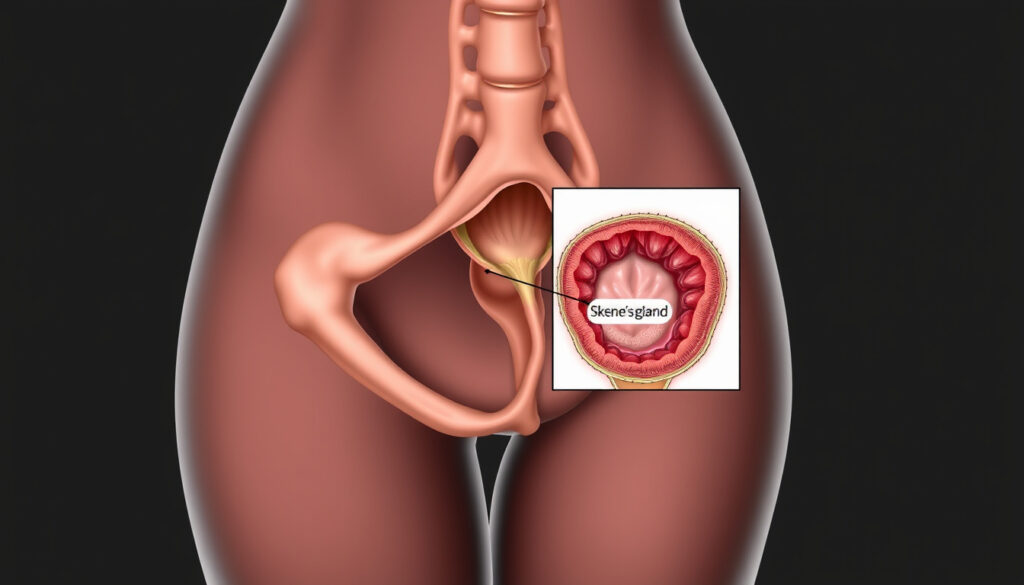
Do Women Have a Prostate? Female Prostate & Skene’s Glands
It’s a question that often comes up in health conversations or anatomy class: do women have a prostate? The short answer is no, but the full story is more interesting. While women don’t have the walnut-sized gland men do, they possess a structure called Skene’s glands—sometimes nicknamed the “female prostate”—that shares a developmental origin. This article unpacks the difference, what these glands actually do, and how prostate health concerns apply differently to men and women.
Women with an anatomical prostate: 0% — female anatomy does not include the prostate gland ·
Female counterpart: Skene’s glands (paraurethral glands) ·
Prostate size in men: About the size of a walnut ·
Semen contribution: Prostate fluid is about 20–30% of semen volume ·
Male US prostate cancer risk: About 1 in 8 men over a lifetime
Quick snapshot
- Women do not have an anatomical prostate gland (Cleveland Clinic (health body))
- Women have Skene’s glands, sometimes called the female prostate (NCBI/PMC (medical research database))
- Skene’s glands are homologous, not identical, to the male prostate (Journal of the National Cancer Institute (peer-reviewed journal))
- The exact function of Skene’s glands is still debated (PubMed (biomedical research database))
- Whether the G-spot is the female prostate is not universally accepted (Wikipedia (encyclopedia))
- The link between ejaculation frequency and prostate cancer risk isn’t proven causally (Koelis (urology technology firm))
- 1672: Regnier de Graaf described glands around the female urethra (Journal of the National Cancer Institute (peer-reviewed journal))
- 1880: Alexander Skene highlighted the paraurethral ducts (Journal of the National Cancer Institute (peer-reviewed journal))
- Modern research confirms homologous origin with the male prostate (NCBI/PMC (medical research database))
- Understanding Skene’s gland function may clarify female urinary health (Cleveland Clinic (health body))
- Prostate removal research continues to improve men’s quality of life (Koelis (urology technology firm))
- Ejaculation frequency and cancer risk need more rigorous study (Live UTI Free (health blog))
| Label | Value |
|---|---|
| Female equivalent | Skene’s glands |
| Prostate location (men) | Below the bladder, in front of the rectum |
| Prostate size | About the size of a walnut |
| Prostate fluid share | About 20–30% of semen volume |
| Male prostate cancer lifetime risk | About 1 in 8 US men |
Can a female have a prostate?
No—women do not have a prostate gland. The prostate is an exclusively male organ, located below the bladder and surrounding the urethra. However, women do have Skene’s glands, which are sometimes called the “female prostate.” These are two small glands located near the lower end of the urethra, on either side of it, in the vulvar vestibule (Cleveland Clinic (health body)).
Do women have a prostate like men?
- Women lack the walnut-sized prostate gland found in men.
- Skene’s glands are the female counterpart, sharing a homologous origin with the male prostate (NCBI/PMC (medical research database)).
- They are not the same organ—Skene’s glands are smaller, positioned differently, and have a debated function.
The implication: when someone asks “do women have a prostate,” the accurate answer is a clear no, but the female body has evolved a related structure that serves some similar purposes—albeit on a much smaller scale.
What is the female version of a prostate called?
The female version of the prostate is called Skene’s glands, named after Alexander Skene who described them in 1880. They are also known as paraurethral glands or lesser vestibular glands (Wikipedia (encyclopedia)). Medical literature has described them as the “female prostate” due to their homologous origin with the male prostate—meaning they develop from the same embryonic tissue (Journal of the National Cancer Institute (peer-reviewed journal)).
What is the female prostate called?
The term “female prostate” is informal, not a standard anatomical designation. The proper medical term is Skene’s glands. This terminology has historical roots: in 1672, anatomist Regnier de Graaf described glands around the female urethra, and later, the gland/duct structure surrounding the female urethra was called the “female prostate” by earlier anatomists (Journal of the National Cancer Institute (peer-reviewed journal)).
What does the female prostate do?
The exact function of Skene’s glands is still debated. Some clinical sources suggest they produce fluid that may help lubricate the urethra, while others associate their secretion with female ejaculation or orgasm-related fluid release (Pelvic Pain Rehab (physical therapy clinic)). Histologic studies have found that female prostatic glands consist of tubuloalveolar structures with connective tissue and smooth muscle, with tall cylindrical secretory cells that have apical cytoplasmic protrusions (PubMed (biomedical research database)).
The pattern here is that the “female prostate” is a functional and developmental cousin, not a female twin. Its role remains under investigation, but it clearly shares tissue characteristics with the male prostate.
What is a prostate, and what does it do?
The prostate is a walnut-sized gland located below the bladder and in front of the rectum in men. It surrounds the urethra—the tube that carries urine and semen out of the body. The prostate’s primary role is to produce fluid that becomes part of semen (Koelis (urology technology firm)).
What does the prostate do when ejaculating?
The prostate is an active participant during ejaculation, not merely a storage organ.
| Function | Details |
|---|---|
| Fluid production | Contributes about 20–30% of semen volume |
| Sperm support | Produces fluid that helps nourish and transport sperm |
| Muscle contraction | Helps propel semen during ejaculation |
Prostate fluid contains enzymes, zinc, and other substances that support sperm motility and viability. When ejaculation occurs, the prostate’s muscles contract to push its fluid into the urethra, mixing with sperm from the testicles and fluid from other glands.
What this means: the prostate isn’t just a passive organ—it’s an active participant in male fertility. Its secretions are critical for sperm function, and its muscular actions help deliver semen effectively.
Why do men have a prostate?
Men have a prostate because it plays a vital role in reproduction. The prostate produces part of the seminal fluid—the liquid that carries sperm during ejaculation. Prostate secretions help nourish sperm and maintain an environment that keeps them viable as they travel through the female reproductive tract (Koelis (urology technology firm)).
What is the purpose of a prostate?
- Produces prostate-specific antigen (PSA) and other enzymes that thin semen.
- Secretes fluid rich in citrate, zinc, and enzymes that support sperm function.
- Surrounds the urethra, helping control urine flow and prevent retrograde ejaculation.
The trade-off: the prostate’s position around the urethra creates a vulnerability. As men age, the prostate can enlarge (benign prostatic hyperplasia), causing urinary symptoms. This is a direct consequence of its anatomical design—a gland that’s essential for reproduction but positioned where growth can cause problems.
Can a man be OK without a prostate?
Yes, men can live without a prostate. Prostate removal, or prostatectomy, is a common treatment for prostate cancer. While the prostate is important for fertility, it’s not essential for survival. Men who have their prostate removed can live long, healthy lives, though they may face side effects (Koelis (urology technology firm)).
Can you get an erection without a prostate?
Erectile function can be affected by prostate removal, but it’s not automatically lost. The ability to achieve an erection depends on the surgery’s approach and whether the nerves that control erections are spared. In nerve-sparing prostatectomy, surgeons try to preserve the erectile nerves that run alongside the prostate. Outcomes vary widely: some men regain normal erections, while others need assistance from medications, vacuum devices, or other treatments.
Prostate removal trades cancer risk for quality-of-life challenges. Men facing surgery must weigh the immediate health threat against potential long-term effects on urinary control and sexual function.
The implication: prostate removal is survivable, but the decision involves a clear trade-off between treating a potentially fatal cancer and managing post-surgical side effects.
Is ejaculating every day good for your prostate?
Some observational studies have linked more frequent ejaculation with a lower risk of prostate cancer. One often-cited study from Harvard’s Health Professionals Follow-up Study found that men who ejaculated 21 or more times per month had a lower risk of prostate cancer compared to those who ejaculated 4–7 times per month. However, the evidence is observational, not causal—it shows a correlation, not proof of protection (Live UTI Free (health blog)).
What does ejaculation frequency do to prostate cancer risk?
- Studies suggest frequent ejaculation may flush out carcinogens from the prostate.
- Regular ejaculation might reduce the formation of crystals in seminal fluid that could cause inflammation.
- Doctors do not prescribe a specific ejaculation frequency for prostate health.
Why this matters: while the data is suggestive, it’s not strong enough for doctors to recommend a specific ejaculation schedule. Prostate health isn’t just about ejaculation frequency—it’s also about age, genetics, and regular screening for those at risk.
Skene’s Glands vs. Prostate: side-by-side
Two structures, one term—comparing the female Skene’s glands with the male prostate shows both the similarities and the limits of the “female prostate” label. Here’s how they stack up across key dimensions:
| Aspect | Male Prostate | Female Skene’s Glands |
|---|---|---|
| Location | Below the bladder, surrounding the urethra | On either side of the lower urethra, near the vaginal opening |
| Size | About the size of a walnut | Varies among individuals, generally small |
| Function | Produces seminal fluid; supports sperm | Debated; may lubricate urethra or contribute to female ejaculation |
| Cancer potential | Prostate cancer is common in men | Rare Skene’s gland cysts or cancers reported |
| Homologous origin | Develops from urogenital sinus | Develops from the same embryonic tissue |
| Standard exams | PSA tests and digital rectal exams for men | No standard screening for women |
The pattern: Skene’s glands share a developmental origin and some tissue characteristics with the male prostate, but they diverge significantly in size, function, and clinical importance. Calling them the “female prostate” captures the homology but overstates the similarity in practice.
Confirmed and Unclear: what the science says
Research on this topic spans anatomy, cancer biology, and sexual health. The confirmed facts are solid—women don’t have a prostate, but they have Skene’s glands with a homologous origin. What remains unclear is the function of these glands and their connection to sensation and urinary health.
Confirmed facts
- Women do not have an anatomical prostate gland (Cleveland Clinic (health body)).
- Skene’s glands are located near the lower end of the urethra (Cleveland Clinic (health body)).
- Skene’s glands are homologous to the male prostate (Journal of the National Cancer Institute (peer-reviewed journal)).
- The prostate sits below the bladder in men (Koelis (urology technology firm)).
- Men can survive prostate removal (Koelis (urology technology firm)).
What’s unclear
- The exact function of Skene’s glands is still debated (PubMed (biomedical research database)).
- Whether the G-spot is the female prostate is not universally accepted (Wikipedia (encyclopedia)).
- The relationship between ejaculation frequency and prostate cancer risk is not proven causally (Live UTI Free (health blog)).
The check: medical literature favors the term “paraurethral glands” for precision, reserving “female prostate” for historical or informal usage. The science is clear on anatomy but less settled on function.
Expert perspectives
“Women do not have a prostate gland. Instead, they have Skene’s glands, which are sometimes referred to as the female prostate.”
Cleveland Clinic (health body)
“The prostate is not part of female anatomy. The term ‘female prostate’ refers to Skene’s glands, which are homologous but not identical to the male prostate.”
Koelis (urology technology firm)
“Skene’s glands and ducts are homologous to the male prostate, a fact that has been recognized in medical literature for over a century.”
Journal of the National Cancer Institute (peer-reviewed journal)
“The glands are often called the female prostate in research contexts, though their function remains a topic of debate.”
NCBI/PMC (medical research database)
Summary
Women don’t have a prostate, but they do have Skene’s glands—a homologous structure with a debated role and a persistent nickname that causes confusion. The medical consensus is clear: the “female prostate” is not a female version of the male organ any more than an appendix is a version of a gallbladder. For men, the prostate presents both reproductive advantages and age-related challenges, making screening and surgical decisions part of the health landscape. For women, Skene’s glands remain a frontier of anatomical research with potential relevance to urinary health and sexual function. For anyone asking “do women have a prostate,” the scientific answer is a confident no—but the conversation doesn’t end there. The real question is how these two structures diverge in function and clinical significance, and that’s where the interesting science lives.
en.wikipedia.org, youtube.com, clinicsearchonline.org, youtube.com, droracle.ai
Frequently asked questions
Do women need prostate exams?
No. Prostate exams are only for men, since women don’t have a prostate gland. There is no standard screening for Skene’s glands. Women should discuss urinary or pelvic health concerns with their gynecologist or primary care provider (Cleveland Clinic (health body)).
Can women get prostate cancer?
Women cannot get prostate cancer because they don’t have a prostate gland. However, rare cases of cancer in Skene’s glands have been reported, though they are extremely uncommon. These would be classified as Skene’s gland cancers, not prostate cancer (NCBI/PMC (medical research database)).
Do Skene’s glands produce PSA?
Yes, studies have found that Skene’s glands can produce prostate-specific antigen (PSA), a protein associated with the male prostate. This is one reason they’re considered homologous to the prostate. However, PSA levels in women aren’t used as a cancer screening marker (Journal of the National Cancer Institute (peer-reviewed journal)).
Is the female prostate the same as the G-spot?
Some theories suggest the G-spot may be related to Skene’s glands, but this is not universally accepted. The area often called the G-spot is located on the anterior vaginal wall, near where Skene’s glands are positioned. Scientific evidence linking the two is still emerging and remains debated (Wikipedia (encyclopedia)).
What are the signs of Skene’s gland problems?
Skene’s gland issues can include cysts, infections, or rarely, tumors. Symptoms may include pain near the urethra, difficulty urinating, a noticeable lump, or discomfort during intercourse. Anyone experiencing these symptoms should consult a healthcare provider (Cleveland Clinic (health body)).
Can a woman’s Skene’s glands affect urinary health?
Yes. Skene’s glands are located near the urethra, and issues like infection or blockage can potentially affect urination. Some sources suggest their secretions may have antimicrobial properties that help protect the urinary tract, though this is still being studied (NCBI/PMC (medical research database)).
More related posts
 North Korea Rocket Launches: Tests, Nuclear Arsenal & Defense
 Royal Caribbean Ships by Size 2026: Full Fleet Ranked
 Flight Risk (Film) – Plot, Cast, Release and Reviews
 Best Pasticho Venezuelan Lasagna Near Me: Find It
 Gavin Newsom Net Worth 2025: $30M from Business to Governor
 When Is the Next Full Moon? 2026 Blue Moon & Calendar
 Julie and the Phantoms Cast: Who Sings and Season 2 News
 How to Write a Check Correctly: Step-by-Step Guide (2025)