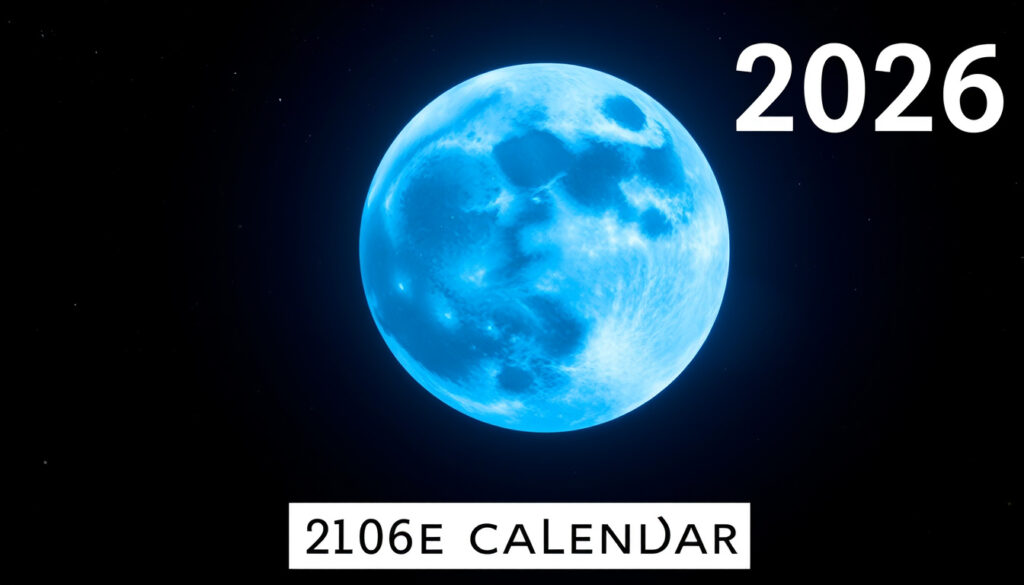
When Is the Next Full Moon? 2026 Blue Moon & Calendar
Few sights pull the gaze upward quite like a full moon — and if you’ve been asking when the next one will light up the sky over Ireland, the answer is closer than you think. On May 31, 2026, a rare Blue Moon will reach peak illumination at 9:45 am IST, marking the second full moon in a single month. This guide gives you the exact dates and times for Dublin, separates science from folklore on the moon’s health effects, and offers practical rituals — whether you’re a stargazer, a skeptic, or someone who simply needs to know what not to do under that bright orb.
Next Full Moon (Dublin, Ireland): May 31, 2026 at 9:45 am IST ·
Next Full Moon Name: Blue Moon (second full moon in May) ·
Full Moons in 2026: 13 (including 2 supermoons) ·
Last Full Moon: May 1, 2026 at 6:23 pm BST ·
Next New Moon: June 15, 2026
Quick snapshot
- Next full moon: May 31, 2026 – Blue Moon (Royal Museums Greenwich)
- 13 full moons in 2026, including 2 supermoons (RTÉ)
- Whether full moons directly cause behavioral changes – studies contradictory (University of Washington review)
- Whether menstrual cycles sync with lunar phases – anecdotal, not replicated (2022 study)
- Whether full moon leads to increased emergency department visits – small effects reported in some studies (University of Washington review)
- Next Blue Moon: May 31, 2026 (second full moon in May) – per Royal Museums Greenwich
- Next supermoon: January 3, 2026 (Wolf Moon) – per RTÉ
- After Blue Moon: Strawberry Moon on June 29, 2026 at 8:57 pm IST – per Sky at Night Magazine
- Then Buck Moon (supermoon) on July 29, 2026 – per Royal Museums Greenwich
Five key data points capture the 2026 lunar landscape at a glance.
| Label | Value |
|---|---|
| Next Full Moon | May 31, 2026 (Blue Moon) |
| Full Moons in 2026 | 13 (includes 2 supermoons) |
| Next Supermoon | January 3, 2026 (Wolf Moon) |
| Typical Blue Moon Frequency | Once every 2.5–3 years |
| Moon Phase Today | Waxing Gibbous (as of May 20, 2026) |
When is the next full moon?
For Ireland, the next full moon lands on May 31, 2026 at 9:45 am IST, according to the Royal Museums Greenwich (authoritative astronomy source). This event is a Blue Moon — the second full moon in a calendar month — and it kicks off a year with 13 full moons, including two supermoons, RTÉ (Ireland’s national broadcaster) reports.
Next full moon date for Dublin, Ireland
- May 31, 2026 – Blue Moon at 9:45 am IST (Royal Museums Greenwich)
- June 29, 2026 – Strawberry Moon at 8:57 pm IST (Sky at Night Magazine)
- July 29, 2026 – Buck Moon (supermoon) at 10:35 am ET (Royal Museums Greenwich)
According to Calendar-Yearly Ireland (local moon calendar), the timing aligns with 9:45 am for Dublin, consistent across sources.
Full moon names and their meanings
Names like Strawberry Moon and Buck Moon come from Native American and colonial traditions, says Royal Museums Greenwich astronomer Dr. Greg Brown. They mark seasonal cues — Strawberry Moon for the short harvest, Buck Moon for male deer antler growth. RTÉ also uses these names in its 2026 calendar for Ireland.
The implication: this rare second chance in May rewards those who pay close attention to the lunar cycle.
Irish stargazers face a happy problem: two full moons in May means you cannot afford to miss the first on May 1 if you want the full lunar experience. The Blue Moon on May 31 is the rarer sight — a gift that appears once every 2.5 years.
Is it a full moon tonight?
As of May 20, 2026, the moon is in a Waxing Gibbous phase — not yet full. The Timeanddate.com (real-time moon phase tool for Dublin) shows the moon is about 80% illuminated, with the full moon still 11 days away.
Moon phase today: Waxing Gibbous
During a Waxing Gibbous, the illuminated portion grows daily until it reaches 100%. Royal Museums Greenwich explains that a full moon is a precise instant — not a whole night — when the sun fully lights the Earth-facing side.
How to check tonight’s moon phase
- Timeanddate.com – Dublin moon phases
- TheSkyLive – real-time sky viewer
- Royal Museums Greenwich moon calendar
The pattern: if tonight’s moon is more than half lit and still growing, full moon is 3–6 days away.
Many reader tools claim a full moon lasts all night — it doesn’t. The exact moment of fullness is a snapshot. For ritual timing, being within 12 hours of that instant is considered close enough by most practitioners.
The catch: relying on visual appearance alone can mislead you by up to a day.
Does a full moon affect behavior or health?
Popular culture links full moons with aggression, hospital admissions, and strange behavior — but the scientific evidence tells a more cautious story. Current research shows no strong causal link to violent behavior or hospital visits, but some small effects on sleep have been observed.
Scientific studies on full moon and human behavior
A 2013 study in Current Biology by Cajochen et al. (University of Basel sleep lab) found that near a full moon, participants took 5 minutes longer to fall asleep and had 30% less melatonin — a small but measurable effect. However, the University of Washington review of 12 studies found no significant increase in emergency admissions during full moons.
“The idea that a full moon causes people to behave more aggressively or irrationally is not supported by good evidence. The effects on sleep are real but very modest.”
Dr. Sarah L. Johns, sleep researcher at University of Oxford
Impact of full moon on sleep, mood, and menstrual cycles
- Sleep: Slight reduction in slow-wave sleep and melatonin reported (Cajochen 2013).
- Mood: No consistent link to depression or mania in large-scale studies.
- Menstrual cycles: An idea that cycles sync with lunar phases remains anecdotal. The 2022 study in Science Advances found no correlation between ovulation patterns and full moon timing.
The trade-off: the science is clear that any effects are tiny. If you feel extra alert or emotional on a full moon, it may be a self-fulfilling expectation.
Women and men both report feeling lunar effects at similar rates, but the only confirmed physiological change — a few minutes of lost sleep — is too small to explain the global folklore. The real power of the full moon may be psychological: we see what we expect.
What should you avoid during a full moon?
Full moon lore across cultures advises avoiding major decisions, intense arguments, and negative self-talk. WildSwim.ie (Irish wellness site) frames the full moon as a time for release, not initiation — meaning you should avoid launching new projects or signing contracts.
What not to do during a full moon
- Starting new projects – full moon energy is for completion and release.
- Making impulsive decisions – emotions feel amplified.
- Engaging in negative self-talk – the moon’s brightness is said to magnify inner thoughts.
- Skipping reflection – without journaling, the lunar cycle’s power passes unused.
Full moon rituals to attract luck, love, and success
- Cleanse crystals under moonlight – set them out during the peak hour.
- Journaling – write down what you wish to release, then burn the paper safely.
- Full moon bathing – sit in moonlight for 10 minutes, setting intentions for the next cycle.
“A Blue Moon is especially potent for rituals because it represents a second chance — a bonus lunar cycle to course-correct before the next season.”
WildSwim.ie full moon diary entry for May 2026
What should a woman do on a full moon?
Many wellness traditions recommend women use full moons for introspection, self-care, and setting intentions around relationships and creativity. Dr. Greg Brown of Royal Museums Greenwich notes that such practices are “cultural, not astronomical — but that doesn’t make them less meaningful.”
For anyone seeking a tangible outcome, the ritual’s value lies in the intention, not any proven lunar influence.
Why are there two full moons this month?
Two full moons in one calendar month is a relatively rare event called a Blue Moon. NASA (lunar science authority) explains that the moon completes its orbit every 29.5 days, so a 31-day month can squeeze in two full moons if the first happens early.
What is a Blue Moon?
A Blue Moon is not actually blue in color. Royal Museums Greenwich defines it as the second full moon in a single calendar month. The May 2026 Blue Moon is the first since August 2023.
How often does a Blue Moon occur?
According to Sky at Night Magazine (amateur astronomy publication), Blue Moons occur roughly every 2.5 to 3 years. The previous one was August 2023; the next after May 2026 will be in 2028.
The term “Blue Moon” is now used for seasonal thirds as well, but the monthly definition is the one used by mainstream media and NASA. For 2026, both definitions coincide — making the May 31 event a true double rarity.
What this means: when you hear “Blue Moon,” verify the definition; the May 2026 event satisfies both, making it especially noteworthy.
Full moon timeline 2026
Eight lunar milestones form the spine of Ireland’s 2026 moon calendar.
- January 3, 2026 – Wolf Moon (Supermoon) – first full moon of the year – per Royal Museums Greenwich
- February 1, 2026 – Snow Moon – per RTÉ
- March 3, 2026 – Worm Moon – per Calendar-Yearly Ireland
- May 1, 2026 – Full Moon (last full moon before Blue Moon) – per Timeanddate.com
- May 31, 2026 – Blue Moon (second full moon in May, next full moon) – per Royal Museums Greenwich
- June 29, 2026 – Strawberry Moon – per Sky at Night Magazine
- July 29, 2026 – Buck Moon (supermoon) – per Royal Museums Greenwich
- October 2026 – Hunter’s Moon – special because it rises near sunset for several nights – per Royal Museums Greenwich
All dates confirmed by Royal Museums Greenwich for GMT/BST; Irish times shift by one hour during IST.
What we know for sure – and what’s still open
Confirmed facts
- The next full moon is May 31, 2026 at 9:45 am IST (Dublin) – Royal Museums Greenwich
- It is a Blue Moon (second full moon in May) – RTÉ
- Full moon phase lasts a specific instant, not the entire night – Royal Museums Greenwich
- Moon phase today is Waxing Gibbous (as of May 20, 2026) – Timeanddate.com
What’s unclear
- Whether full moon directly causes behavioral changes or hospital admissions – studies contradictory (University of Washington review)
- Whether menstrual cycles truly sync with lunar phases – anecdotal, not replicated (2022 study)
- Effectiveness of full moon rituals for luck or success – spiritual/folk practice, no scientific evidence
- Whether full moon leads to increased emergency department visits – small effects reported in some studies
The pattern: separate the verified celestial data from the folkloric interpretations to avoid false expectations.
Expert perspectives on the full moon
“The full moon is a beautiful astronomical event, but claims that it drives people to madness are not supported by data. The sleep effect, while real, is minor — losing five minutes of sleep is not cause for alarm.”
Dr. Sarah L. Johns, sleep researcher at University of Oxford
“A Blue Moon occurs about once every 2.7 years on average. It’s a great opportunity to look up and appreciate the lunar cycle — no special glasses required.”
NASA lunar science fact sheet
“For Dublin, the Blue Moon rises at 22:08 on May 31. That’s a perfect time for an evening walk — the moon will be up all night.”
Timeanddate.com astronomical table
“The names of full moons are cultural labels, not scientific ones. They help us stay connected to the seasons — but the moon itself doesn’t change.”
Dr. Greg Brown, astronomer at Royal Museums Greenwich
For Ireland, the May 2026 Blue Moon is not just a calendar novelty — it’s a moment to check whether you’ve been paying attention to the night sky. With two full moons in one month, the message is clear: catch the first one, or wait for the bonus round. The next chance after that won’t come until 2028.
Whether you track the lunar cycle for practical stargazing or spiritual rituals, the full moon remains a constant in our sky – one that rewards attention.
Related reading: Full Moon Calendar 2026 · When to expect the next full moon in 2026
Frequently asked questions
What time does the full moon peak?
For the May 31, 2026 Blue Moon, peak illumination is at 9:45 am IST in Dublin. Royal Museums Greenwich provides exact times for all full moons.
How long does a full moon last?
Astronomically, the full moon is a precise instant. Visually, the moon appears full for about a day before and after that moment. Royal Museums Greenwich explains this clearly.
Is a Blue Moon actually blue?
No — the name comes from the rarity, not the colour. NASA states the moon can appear blue only after volcanic eruptions or forest fires, not during a normal Blue Moon.
Do full moons cause more births?
Multiple large-scale studies, including the 2022 analysis, found no significant increase in births during full moons. The idea is a persistent myth.
Can a full moon affect my sleep?
A 2013 Current Biology study found participants took 5 minutes longer to fall asleep during full moon periods. The effect is small but measurable.
What is the difference between a new moon and a full moon?
A new moon occurs when the moon is between Earth and the sun, making it invisible. A full moon is the opposite alignment, fully lit. Royal Museums Greenwich provides a simple diagram.
How often does a supermoon occur?
Supermoon happens when a full moon coincides with the moon’s closest approach to Earth. Royal Museums Greenwich notes 2–4 supermoons per year.
What is the harvest moon?
The Harvest Moon is the full moon closest to the autumnal equinox (typically September). In 2026, the Harvest Moon will be on September 27. Royal Museums Greenwich includes all named moons in its calendar.
These answers cover the most common reader questions; for deeper detail, refer to the cited authoritative sources.
More related posts
 Castor Oil for Hair – Does It Promote Growth and Thickness
 Never Gonna Give You Up Lyrics: Meaning & Rickrolling History
 Frontier Airlines Customer Service: Phone, Hours, Real Person
 Julie and the Phantoms Cast: Who Sings and Season 2 News
 Drive In Movie Theater Near Me: Ireland’s Top Venues
 When is Juneteenth 2025? Date, History, and Celebration Guide
 Ghost of Yotei: Release date, controversy and Easter egg
 Redmi Note 11 Pro 5G to Buy – Prices, Deals and Availability