Russian Invasion of Ukraine: Key Facts, Timeline, FAQs
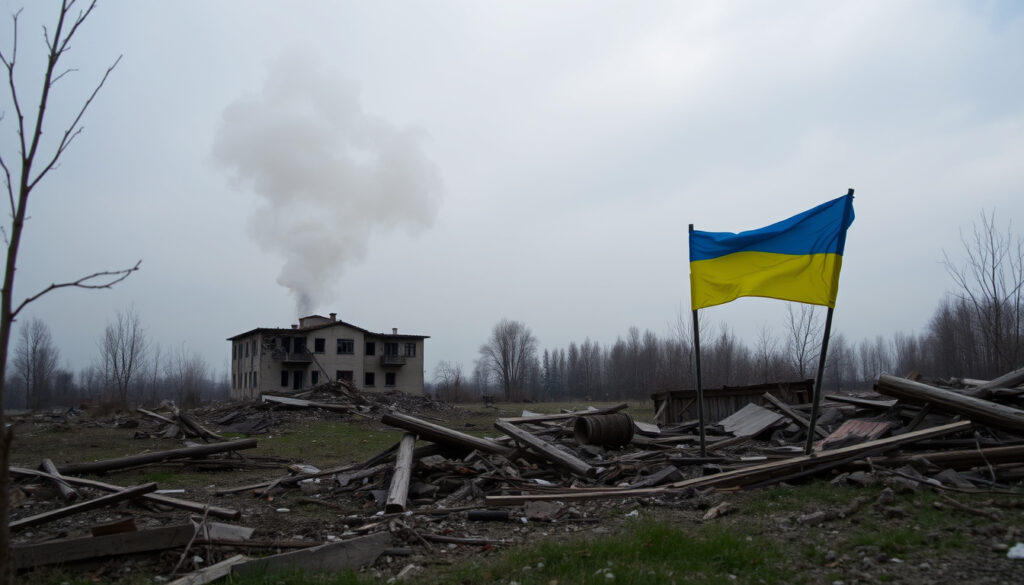
Open a map of Europe and you’ll see a line that wasn’t there two years ago. On 24 February 2022, Russia launched a full-scale invasion of Ukraine, shattering the post-Cold War security order and resurrecting questions many thought settled.
Start of full-scale invasion: 24 February 2022 ·
Pre-war Russian active military personnel: ~900,000 ·
Ukrainian military personnel: ~200,000 ·
Estimated total casualties (as of 2024): Hundreds of thousands ·
Percentage of Ukrainian territory occupied: ~18% (as of 2024)
Quick snapshot
- Russia invaded Ukraine on 24 February 2022 (UK Government official statement)
- Crimea was transferred to Ukraine in 1954 (Wilson Center analysis)
- Exact number of Russian military casualties remains uncertain
- Long-term outcome of the war is unknown
- Crimean public opinion on status is contested
- 1954: Crimea transferred to Ukrainian SSR
- 1994: Budapest Memorandum signed
- 2014: Russia annexes Crimea
- 24 Feb 2022: Full-scale invasion begins
- Negotiations remain stalled
- Western military aid continues to arrive
- Winter 2024–2025 may shift momentum
Six key facts, one pattern: the invasion sits on top of a chain of security promises that were never fulfilled.
| Fact | Detail |
|---|---|
| Full-scale invasion date | 24 February 2022 |
| Russian pre-war active personnel | ~900,000 |
| Ukrainian pre-war active personnel | ~200,000 |
| Estimated casualties (2024) | Hundreds of thousands |
| Ukrainian territory occupied | ~18% |
| Ukraine’s nuclear weapons given up | 1994 Budapest Memorandum |
When did Russia fully invade Ukraine?
Russia launched a full-scale invasion on 24 February 2022, with missile strikes hitting cities across Ukraine. The attack was described by the UK Government (official statement to the OSCE) as “unprovoked and a deliberate choice made in Moscow.” The invasion was the culmination of a conflict that began in 2014 with Russia’s annexation of Crimea and support for separatists in eastern Ukraine (Arms Control Association).
The implication: the invasion was not a sudden event but a broken timeline.
What was the main reason for Russia invading Ukraine?
Russia cited NATO expansion and the protection of Russian speakers in eastern Ukraine as primary justifications. President Vladimir Putin, in his announcement of the “special military operation” on 24 February 2022, claimed NATO’s eastward enlargement threatened Russia’s security (International Affairs, Oxford Academic). Underlying this were historical grievances over Ukraine’s sovereignty and identity—particularly the legacy of shared Soviet history.
Why is Russia attacking Ukraine today?
Russia’s decision to escalate in 2022 was rooted in a longer pattern. The UK Government noted that Russia had fuelled, armed, and sustained conflict in eastern Ukraine for eight years after 2014. By 2021, Putin had massed troops along the border while demanding binding guarantees that Ukraine would never join NATO.
- NATO membership for Ukraine was not imminent, but the possibility itself was framed as unacceptable by Moscow.
- Russia also demanded that NATO withdraw all forces from member states that joined after 1997—a non-starter for the alliance.
The pattern: the public justification (NATO expansion) was a real factor, but the deeper driver was a rejection of Ukraine’s independent sovereign trajectory—a pattern that dates back to the Orange Revolution.
Who actually started the war between Ukraine and Russia?
The war began with Russia’s annexation of Crimea in 2014, followed by its support for separatist forces in the Donbas region. According to the UK Government, “Russian forces invaded Crimea and attempted illegally to annex it.” The full-scale invasion in 2022 was an escalation, not a new conflict.
Do crimeans want to be Russian or Ukrainian?
Crimean identity is complex. After annexation, polls conducted inside Crimea have shown a majority expressing a preference for Russian affiliation. However, independent verifiability is limited, and many Crimean Tatars—who make up about 12% of the population—largely oppose Russian control. The Wilson Center notes that the 2014 referendum was widely condemned as illegitimate internationally.
The catch: public opinion in Crimea is contested and deeply politicized. Under Russian occupation, it’s hard to know what Crimeans truly think—and the international community does not recognize the result.
How much of Russia’s army is left?
Russia suffered significant casualties and equipment losses during the first year of the war. According to estimates cited by the Arms Control Association, tens of thousands of Russian soldiers have been killed, and thousands of armored vehicles destroyed. Ukrainian resistance, bolstered by Western military aid, prevented Russia from achieving its initial objectives. By 2024, Russia had adapted its tactics, launching a new offensive in the east, but its pre-war professional army was effectively shattered.
- Open-source intelligence estimates (Oryx, as of late 2024): over 3,500 Russian tanks and 7,000 armored fighting vehicles visually confirmed destroyed.
- Ukrainian officials claim over 300,000 Russian casualties (killed and wounded), though exact figures are hard to verify.
What this means: Russia’s military is still large on paper—about 1.3 million active personnel after mobilization—but its quality has degraded. The invasion failed to capture any major Ukrainian city besides a handful of eastern towns, revealing poor planning and low morale.
Who gave Crimea to Ukraine?
Crimea was transferred from the Russian Soviet Federative Socialist Republic to the Ukrainian Soviet Socialist Republic in 1954 by Soviet leader Nikita Khrushchev. The move was largely symbolic within the framework of a unified Soviet state. After the USSR collapsed in 1991, Crimea became part of independent Ukraine. Russia recognized Ukraine’s borders in several treaties, including the 1994 Budapest Memorandum and the 1997 Treaty of Friendship.
The UK Government has stated that the 2014 annexation violated those commitments. The transfer itself is not disputed; the interpretation of what it meant after 1991 is what changed.
The pattern: Khrushchev’s 1954 decision was an administrative gesture inside the USSR, but after 1991 it became a territorial reality that Russia later refused to accept.
What did the US promise Ukraine in 1994?
In December 1994, Ukraine signed the Budapest Memorandum, receiving security assurances from Russia, the United States, and the United Kingdom in exchange for giving up the nuclear weapons left on its territory after the Soviet collapse. According to the National Security Archive at George Washington University, the memorandum committed signatories to respect Ukraine’s independence, sovereignty, and existing borders, and to refrain from the threat or use of force.
Who told Ukraine to get rid of their nuclear weapons?
The push came from both the US and Russia, who feared a third nuclear successor state after the USSR’s dissolution. The Wilson Center describes the memorandum as “politically binding” rather than legally binding, which became a crucial weakness. Russia broke its pledge in 2014 with the annexation of Crimea, and then again in 2022 with the full-scale invasion.
Ukraine surrendered the world’s third-largest nuclear arsenal (~1,900 strategic warheads) for pieces of paper. When those papers were torn up, Ukraine had no nuclear deterrent to fall back on—exactly the vulnerability critics warned about in the 1990s.
What this means: the Budapest Memorandum is the central broken promise of this war. For Kyiv, it proves that security guarantees without enforcement are worthless.
Why did Russia’s invasion of Ukraine fail?
The invasion failed to capture Kyiv due to strong Ukrainian resistance, logistical failures, and poor planning. According to analyses by the Arms Control Association, Russia underestimated Ukrainian morale and the effectiveness of Western-supplied weapons like Javelin anti-tank missiles and Starlink communications. By April 2022, Russian forces withdrew from the Kyiv region, leaving behind evidence of war crimes.
- Russia attempted a three-pronged assault from Belarus, Russia, and Crimea—but none of the prongs achieved their objectives.
- Logistics: Russia’s 40-mile-long convoy north of Kyiv stalled due to fuel shortages, mud, and ambushes.
- Morale: Reports of Russian soldiers unaware they were invading, and many refusing to fight.
The trade-off: Russia bet that a quick, decapitation strike would collapse Ukraine’s government. When that failed, it had no plan B. The war became a grinding attrition conflict—exactly what Russia hoped to avoid.
Timeline
- 1954 – Crimea transferred to Ukrainian SSR (Wilson Center)
- 1991 – Ukraine becomes independent after USSR collapse
- 1994 – Budapest Memorandum signed; Ukraine gives up nuclear weapons (National Security Archive)
- 2014 – Russia annexes Crimea; war in Donbas starts (UK Government)
- 24 February 2022 – Russia launches full-scale invasion (UK Government)
Clarity
Confirmed facts
- Russia invaded Ukraine on 24 February 2022
- Ukraine gave up nuclear weapons in 1994 for security assurances
- Crimea was transferred to Ukraine in 1954
- Russia violated the Budapest Memorandum in 2014
- Western military aid has been crucial to Ukraine’s resistance
What’s unclear
- Exact number of Russian military casualties remains uncertain
- Long-term outcome of the war is unknown
- Crimean public opinion on status is contested
- Whether Ukraine can sustain the fight without continued Western support
Key quotes
“I decided to conduct a special military operation… to protect people who have been subjected to bullying and genocide by the Kyiv regime for eight years.”
— Vladimir Putin, 24 February 2022 (UK Government context)
“We are fighting for our freedom, for our land, for our families. The enemy will not succeed.”
— Volodymyr Zelenskyy, President of Ukraine (addressed in multiple international venues)
“Putin has chosen this war. And now he and his country will bear the consequences.”
— Joe Biden, President of the United States, announcing sanctions and military aid
Each of these statements reflects a different framing of the conflict—justification, resistance, and accountability. They show how the same event is narrated from three distinct positions of power.
Summary
The Russian invasion of Ukraine is not just a war over territory—it is a crisis of unfulfilled security assurances. The 1994 Budapest Memorandum promised Ukraine safety in exchange for its nuclear arsenal; when those promises were broken, the world saw that guarantees without enforcement are hollow. For Ukraine, the choice is clear: continue to fight for sovereignty with what help it can get, or accept a peace that legitimizes aggression. The implication for the rest of Europe is that security relies on credible deterrence—not paper agreements.
Related reading: US Intercepts Five Russian Warplanes Near Alaska
ukdefencejournal.org.uk, justsecurity.org, citystgeorges.ac.uk, newsukraine.rbc.ua, studocu.com, static1.squarespace.com, thesis.unipd.it, journals.umcs.pl
Frequently asked questions
Why did the world almost end in 1983?
In 1983, a Soviet early-warning system falsely reported a US missile attack. Duty officer Stanislav Petrov correctly judged it was a false alarm, preventing a retaliatory nuclear strike. The incident remains a chilling example of how close the Cold War came to nuclear war.
Did Donald Trump support Ukraine?
During his presidency (2017-2021), the Trump administration approved lethal military aid to Ukraine, including Javelin anti-tank missiles, though the 2019 Ukraine phone call scandal involved temporarily withholding aid for political pressure. Overall, the US provided more than $2.5 billion in security assistance under Trump.
What is the Minsk Agreement?
The Minsk Agreements (2014 and 2015) were cease-fire accords brokered by France and Germany to end the war in Donbas. They called for a ceasefire, withdrawal of heavy weapons, autonomy for separatist areas, and constitutional reform in Ukraine. Neither side fully implemented them, and Russia’s violations led to its collapse.
How has the war affected global energy markets?
Russia’s invasion triggered a sharp spike in oil and gas prices, especially in Europe, which had relied on Russian natural gas. The EU imposed sanctions and rapidly diversified supply through LNG imports from the US and Qatar. Countries like Germany were forced to restart coal plants as a stopgap.
What are the main international sanctions against Russia?
The US, EU, UK, and allies have imposed sweeping sanctions: freezing Russia’s central bank assets, cutting off major banks from SWIFT, banning technology exports, and placing price caps on Russian oil. The sanctions aim to cripple Russia’s ability to fund the war.
How many refugees have fled Ukraine since 2022?
As of 2024, over 6 million Ukrainians have fled abroad, mainly to Poland, Germany, and the Czech Republic. Around 3.7 million are internally displaced. The UNHCR says it is the fastest displacement crisis in Europe since World War II.
More related posts
 High Chloride Blood Test: Causes, Treatment, and When to Worry
 The Chosen Season 4: Free Streaming, Cast Changes, Season 5
 Memphis Grizzlies vs Utah Jazz Match Player Stats – Box Scores & Top Scorers
 Isabella Ladera y Beéle Video Viral: Lawsuit Explained
 Watch How to Train Your Dragon 3: Streaming Guide & FAQ
 Too Hot to Handle – Rules, Cast, Winners and Seasons Guide
 Secretariat (2010) – Is It a True Story? Facts vs Fiction
 Yamaha Dealer Near Me: Ireland & Dublin Locator Guide