Parts of a Flower – Anatomy, Functions and Identification
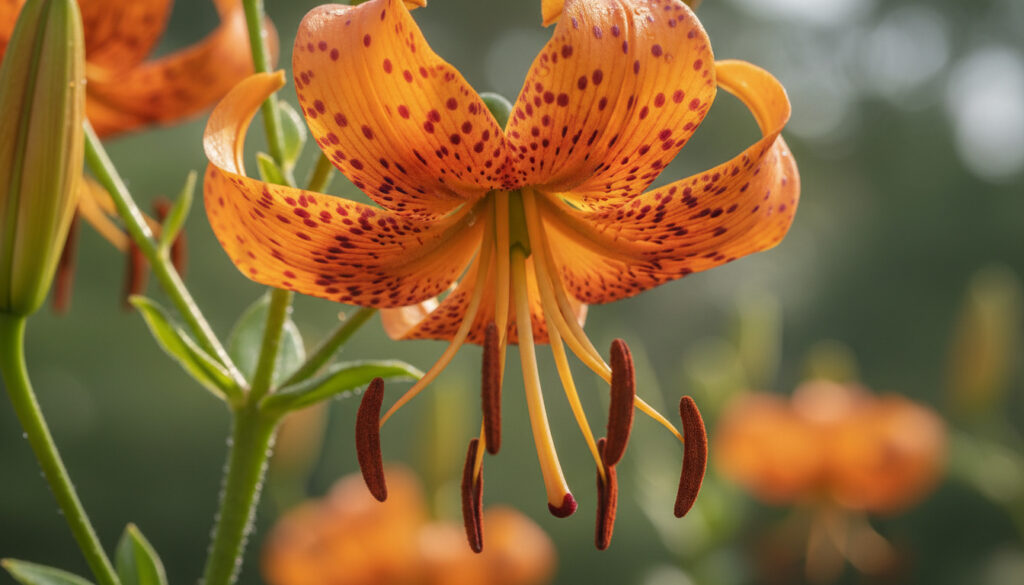
Flower anatomy follows a precise architectural plan built from four concentric whorls. These structures—sepals, petals, stamens, and carpels—coordinate protection, attraction, and reproduction across approximately 400,000 flowering plant species worldwide.
The Royal Horticultural Society emphasizes that despite variations in color and size, most flowers share this fundamental organization. Biologists classify these arrangements as complete when all four whorls remain present, or incomplete when one or more structural components are absent through evolutionary adaptation.
Understanding these components requires examining both external features visible to the naked eye and microscopic reproductive mechanisms. 3/8 Inch to mm – Exact 9.525 mm Value, Formula & Chart provides precise measurement contexts for botanical illustrations, though floral dimensions vary dramatically across species.
What Are the Main Parts of a Flower?
Four primary structures define floral architecture. Botanists organize these from exterior to interior, creating distinct functional zones that collaborate during the plant’s reproductive cycle.
Green protective leaves enclosing the bud
Colorful modified leaves attracting pollinators
Male reproductive organs producing pollen
Female reproductive structures forming seeds
Key characteristics distinguish these components:
- The calyx (sepals) typically persists after blooming to support developing fruit
- Corolla petals often contain ultraviolet nectar guides invisible to human eyes
- Stamens number varies widely, with some flowers containing hundreds of male parts
- Carpels may fuse into a single pistil or remain separate in multicellular arrangements
- Complete flowers maintain all four whorls, while incomplete forms lack one or more rings
- Perfect flowers house both male and female reproductive organs within the same blossom
- Imperfect flowers separate sexual functions onto different individual blooms
| Structure | Primary Function | Location |
|---|---|---|
| Sepals (Calyx) | Protection of developing bud | Outermost whorl |
| Petals (Corolla) | Attract pollinators via color/scent | Second whorl |
| Filament | Support anther for pollen dispersal | Stalk of stamen |
| Anther | Produce and release pollen grains | Top of filament |
| Stigma | Capture and receive pollen | Top of pistil |
| Style | Tube guiding pollen to ovary | Neck of pistil |
| Ovary | House ovules for fertilization | Base of pistil |
| Ovules | Develop into seeds after fertilization | Inside ovary |
| Receptacle | Attach flower parts to stem | Base of flower |
| Peduncle | Support flower as stalk | Below receptacle |
What Are the Male and Female Parts of a Flower?
Sexual reproduction in angiosperms depends on specialized structures that produce and receive genetic material. The American Museum of Natural History identifies these as the androecium (male) and gynoecium (female), typically positioned in the flower’s center to facilitate pollination.
How Do Stamens Function as Male Reproductive Organs?
Each stamen consists of two integrated components. The filament serves as a stalk elevating the anther to optimal heights for pollen dispersal by wind or animal vectors. Kremp Florist notes that anthers contain microsporangia where pollen grains develop, each carrying male gametes necessary for fertilization.
What Structures Compose the Female Pistil?
The carpel—often fused with others into a compound pistil—features three distinct zones. The stigma presents a sticky or feathery surface adapted to trap pollen grains. Trees.com explains that the style forms a hollow tube lined with specialized cells that guide pollen tubes toward the ovary, where fertilization actually occurs.
Pollen lands on the stigma, germinates into a tube descending through the style, and releases sperm cells into the ovary. Fertilized ovules develop into seeds while the ovary wall transforms into protective fruit tissue.
What Is the Function of Each Flower Part?
Every whorl executes specific tasks coordinated by genetic programming and environmental triggers. Science Notes diagrams illustrate how these functions align with the flower’s ultimate goal: sexual reproduction ensuring genetic diversity.
What Role Do Sepals Play in Floral Development?
Before blooming, sepals form a tight protective case around delicate internal tissues. University of Illinois Extension describes how these typically green, leaf-like structures photosynthesize to fuel early growth, then either wither or persist to shield the maturing fruit. For a more in-depth understanding of flower anatomy, explore Deep vein thrombosis symptoms.
How Do Petals Attract Pollinators?
Petals function as biological advertising through pigments, ultraviolet patterns, and volatile organic compounds. These characteristics target specific pollinators—bees perceive blue and yellow, hummingbirds prefer red, while nocturnal moths respond to white and heavy fragrances.
What Coordinates Pollination and Fertilization?
The interaction between stamens and pistils involves precise timing mechanisms. Some flowers prevent self-fertilization by positioning male and female parts at different heights or maturing them at different times, ensuring cross-pollination and genetic mixing.
How to Identify and Label Flower Parts?
Accurate identification requires observing radial or bilateral symmetry patterns. Little Bins for Little Hands recommends starting with complete flowers like lilies or tulips that display all four whorls clearly. Precise measurement standards, such as 3/8 Inch to mm – Exact 9.525 mm Value, Formula & Chart, assist in accurately scaling botanical documentation.
Standard botanical illustrations show radial flowers viewed from above. Sepals appear at the periphery, petals radiate inward, stamens encircle the central pistil, and the receptacle anchors the entire structure to the peduncle.
Dissection provides the clearest identification method. Removing sepals and petals sequentially reveals the reproductive core. Video demonstrations show how to distinguish filament from anther, and style from stigma, using simple magnification.
Colorful sepals in flowers like poinsettias are often mistaken for petals. Similarly, multiple carpels fused together may appear as a single structure unless examined during dissection.
How Does a Flower Develop from Bud to Fruit?
Floral development follows a predictable chronological sequence observed across most angiosperms. Wild Earth Lab documents these stages from meristem differentiation through seed dispersal.
- Bud Formation: Meristematic tissue differentiates into floral primordia enclosed by protective sepals
- Sepal Expansion: The calyx splits to reveal internal structures while maintaining structural support
- Corolla Deployment: Petals unfold, often rapidly, to display nectar guides and reproductive readiness
- Pollen Presentation: Anthers dehisce to release mature pollen grains onto waiting vectors
More related posts
 Translate German to English: DeepL vs Google Translate
 Kohl’s 20% Off Coupon: How to Get & Stack Discounts
 Battlefield 6 Battle Royale – Status, Leaks and History
 How Long Do COVID Symptoms Last? Timeline & Recovery
 SNAP Benefits Government Shutdown 2025: Impact & Eligibility
 28 Days Later Series Guide: Movies, Watch Order & 28 Years Later
 When Is the Next Full Moon? 2026 Blue Moon & Calendar
 New Balance Golf Shoes: Spiked, Waterproof and More