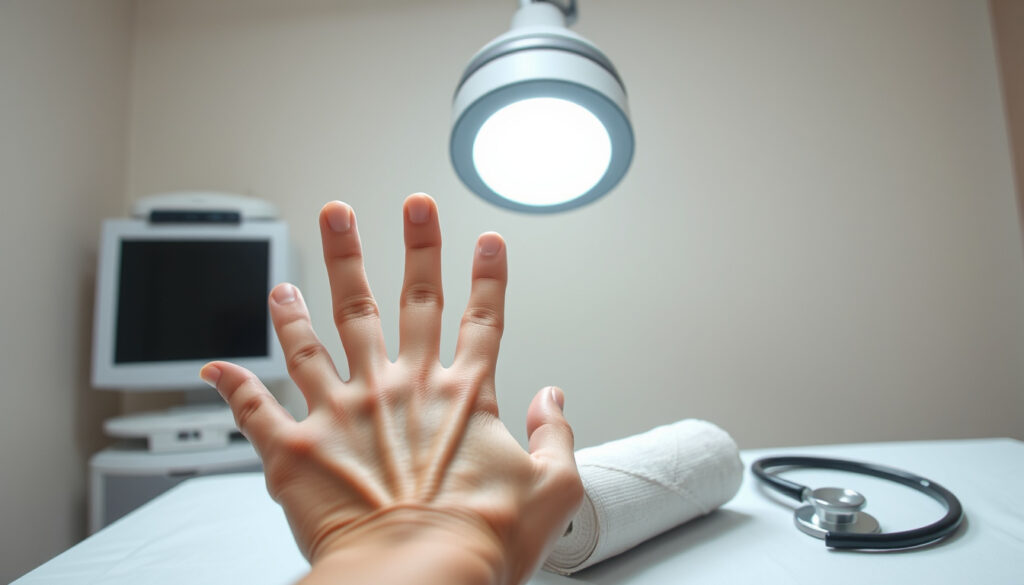
Ehlers-Danlos Syndrome Symptoms: Signs, Diagnosis & More
Anyone who’s ever felt like their body operates on a different set of rules — joints that slide out of place with a simple twist, skin that splits open from a gentle bump — knows the frustration of symptoms that don’t fit a neat box. For millions worldwide, those symptoms trace back to Ehlers-Danlos syndrome (EDS), a group of hereditary connective tissue disorders affecting an estimated 1 in 5,000 people.
Joint hypermobility prevalence: 90% · Skin hyperextensibility: 80% · Easy bruising: 75% · General prevalence: 1 in 5,000 · Recognized subtypes: 13
Quick snapshot
- Joint hypermobility is the hallmark symptom (NHS (UK National Health Service))
- Skin hyperextensibility and fragility are common across subtypes (NCBI Bookshelf (National Library of Medicine))
- Vascular EDS carries high risk of arterial rupture (NORD (National Organization for Rare Disorders))
- EDS is a genetic disorder with autosomal inheritance patterns (NCBI Bookshelf (National Library of Medicine))
- Exact prevalence of hypermobile EDS remains unknown (Cleveland Clinic (Academic Medical Center))
- Not all 13 subtypes are fully understood at the genetic level (NCBI Bookshelf (National Library of Medicine))
- Long-term prognosis for many subtypes varies widely (NORD (National Organization for Rare Disorders))
- Children with vascular EDS may present with clubfeet and joint hypermobility before major complications (GeneReviews (Clinical Genetics Resource))
- Shoulder dislocation is often the first noticeable sign of EDS (PMC (Peer-Reviewed Medical Journal))
- Adults may go decades before receiving a formal diagnosis (The Ehlers-Danlos Society (International Patient Organization))
- Genetic research continues to identify new EDS subtypes (PMC Review (Genetic Diagnosis Literature))
- Updated diagnostic criteria from the EDS Society aim to improve early detection (The Ehlers-Danlos Society (International Patient Organization))
- Patient advocacy groups are pushing for standardized care pathways (NORD (National Organization for Rare Disorders))
The pattern: EDS is fundamentally a connective tissue disorder that manifests through skin, joints, and blood vessels, with severity depending on the specific subtype.
| Attribute | Value |
|---|---|
| Prevalence | 1 in 5,000 people |
| Inheritance | Autosomal dominant or recessive depending on subtype |
| Diagnosis method | Clinical criteria (Beighton score) and genetic testing |
| Treatment focus | Symptom management, physical therapy, surgical intervention for complications |
What are four symptoms of Ehlers-Danlos syndrome?
What are the most common symptoms?
- Joint hypermobility — joints move beyond the typical range of motion, often leading to dislocations (NHS (UK National Health Service))
- Skin hyperextensibility — skin stretches more than normal and may feel velvety or soft (MedlinePlus (NIH Patient Education))
- Fragile skin that bruises easily — minor trauma can cause significant bruising or tearing (Cleveland Clinic (Academic Medical Center))
- Chronic pain and fatigue — joint instability and muscle strain often lead to persistent pain and exhaustion (Cleveland Clinic (Academic Medical Center))
In classical EDS, the skin over the forehead, knees, shins, and elbows splits with surprising ease, and healing leaves thin, atrophic scars (NHS (UK National Health Service)). This combination of stretchy, fragile skin and unstable joints forms the diagnostic core of the disorder.
Patients with hypermobile EDS often appear flexible in a way that looks like a gift — until the same joints dislocate during sleep or a simple handshake. The very trait that seems like an advantage is the source of the most disability.
What do EDS feet look like?
- Flat feet (pes planus) are extremely common in EDS patients (MedlinePlus (NIH Patient Education))
- Clubfoot deformities can be present at birth, especially in vascular EDS (GeneReviews (Clinical Genetics Resource))
- Toes may be hypermobile and can bend backward more than normal (NHS (UK National Health Service))
- Prematurely aged appearance of the feet (acrogeria) is a feature of vascular EDS (NORD (National Organization for Rare Disorders))
Foot morphology matters because it’s one of the earliest physical signs that clinicians can spot. A child with vascular EDS, for instance, may present with clubfeet long before any vascular complication occurs (GeneReviews (Clinical Genetics Resource)).
What are the signs of hypermobility?
- Ability to bend the pinky finger back past 90 degrees
- Ability to touch the thumb to the forearm
- Knees that hyperextend backward beyond straight
- Elbows that hyperextend past 10 degrees
- Ability to place palms flat on the floor while standing with straight legs
These five movements form the Beighton score, the standard clinical tool for measuring joint hypermobility (NCBI Bookshelf (National Library of Medicine)). A score of 5 or more out of 9 is considered indicative of generalized joint hypermobility in adults.
What are the unusual symptoms of EDS?
Gastrointestinal issues
- Gastrointestinal dysmotility — slow movement of food through the digestive tract — is common in EDS patients (PMC (Peer-Reviewed Medical Journal))
- Irritable bowel syndrome (IBS) symptoms frequently overlap with EDS
- Spontaneous bowel rupture is a rare but life-threatening complication of vascular EDS (NORD (National Organization for Rare Disorders))
The catch: Patients often spend years seeing gastroenterologists before the connective tissue connection is made.
Cardiovascular complications
- Mitral valve prolapse is more prevalent in EDS patients than in the general population (PMC (Peer-Reviewed Medical Journal))
- Early-onset varicose veins appear in some subtypes
- Arterial rupture — the most feared complication — is specific to vascular EDS (NORD (National Organization for Rare Disorders))
For someone with vascular EDS, the first sign of arterial weakness can be a sudden, catastrophic rupture. That’s why identifying the facial and foot features of this subtype before a crisis is so critical — and why genetic testing matters.
Dental problems
- Temporomandibular joint (TMJ) disorders are common due to ligament laxity in the jaw (PMC (Peer-Reviewed Medical Journal))
- Gum tissue may be fragile and prone to bleeding
- Teeth may be more resistant to local anesthesia
Vision changes
- Myopia (nearsightedness) is more common in EDS populations
- Retinal detachment risk is elevated due to fragile connective tissue in the eye (MedlinePlus (NIH Patient Education))
- Dry eyes and corneal irregularities are also reported
Many of these unusual symptoms are easy to dismiss as separate issues. But in the context of EDS, they’re all downstream effects of faulty collagen — the protein that gives structure to skin, blood vessels, organs, and eyes.
How do you diagnose Ehlers-Danlos syndrome in adults?
Clinical evaluation using Beighton score
Diagnosis begins with a physical exam. The Beighton score assesses joint hypermobility on a 9-point scale, and a score of 5 or higher is a key criterion for hypermobile EDS (NCBI Bookshelf (National Library of Medicine)). The clinician also evaluates skin stretchiness, scarring, and bruising patterns.
Genetic testing for specific subtypes
- Genetic testing can confirm vascular EDS, classical EDS, kyphoscoliotic EDS, and several other rare subtypes (PMC Review (Genetic Diagnosis Literature))
- Testing looks for mutations in collagen genes such as COL5A1, COL5A2, and COL3A1
- Results help determine the specific subtype and guide monitoring for complications
No specific test for hypermobile EDS
Hypermobile EDS (hEDS) — the most common subtype — has no genetic test. Diagnosis is made entirely on clinical criteria using the 2017 diagnostic checklist from the Ehlers-Danlos Society (The Ehlers-Danlos Society (International Patient Organization)). This can make the diagnostic process feel uncertain for patients.
The catch: Without a biomarker for hEDS, clinicians must rely on pattern recognition — and many general practitioners have never seen a case. That’s why patients often see five or more specialists before getting a diagnosis.
At what age is Ehlers-Danlos usually diagnosed?
Childhood diagnosis
- Some children are diagnosed at birth, especially when clubfoot or hip dislocation is present (NORD (National Organization for Rare Disorders))
- Delayed motor development and muscular hypotonia (low muscle tone) are early clues (PMC Review (Genetic Diagnosis Literature))
- Easy bruising and slow wound healing in a toddler can prompt a referral
Adult diagnosis
- Many adults are diagnosed in their 30s or 40s after years of unexplained symptoms (Cleveland Clinic (Academic Medical Center))
- Chronic pain, fatigue, and recurrent joint dislocations are the most common triggers for seeking a diagnosis
- Some patients are diagnosed only after a major complication like a bowel rupture or arterial dissection
Late diagnosis in mild cases
Mild cases of EDS — particularly hypermobile EDS — may never be formally diagnosed. The symptoms are present but don’t cause enough disruption to prompt medical investigation. In other cases, the patient has been told for so long that they’re “just flexible” that they don’t question the joint pain and fatigue.
The pattern: EDS is underdiagnosed across all age groups. The average time from first symptom to diagnosis is often a decade or more, according to patient-reported data from the Ehlers-Danlos Society.
Which parent passes down Ehlers-Danlos syndrome?
Autosomal dominant inheritance
- Most EDS subtypes — including hypermobile EDS, classical EDS, and vascular EDS — follow an autosomal dominant pattern (NCBI Bookshelf (National Library of Medicine))
- Only one copy of the mutated gene from either parent is sufficient to cause the disorder
- Each child of an affected parent has a 50% chance of inheriting the condition
Autosomal recessive inheritance
- Subtypes like kyphoscoliotic EDS and dermatosparaxis EDS require two copies of the mutated gene (one from each parent) (NCBI Bookshelf (National Library of Medicine))
- Both parents are carriers but typically do not show symptoms
- Each child has a 25% chance of inheriting the disorder
De novo mutations
In a small percentage of cases, the genetic mutation occurs spontaneously in the affected person with no family history. This is more common in vascular EDS than in other subtypes (NORD (National Organization for Rare Disorders)).
The catch: A negative family history doesn’t rule out EDS. A child born with vascular EDS to parents with no known mutations has a de novo event — and the parents aren’t off the hook for genetic counseling regarding future pregnancies.
Steps toward diagnosis: What to expect
- Self-assessment: Review the Beighton score criteria and document your joint symptoms, skin findings, and family history.
- Primary care visit: Bring a symptom log and the Beighton score to your general practitioner. Ask for a referral to a rheumatologist or geneticist.
- Specialist evaluation: A rheumatologist or clinical geneticist will perform the full Beighton exam, assess skin hyperextensibility, and check for atrophic scars.
- Genetic testing: If vascular EDS, classical EDS, or another rare subtype is suspected, a blood sample is sent for genetic sequencing (PMC Review (Genetic Diagnosis Literature)).
- Diagnostic criteria review: For hypermobile EDS, the clinician uses the 2017 diagnostic checklist. Meeting all the criteria leads to a formal diagnosis.
- Subtype classification: Once diagnosed, the specific subtype determines the monitoring plan — vascular EDS requires cardiology follow-up, while hypermobile EDS focuses on physical therapy and pain management.
For someone navigating the diagnostic maze, the single most important step is finding a clinician who has seen EDS before. The Ehlers-Danlos Society maintains a directory of specialists by region because the condition is rare enough that most general practitioners will never encounter it.
What we know and what remains unclear
Confirmed facts
- Joint hypermobility is a hallmark symptom of EDS (NHS (UK National Health Service))
- EDS is a genetic disorder with autosomal inheritance patterns (NCBI Bookshelf (National Library of Medicine))
- Skin hyperextensibility and fragility are common across subtypes (MedlinePlus (NIH Patient Education))
- Vascular EDS carries high risk of arterial and organ rupture (NORD (National Organization for Rare Disorders))
- Facial features (thin nose, large eyes, small earlobes) are characteristic of vascular EDS (NHS (UK National Health Service))
What’s unclear
- Exact prevalence of hypermobile EDS is unknown (Cleveland Clinic (Academic Medical Center))
- Not all 13 subtypes are fully understood at the genetic level (NCBI Bookshelf (National Library of Medicine))
- Long-term prognosis for many subtypes is variable and unpredictable
- Why some patients with the same genetic mutation have mild symptoms while others have severe complications remains unexplained
Expert perspectives on EDS
“Ehlers-Danlos syndromes are a group of inherited disorders that affect connective tissues — namely the skin, joints, and blood vessel walls.”
— Cleveland Clinic (Academic Medical Center)
“Symptoms of Ehlers-Danlos syndrome include joint hypermobility, stretchy skin, and fragile skin that breaks easily.”
— Mayo Clinic (Academic Medical Center)
“Some features are seen across all types of EDS, including joint hypermobility, skin hyperextensibility, and tissue fragility.”
— The Ehlers-Danlos Society (International Patient Organization)
Three sources, one message: EDS is a systemic condition that affects the entire body, not just the joints. The variability in symptoms is a feature of the disorder, not a sign that the diagnosis is wrong.
ncbi.nlm.nih.gov, msdmanuals.com, neurosurgery.weillcornell.org
Frequently asked questions
What is the life expectancy for Ehlers-Danlos syndrome?
Life expectancy depends on the subtype. Hypermobile EDS and classical EDS generally do not reduce life expectancy, while vascular EDS carries a significantly reduced life expectancy, with a median survival of around 50 years due to the risk of arterial or organ rupture (NORD (National Organization for Rare Disorders)).
Can EDS be cured?
There is no cure for EDS. Treatment focuses on managing symptoms — physical therapy for joint instability, pain management, and monitoring for complications specific to the subtype (Cleveland Clinic (Academic Medical Center)).
What are the first signs of EDS in children?
First signs can include easy bruising, slow wound healing, joint hypermobility, clubfoot deformities, hip dislocation at birth, and delayed motor development (GeneReviews (Clinical Genetics Resource)).
Is EDS painful?
Yes. Chronic pain is a major symptom of EDS, particularly in hypermobile EDS. Joint pain, muscle pain, and neuropathic pain are common and often require a multidisciplinary approach to management (Cleveland Clinic (Academic Medical Center)).
Does EDS affect pregnancy?
Pregnancy in EDS patients carries increased risks, including joint instability, pelvic pain, and in vascular EDS, a high risk of uterine rupture or arterial dissection. Close monitoring by a high-risk obstetric team is recommended (NORD (National Organization for Rare Disorders)).
What is the Beighton score?
The Beighton score is a 9-point scale used to assess joint hypermobility. It measures the ability to perform five specific movements: bending the pinky back past 90 degrees, touching the thumb to the forearm, hyperextending the knees and elbows, and placing palms flat on the floor with straight legs (NCBI Bookshelf (National Library of Medicine)).
How is EDS different from hypermobility spectrum disorder?
Hypermobility spectrum disorder (HSD) is diagnosed when a person has symptomatic joint hypermobility but does not meet the full diagnostic criteria for hypermobile EDS. The distinction is based on the presence of specific skin findings, tissue fragility, and family history that define hEDS (The Ehlers-Danlos Society (International Patient Organization)).
More related posts
 Jenna Bush Hager New Haircut: Bob, Family Reactions & More
 How to Roast Asparagus in the Oven: A Complete Guide
 Universal Studios Florida Tickets – Prices, Deals and Savings
 Free Reverse Number Lookup: Is It Really Free and Safe
 7-Eleven Free Slurpees 2026: How to Get One & Rules
 Spectrum Internet Speed Test: Results, Fixes, and Expectations
 $1,390 IRS Payment November 2025: Verified Facts vs Rumor
 Poppy Playtime Chapter 3 – Release Dates Platforms Characters Guide